
How to Get Your First 100 Patients in 6 Simple Steps
Why Your First 100 Patients Are the Foundation of Your Practice
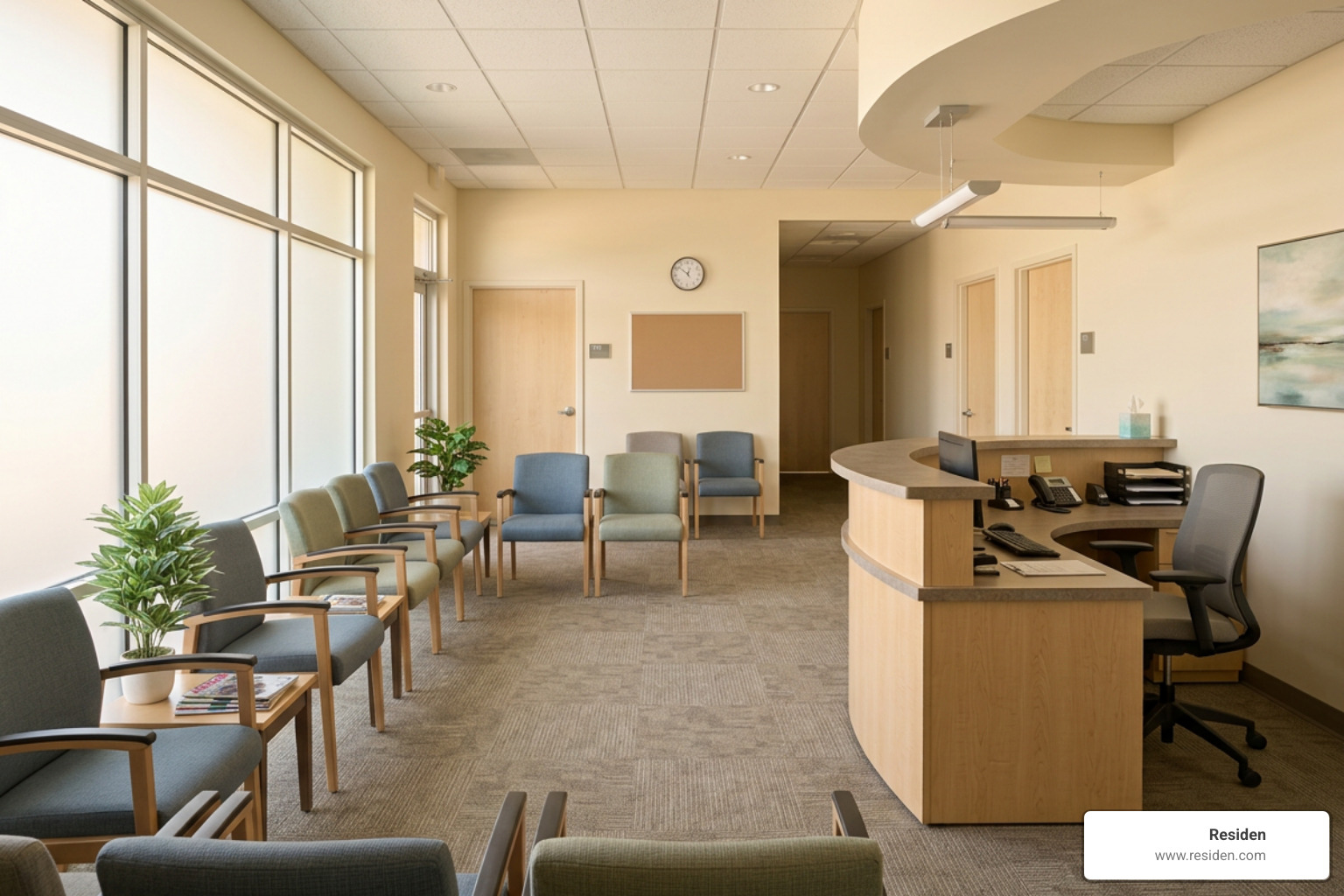
How to get your first 100 patients is the question that keeps most new healthcare providers up at night — and for good reason. Those first 100 aren't just a revenue milestone. They're proof that your practice works.
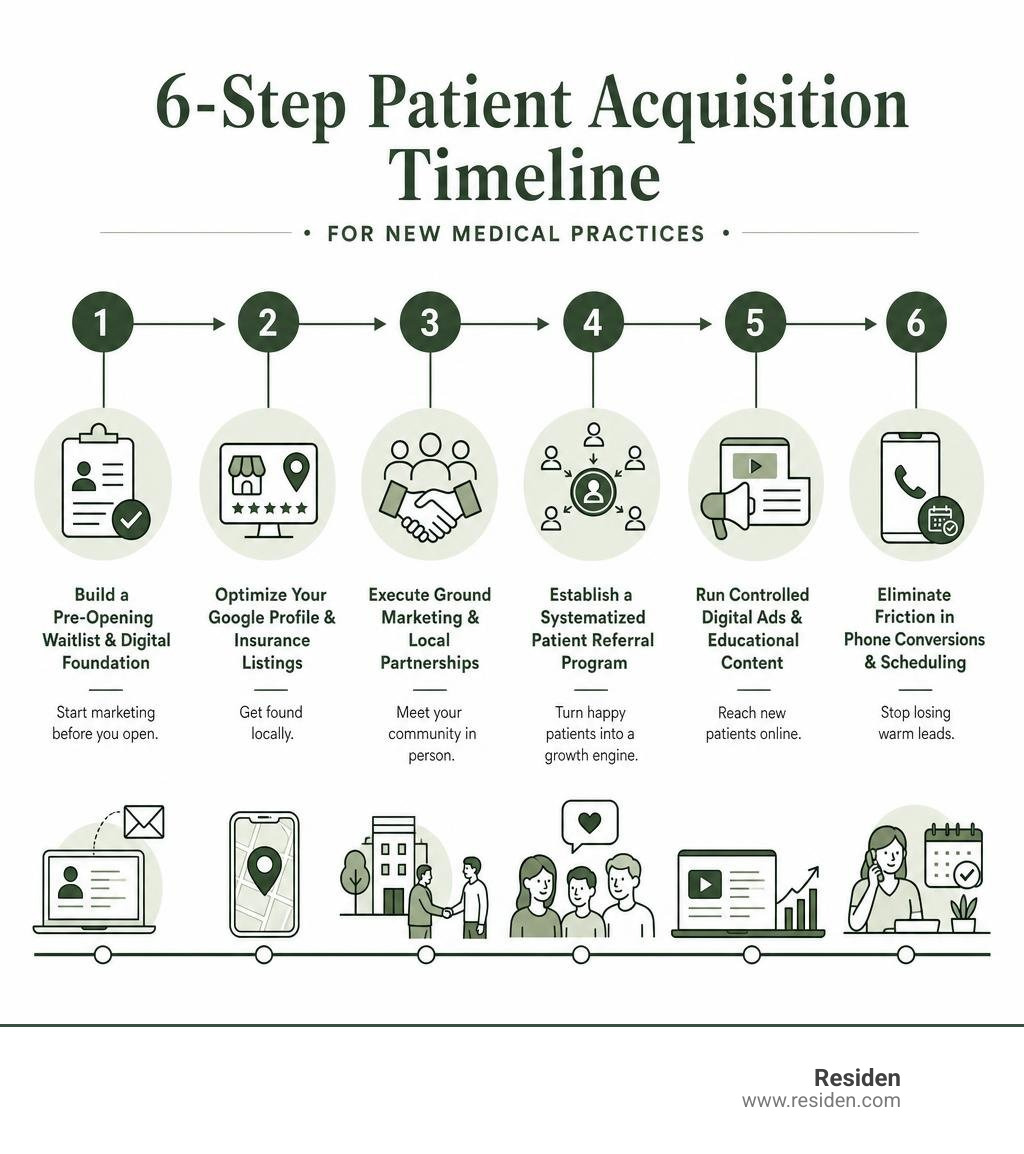
Here's a quick overview of the six steps covered in this guide:
- Build a pre-opening waitlist and digital foundation — start marketing before you open
- Optimize your Google Business Profile and insurance listings — get found locally
- Execute ground marketing and local partnerships — meet your community in person
- Establish a systematized patient referral program — turn happy patients into a growth engine
- Run controlled digital ads and educational content — reach new patients online
- Eliminate friction in phone conversions and scheduling — stop losing warm leads
The path to your first 100 patients doesn't require a massive budget. Research shows that organic trust-building, local visibility, and a great patient experience consistently outperform expensive ad campaigns — especially in the early months.
Most new practices reach their first 100 patients within 2 to 6 months, depending on location, consistency, and how early they start marketing. The practices that fill fastest are the ones that start before they open their doors.
One more thing worth knowing upfront: 42% of incoming calls to medical practices go unanswered — and 85% of those callers never try again. That means even the best marketing can fall apart at the last step. This guide covers all of it, from the first day of pre-opening buzz to the moment a patient books their first appointment.
I'm Dr. Jessica Wu, a Harvard-trained dermatologist with over 20 years of private practice experience in Los Angeles — and I've lived through every stage of figuring out how to get your first 100 patients firsthand. The steps below reflect what actually works, drawn from both my own experience and the best evidence available.
Step 1: Build a Pre-Opening Waitlist and Digital Foundation
Too many practitioners wait until their doors are officially open to start looking for patients. They sign a lease, spend months on build-outs, and only then begin their marketing. By that time, they are burning cash with an empty waiting room.
If you want to hit the ground running, your pre-opening window is your most valuable asset. In the 6 to 12 months before you see your first patient, a new clinic coming to a neighborhood is considered local news. You can use this uncontested time to build local awareness and create a pre-registration waitlist.
Building this foundation starts with a simple, conversion-focused landing page. You do not need a custom $20,000 website when you are first starting your own practice. A clean, 5-to-10-page site that costs a fraction of that is more than enough. The key is to make it easy for people to join your waitlist.
On this landing page, explain your medical philosophy, highlight your credentials, and offer a clear call to action (CTA), such as a "Join the Waitlist" or "Pre-Register for an Appointment" button. To incentivize early sign-ups, consider offering a small perk, such as a complimentary initial wellness consultation or priority scheduling.
While you build this digital presence, you can also share behind-the-scenes content of your journey. Post photos of your clinic setup, your team, and your preparation. This builds anticipation and helps potential patients connect with you on a personal level before they ever step foot in your office.
Traditionally, the massive barrier to starting a practice has been the cost of real estate. Building a traditional clinic from scratch in competitive markets like Beverly Hills or Brentwood typically requires an upfront investment of $750,000 to $800,000. This massive capital outlay forces doctors to delay their launch and take on substantial debt.
Fortunately, modern options like Residen allow you to bypass this risk entirely. By offering turnkey, shared medical office spaces on a flexible, hourly or daily booking basis, you can experience the perks of private practice without the burden of long-term leases, high setup costs, or expensive equipment purchases. This makes it incredibly easy to learn how to start seeing patients this month: 5 methods while keeping your overhead virtually non-existent.
Step 2: Optimize Your Google Business Profile and Insurance Listings
When residents in West Los Angeles, Beverly Hills, or Brentwood need a new doctor, they do not open a phone book. They open Google Maps and search for terms like "primary care doctor near me" or "pediatrician in Brentwood."
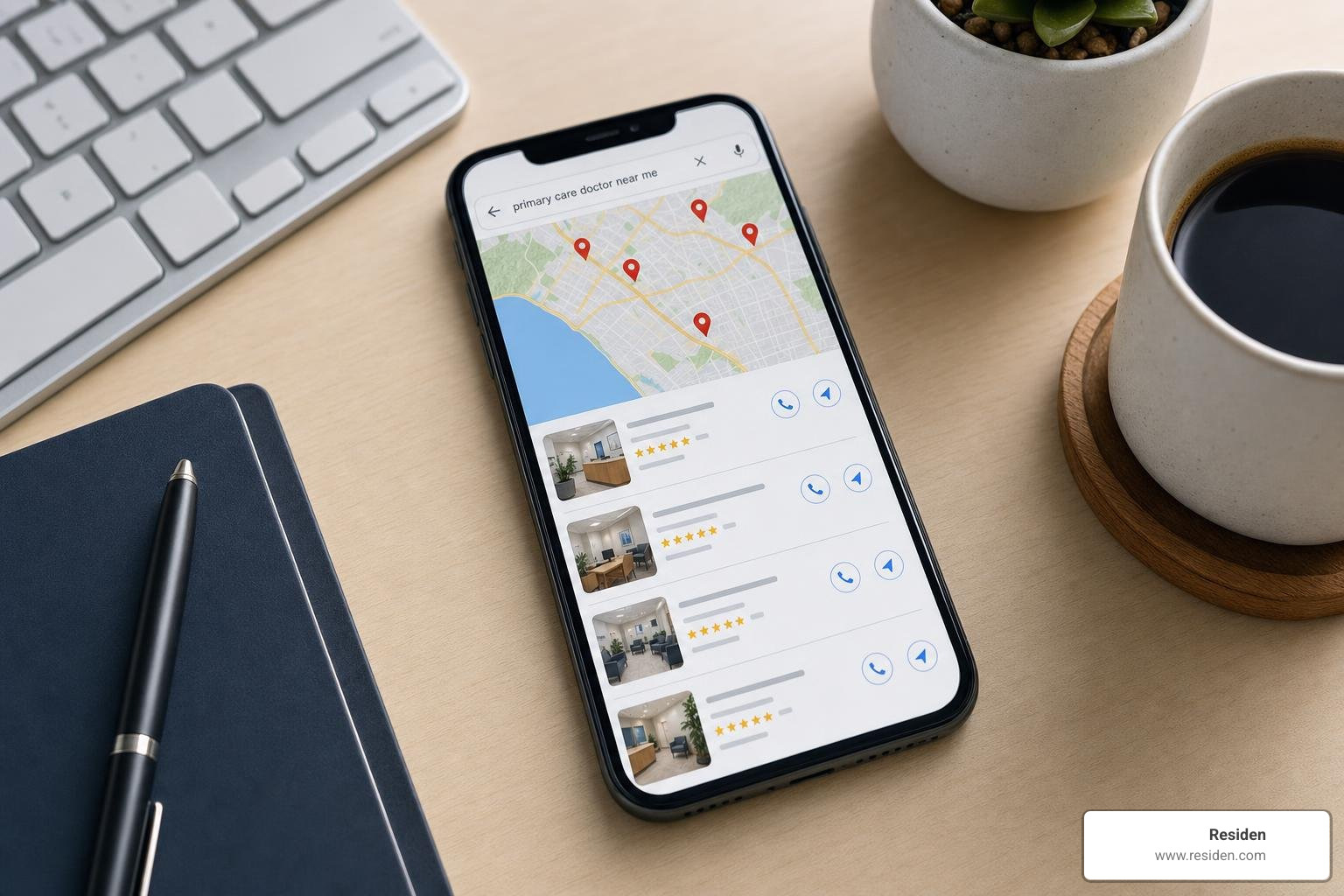
Your Google Business Profile (GBP) is your most important free digital asset. To make sure you show up in those local search results, you must optimize your profile completely:
- Select All Relevant Sub-Categories: Do not just list yourself as a "Doctor." Choose highly specific sub-categories like "Pediatrician," "Sports Medicine Physician," or "Cosmetic Dermatologist."
- Upload Real Photos: Avoid stock photography. Upload high-quality, professional photos of your actual treatment rooms, your office building, and your team. This helps patients familiarize themselves with your space before their visit.
- Fill Out Every Section: Add your exact hours, a detailed description of your services, and a direct link to your online scheduling tool.
- Keep Insurance Listings Accurate: Ensure your practice is accurately listed in major insurance directories. Before you launch, it is critical to understand what new physicians need to know about billing insurance so you can get credentialed early and list your accepted plans clearly on your GBP and website.
How to Get Your First 100 Patients with Local SEO
To win the local search game, you need a targeted local SEO strategy. While broad SEO can take months to show results, highly localized SEO can drive immediate patient inquiries.
Start by targeting long-tail, localized keywords throughout your website content. Instead of trying to rank for a highly competitive term like "dermatologist," aim for "cosmetic dermatologist in Beverly Hills" or "Brentwood acne specialist."
Additionally, build local citations by ensuring your practice's Name, Address, and Phone Number (NAP) are identical across all online directories, including Yelp, Healthgrades, Zocdoc, and WebMD. This consistency signals to Google's algorithm that your business is legitimate and active, boosting your rankings in the local map pack.
Step 3: Execute High-Impact Ground Marketing and Local Partnerships
While digital marketing is essential, ground marketing produces results faster in the early weeks of a new practice than almost anything you can do online. Ground marketing is about building face-to-face trust within your immediate geographic community.
Begin by visiting neighboring businesses in person. Walk into local shops, offices, and cafes with a small, thoughtful gift (like local pastries or customized healthy snacks) and your business cards. Introduce yourself as the new doctor in the neighborhood. Let them know you are accepting new patients and are excited to serve the local community.
Another highly effective strategy is establishing business-to-business (B2B) referral partnerships with complementary healthcare providers. For example:
- If you are a physical therapist, introduce yourself to local orthopedic surgeons and personal trainers.
- If you are a pediatrician, build relationships with local OB-GYNs, family medicine doctors, and local pre-schools.
- If you are a specialist, visit local general practitioners to let them know how you can support their patients.
When reaching out to other providers, remember the importance of networking as a physician. Frame the relationship around how you can add value to their patients, rather than simply asking for referrals. You can find more structured guidance on building these professional networks in the definitive guide to specialized medical practice startup.
Additionally, do not overlook local pharmacies. Patients frequently ask their local pharmacists for direct doctor recommendations. Stop by local independent pharmacies, introduce yourself, and leave a stack of physical cards or brochures detailing your specialty and practice hours.
Step 4: Establish a Systematized Patient Referral Program
Your earliest patients are your most valuable marketing asset. Internal referrals are the lowest-cost, highest-quality source of new patients you will ever have. However, a referral program does not run on hope; you must build a system to encourage it.
First, you must deliver an exceptional patient experience. If your clinical care is excellent but your intake process is confusing, your wait times are long, or your communication is cold, patients will not refer their loved ones. Focus on clinical empathy, clear communication, and operational efficiency from day one.
To turn happy patients into active referrers, make the process as easy as possible:
- Use Physical Referral Cards: At checkout, hand satisfied patients two or three beautifully designed, high-quality "Share the Care" referral cards. You can offer a small, compliant incentive for both the existing patient and the referred friend (such as a complimentary skincare sample or a discount on non-clinical wellness services).
- Implement a "Weekly Referral Moment": Train your team to ask for referrals naturally. At the end of a successful appointment, a simple script works wonders: "We love having patients like you in our practice. If you have any friends, family, or coworkers looking for a doctor, we would love to help them too."
- Follow Up with Appreciation: When a new patient lists an existing patient as their referral source, send a personalized, handwritten thank-you note to the referrer. This small gesture builds incredible loyalty and encourages them to continue sharing your name.
By focusing on relationship-first growth, you can build a compounding stream of organic word-of-mouth referrals.
Step 5: Run Controlled Digital Ads and Educational Content
Once your organic foundations are set, you can accelerate your growth with targeted digital advertising and educational content. The secret here is to start small and scale only when your conversion metrics prove that your campaigns are working.
Paid search advertising (like Google Ads) is incredibly powerful because it targets high-intent searchers. If someone searches for "emergency root canal Brentwood" or "same-day doctor Beverly Hills," they are ready to book immediately.
To maximize your budget, always send ad traffic to dedicated, high-converting landing pages rather than your homepage. A dedicated landing page should focus on a single service, answer common patient objections, and feature a prominent booking form.
How to Get Your First 100 Patients Using Social Media
Social media is not about trying to go viral; it is about building local familiarity. Focus your efforts on one or two visual, community-oriented platforms like Instagram and Facebook.
- Share Behind-the-Scenes Content: Show the human side of your practice. Post short videos of your day-to-day operations, introduce your staff, and share your personal journey.
- Create Educational Video Content: Educate your audience with simple, easy-to-understand health tips. Use the "Symptom to Root Cause to Call to Action" framework. For example, film a 60-second video explaining why desk workers experience neck pain, show a quick stretch to relieve it, and invite them to book a full assessment.
- Run Highly Targeted Local Ads: Use Meta Ads (Facebook and Instagram) to run simple, localized campaigns. You can target specific zip codes around your office (such as 90210 or 90049) with a clear, specific offer, such as a "New Patient Wellness Exam."
If you want to fill your schedule without relying solely on traditional insurance networks, check out our guide on how to fill your schedule without insurance referrals. To model your marketing budget and understand the exact math behind patient acquisition costs, refer to how to market a new medical practice (the year one playbook).
Step 6: Eliminate Friction in Phone Conversions and Scheduling
You can run the most brilliant marketing campaigns in the world, but if your front desk cannot convert incoming inquiries, your budget is wasted. The phone call is where patient acquisition either succeeds or falls apart.
Consider the dramatic difference that response times and staff training make on your booking rates:
| Operational Metric | Average/Unoptimized Practice | Optimized Lean Practice |
|---|---|---|
| Incoming Call Answer Rate | 58% (42% of calls go unanswered) | 100% (Answering service or AI backup) |
| Web Lead Response Time | 47 hours | Under 5 minutes (21x higher conversion) |
| Call-to-Appointment Rate | 41% of qualified callers book | 80%+ of qualified callers book |
| Patient No-Show Rate | 15% - 20% | Under 5% (Automated text reminders) |
To run a highly efficient, high-converting front desk, you must implement simple ways to run the lean medical practice. This includes utilizing automated scheduling tools, setting up automated text confirmations, and training your team on how to handle incoming calls with warmth and confidence.
Before bringing on new team members, make sure to review our before you hire checklist to ensure you are hiring for both operational competence and clinical empathy.
If you are a solo practitioner or operating with a very small team, missed calls can represent a massive financial leak. Implementing an automated answering service, a virtual receptionist, or an AI-powered phone system ensures that you never miss a warm lead.
Frequently Asked Questions About How to Get Your First 100 Patients
How long does it typically take to get your first 100 patients?
For most new medical practices, it takes between 2 to 6 months to secure their first 100 patients. This timeline depends heavily on how early you begin your pre-opening marketing, your local search visibility, and your consistency with ground marketing and professional networking.
Do I need a massive marketing budget to attract my first 100 patients?
Absolutely not. Organic growth strategies — such as optimizing your Google Business Profile, building local B2B referral partnerships, and encouraging patient word-of-mouth — cost very little but yield the highest-quality, most loyal patients. By keeping your overhead low and running a lean practice, you can reinvest your early revenue into highly controlled, scalable digital ads.
What are the most common mistakes when trying to get your first 100 patients?
The three most common mistakes are:
- Waiting until opening day to start marketing: This leads to an empty schedule and rapid cash burn.
- Allowing phone calls to go to voicemail: 42% of calls to new practices go unanswered, and 85% of those callers will simply call a competitor.
- Overspending on complex web design and broad branding: In your first year, focus your budget on local SEO, simple conversion-focused landing pages, and direct local outreach.
Conclusion
Getting your first 100 patients is not about luck; it is about executing a structured, consistent playbook. By starting early, optimizing your local digital presence, building deep roots in your local community, and ensuring your operational systems are frictionless, you can build a thriving, highly profitable practice.
If you are planning to launch or expand your medical practice in Los Angeles, Beverly Hills, or Brentwood, you do not need to take on the massive financial risk of a traditional commercial lease.
At Residen, we provide fully equipped, patient-friendly, and turnkey shared medical office rentals (including exam, procedure, and consultation rooms) at our premier location at 433 N Camden Dr Suite 610, Beverly Hills CA. With our flexible hourly or daily bookings, no long-term leases, and zero setup costs, you can focus 100% of your energy on patient care and marketing.
Ready to build your dream practice on your own terms? Get Started with Residen today.