
Medical Assistant vs. Receptionist Hiring Priorities Demystified

Medical Assistant vs. Receptionist Hiring Priorities Demystified
When expanding a private practice or optimizing daily clinic workflows, determining your first key support hire is a pivotal operational decision. Deciding whether you should hire a medical assistant first or a receptionist depends on your immediate practice staffing priorities, daily clinical volume, and primary operational bottlenecks. Understanding how each role impacts patient experience and administrative revenue helps practice owners build a clear clinic growth strategy.
Core Roles and Responsibilities: Medical Assistant vs. Receptionist

Understanding the distinct roles of healthcare support staff is essential for optimizing clinic workflow and delivering exceptional care. While both positions are critical to smooth operations, their daily responsibilities, required skills, and core focus differ significantly.
A front-office receptionist serves as the primary liaison between patients and your administrative system. They handle incoming phone calls, verify insurance coverage, schedule appointments, and manage the waiting area. Their ultimate goal is to maintain efficient scheduling and foster a welcoming, professional atmosphere.
In contrast, a medical assistant (MA) bridges the administrative and clinical aspects of patient care. In addition to basic front-desk tasks, MAs conduct clinical duties such as rooming patients, recording vital signs, updating Electronic Health Record (EHR) systems, preparing instruments for minor procedures, and assisting providers during examinations.

To build a sustainable workflow, practices must establish clear operational structures. Implementing systems for running an efficient practice allows solo practitioners and growing clinics to delegate non-clinical tasks seamlessly, ensuring that providers spend their time treating patients rather than managing routine logistics.
| Metric / Feature | Medical Receptionist | Medical Assistant (MA) |
|---|---|---|
| Primary Work Zone | Front office / Waiting room | Back office / Exam & procedure rooms |
| Core Responsibilities | Scheduling, phone triage, check-in, insurance checks | Rooming patients, vitals, procedure prep, EHR charts |
| Direct Patient Care | Non-clinical (customer service, front-desk triage) | Clinical (vitals, blood draws, minor procedure support) |
| Average Annual Salary | $36,833 | $41,370 |
| Projected Growth (2024–2034) | 0% (Little to no change) | +12% (Much faster than average) |
| Primary Skillset | Administrative software, therapeutic communication | Clinical procedures, HIPAA compliance, EHR charting |
Front-Office Receptionist Duties and Personality Traits
The medical receptionist is the face and voice of your practice. When patients enter or call, the receptionist sets the tone for their care experience. Key administrative duties include:
- Patient Greeting and Check-In: Greeting arriving patients warmly, managing check-in queues, verifying demographic information, and issuing consent forms.
- Phone Prioritization and Triage: Handling high call volumes, distinguishing routine scheduling inquiries from urgent patient concerns, and routing phone calls appropriately.
- Appointment Scheduling and Calendar Optimization: Managing physician calendars to ensure proper appointment spacing, reducing waiting times, and avoiding double-booking.
- Insurance Verification: Confirming insurance coverage, co-pays, and prior authorizations before scheduled appointments to maintain clean revenue cycles.
Beyond administrative skills, top-performing receptionists possess strong therapeutic communication skills. They excel at patient de-escalation, using empathy and patience to resolve issues when dealing with anxious, stressed, or frustrated patients in person or over the phone.
Back-Office Medical Assistant Responsibilities and Skills
While receptionists focus on front-office administrative flow, medical assistants focus on clinical support and back-office efficiency. Common MA duties include:
- Clinical Intake and Vital Signs: Escorting patients to exam rooms, measuring height, weight, blood pressure, pulse, and temperature, and gathering chief medical complaints.
- Clinical Assistance and Procedure Support: Preparing surgical trays, passing instruments during minor in-office procedures, and helping providers with diagnostic tests.
- Phlebotomy and Specimen Collection: Drawing blood samples, collecting routine lab specimens, and packaging samples for external lab evaluation.
- EHR Documentation and Chart Prep: Pre-charting patient visits, logging current medications, recording allergies, and organizing diagnostic results prior to the provider entering the exam room.
- HIPAA Privacy Compliance: Securing physical and digital health records in back-office areas to protect patient confidentiality.
Education, Scope of Practice, and Legal Boundaries
Navigating qualifications, state regulations, and scope of practice is crucial when structuring your practice team. Hiring without a clear understanding of legal boundaries can expose a medical practice to severe compliance risks.

A high school diploma or GED is typically the baseline education required for a medical receptionist. While formal administrative training programs exist—such as the National Healthcareer Association’s (NHA) Certified Medical Administrative Assistant (CMAA) credential—many practices successfully train receptionists on the job.
Conversely, medical assistants generally complete formal education through accredited diploma or certificate programs lasting 9 to 12 months, or two-year associate degree programs. MAs often earn national credentials like the Certified Medical Assistant (CMA) or Registered Medical Assistant (RMA), which demonstrate verified competency in clinical tasks like phlebotomy, injections, and EKG execution.
Reviewing a comprehensive checklist for hiring practice staff can help practice owners verify credentials, complete necessary background checks, and maintain full regulatory compliance. For step-by-step guidance on sourcing qualified clinical candidates, explore this detailed guide to hiring medical assistants.
Clinical Delegation Regulations and Scope Risks
Medical assistants work under the direct supervision of a licensed healthcare provider, such as a physician, nurse practitioner, or physician assistant. However, state regulations strictly dictate what tasks can be legally delegated to an MA.
- Physician Supervision Rules: In many jurisdictions, a licensed provider must be physically present on site for an MA to perform certain clinical tasks, such as administering injections or conducting diagnostic testing.
- Assessment Restrictions: MAs are un-licensed support staff; they cannot perform independent clinical assessments, diagnose conditions, interpret lab results, or provide formal medical advice to patients.
- Misrepresentation Risks: Medical assistants must explicitly identify themselves as assistants. Falsely identifying oneself as a registered nurse (RN) or physician assistant is illegal and carries significant criminal penalties.
- Delegation Compliance: Delegating complex medical tasks outside an MA’s state-approved scope of practice exposes the practice owner to severe legal liability and professional license discipline.
Receptionist to Medical Assistant Transition Pathways
It is common for motivated medical receptionists to express interest in advancing their careers by transitioning into clinical medical assistant roles. Practice owners can support this transition through defined career pathways:
- On-the-Job Clinical Mentorship: Unlicensed MAs are permitted in certain states, allowing experienced receptionists to learn basic back-office procedures under direct provider supervision.
- Formal Certification Programs: Encouraging administrative staff to enroll in online or night-school accredited MA certificate programs provides a structured path to earning CMA credentials.
- Medical Terminology and EHR Mastery: Building upon existing front-office experience with practice management software makes learning clinical charting systems faster and more intuitive.
- Clinical Externships: Allowing staff members to complete their required program clinical externship hours within your practice helps transition them smoothly into dual administrative-clinical roles.
Salary, Turnover, and Career Growth Projections
Evaluating compensation expectations, job growth trends, and retention dynamics helps practice owners make financially sound hiring decisions.
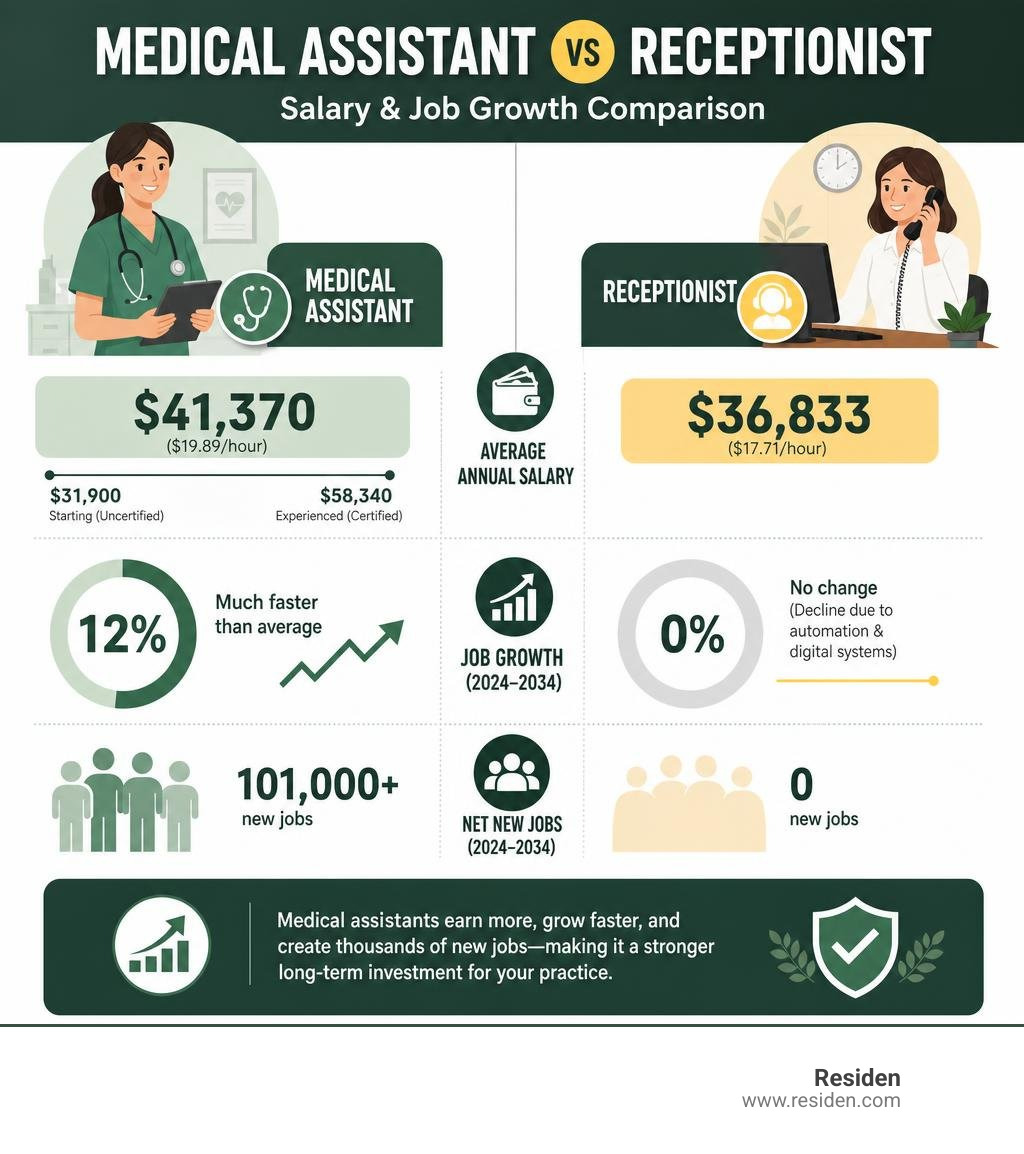
According to data from the U.S. Bureau of Labor Statistics (BLS), medical assistants earn an average annual salary of $41,370 ($19.89/hour), with starting rates for uncertified hires around $31,900 and experienced certified professionals earning up to $58,340. Medical receptionists earn an average annual salary of $36,833 ($17.71/hour), reflecting a wage difference of roughly $4,500 to $7,000 annually.
Employment growth projections over the 2024–2034 decade further highlight the divergence between these roles. Driven by an aging population and expanding clinical needs, medical assistant employment is projected to grow by 12% ("much faster than average"), adding over 101,000 net new jobs. In contrast, general receptionist employment is projected to experience 0% growth, largely due to digital check-in kiosks, online patient portals, and automated phone systems.
Understanding these economic factors is critical when addressing broader healthcare management issues. Practice owners navigating operational friction can gain deeper insights by exploring strategies for managing healthcare staffing challenges.
Compensation Benchmarks and Career Advancement Paths
Both roles offer valuable entry points into the healthcare sector, though their career trajectories follow distinct directions:
- Medical Receptionist Career Path: Receptionists can advance into specialized revenue-cycle management positions, medical billing and coding, front-office coordination, or general medical practice management.
- Medical Assistant Career Path: MAs can leverage their hands-on clinical exposure to specialize in high-demand fields like cardiology or dermatology, advance into clinical team lead positions, or pursue further education to become Registered Nurses (RNs) or Physician Assistants (PAs).
Managing Turnover Rates and Retention Costs
High employee turnover poses a significant financial threat to independent medical practices. Healthcare support staff turnover rates routinely range between 20% and 40% annually.
A peer-reviewed study conducted at an academic family-medicine center revealed that losing a single medical assistant costs approximately $14,200 in replacement expenses—amounting to roughly 40% of the position’s annual salary. Over 70% of these expenses stem from recruitment costs, lost provider efficiency, and onboarding time.
To protect your practice from costly staff turnover, implement a structured retention strategy:
- Rapid Sourcing and Candidate Engagement: Contact qualified applicants within 24–48 hours of submission to secure top talent in a competitive market.
- Hands-On Skills Assessments: Conduct practical skill evaluations during interviews to confirm clinical or software competencies before extending job offers.
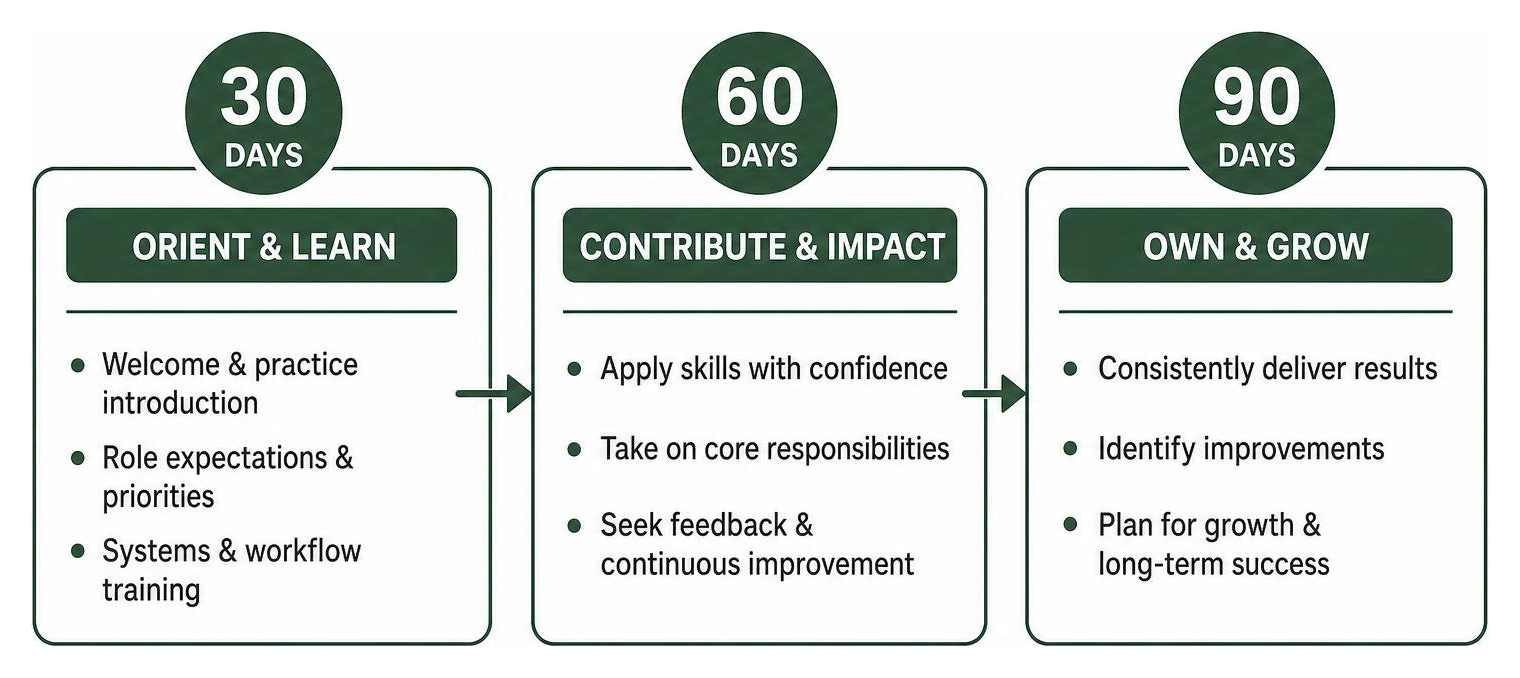
- Structured 30-60-90 Day Onboarding: Pair new hires with dedicated staff mentors and establish concrete performance milestones for their first three months.
- Competitive Compensation and Recognition: Align compensation packages with local wage benchmarks and establish clear opportunities for professional development.
Should You Hire a Medical Assistant First or a Receptionist?
Determining whether to prioritize hiring a medical assistant or a receptionist depends entirely on identifying your current operational bottlenecks.

When launching a practice or operating with limited initial capital, every payroll dollar must deliver a clear return on investment. Rather than hiring full-time staff immediately across all roles, smart practice managers employ phased hiring strategies, cross-training, and modern workspace management.
For additional frameworks on keeping overhead low during early operational phases, review these practical strategies for running a lean medical practice.
Workflow Bottlenecks: Should You Hire a Medical Assistant First or a Receptionist?
To identify your primary operational bottleneck, track where your practice experiences the most friction during a typical clinical day:
Hire a Medical Receptionist First IF:
- Inbound phone calls are going unanswered, leading to missed patient appointments.
- Patient check-in lines cause delays, disrupting room availability.
- Insurance eligibility checks are delayed, causing billing errors or unpaid claims.
- The provider spends significant time answering scheduling inquiries, managing paperwork, and collecting payments.
Hire a Medical Assistant First IF:
- The provider spends valuable time rooming patients, taking vital signs, and cleaning exam rooms between visits.
- In-office procedures require hands-on clinical assistance, such as passing surgical instruments or holding equipment.
- Pre-visit chart preparation and medical history entry delay patient exam times.
- Procedure-heavy clinical days limit the number of patients a provider can treat without clinical support.
For solo providers who must choose a single initial hire, hiring a medical assistant with strong administrative skills often provides the greatest early flexibility. An MA can manage front-desk check-ins and phone calls during low-volume morning hours, then transition to back-office patient rooming and clinical support as appointments begin.
Budget and Financial ROI: Should You Hire a Medical Assistant First or a Receptionist?
Evaluating true staffing costs requires analyzing fully loaded employment expenses. Beyond base hourly wages, employers must budget for payroll taxes, health benefits, paid time off (PTO), workers' compensation, and recruitment overhead. A standard fully loaded cost multiplier ranges from 1.25x to 1.5x base hourly pay.
For instance, a front-desk receptionist earning $18.00 per hour incurs a fully loaded cost of roughly $24.30 per hour ($4,212/month). A medical assistant earning $21.00 per hour costs approximately $28.35 per hour ($4,914/month) fully loaded.
While a receptionist protects revenue by optimizing appointment scheduling and capturing incoming patient leads, a medical assistant directly expands clinical capacity. By delegating rooming, vitals, and prep work to an MA, a provider can see 2 to 4 additional patients per day—generating income that easily offsets the higher salary cost of clinical support staff.
Summary
Deciding between hiring a medical assistant or a medical receptionist first comes down to evaluating your immediate operational priorities:
- Select a Medical Receptionist First when administrative burdens, phone call backlogs, missed appointments, and check-in delays restrict practice growth.
- Select a Medical Assistant First when provider time is consumed by rooming patients, taking vital signs, preparing medical charts, and handling procedure setup.
- Consider a Hybrid Strategy by hiring a versatile medical assistant capable of managing front-desk responsibilities, or utilizing virtual reception solutions alongside on-site clinical staff.
- Optimize Operational Costs by pairing flexible, phased staffing choices with adaptable practice environments to maintain low overhead while building patient volume.
Frequently Asked Questions About Healthcare Support Staffing
Can a medical assistant perform front desk receptionist duties?
Yes. Medical assistants receive training in both administrative software and clinical procedures. In solo and small medical practices, MAs routinely manage front-desk duties such as patient check-in, phone management, and appointment scheduling, transitioning to clinical back-office duties as patient rooming requires.
What is the financial cost of turnover when hiring healthcare staff?
Replacing a medical assistant costs an average of $14,200 per employee loss, representing roughly 40% of their annual base salary. These expenses include direct recruitment spending, temp staff coverage, lost provider efficiency, and onboarding resources. Healthcare administrative staff turnover generally ranges from 20% to 40% annually.
How long does it take for a medical receptionist to become a certified medical assistant?
A medical receptionist can become a certified medical assistant in 9 to 12 months through an accredited certificate or diploma program. Alternatively, two-year associate degree programs are available. Some states also permit on-the-job clinical training under the direct supervision of a licensed provider without requiring formal classroom certification.
Conclusion
Choosing whether Should You Hire a Medical Assistant First or a Receptionist is a major operational milestone for any growing medical practice. By carefully assessing your daily workflow bottlenecks, understanding state scope-of-practice boundaries, and calculating fully loaded employment costs, you can build a stable support foundation that keeps care efficient and patients satisfied.
For providers launching a new practice or expanding into new markets, managing long-term commercial leases alongside full-time payroll can create unnecessary financial pressure. Partnering with a turnkey medical office provider offers a modern, high-flexibility solution.
Residen provides premium medical coworking spaces in Brentwood, CA and Beverly Hills, CA, offering fully equipped exam, consultation, and procedure rooms rentable hourly, daily, or long-term without rigid leases or setup fees. By reducing facility overhead, independent clinicians can scale their team at a comfortable pace—adding receptionist coverage or clinical assistant staff only when patient volume demands it.
Ready to build a flexible practice structure that supports your growth? Explore our medical coworking spaces and discover how Residen can elevate your practice today.