
How Injectors Can Launch a Boutique Practice Faster
Why So Many Injectors and Wellness Providers Are Launching Boutique Practices Right Now
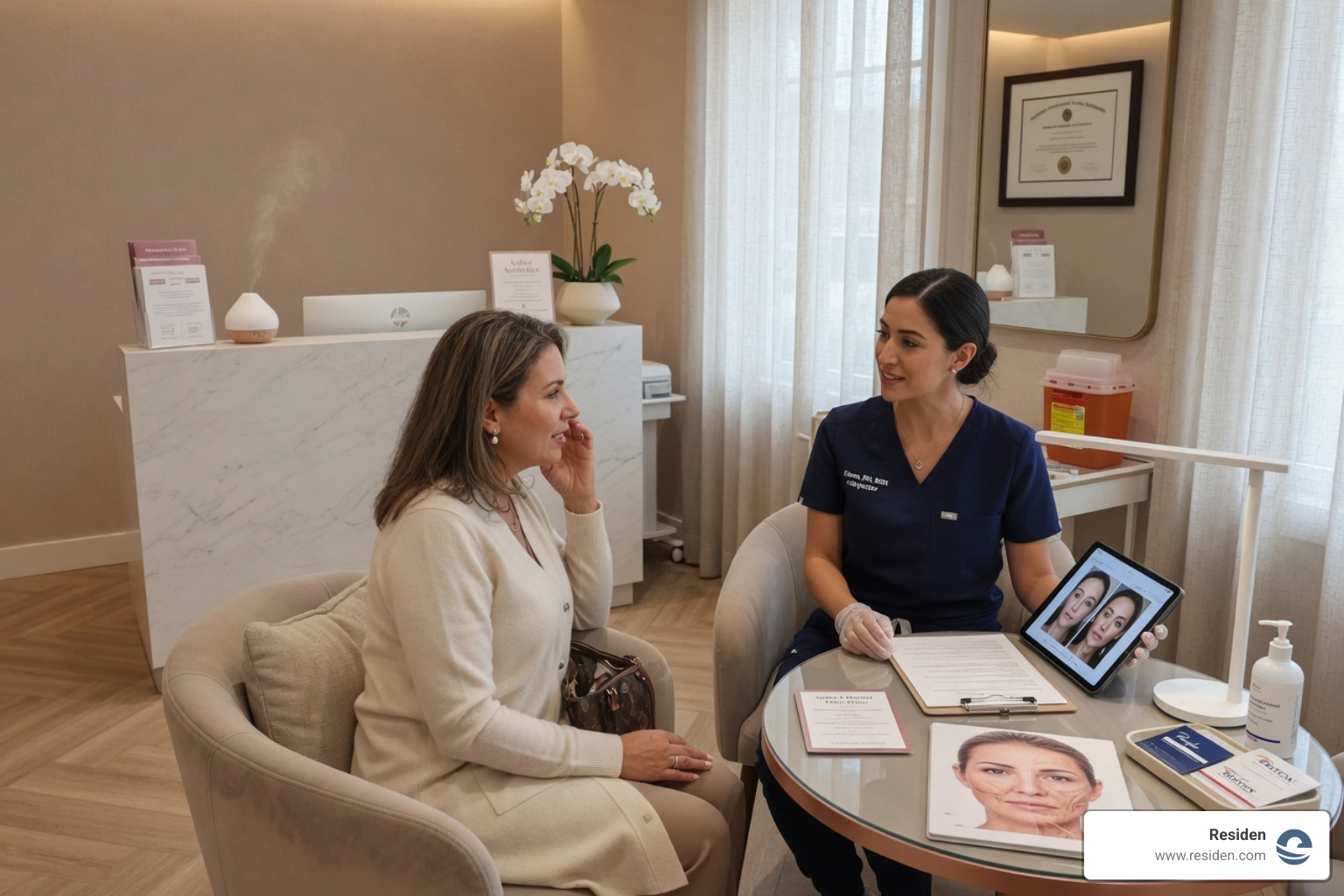
How injectors and wellness providers can launch a boutique practice faster comes down to a few key decisions made early — the right business model, the right space, and the right compliance structure.
Here's a quick overview of the fastest path to launch:
- Choose a lean model — shared medical suites or mobile setups over full brick-and-mortar
- Solve compliance first — secure a medical director, understand your state's scope-of-practice rules, and set up proper good-faith exam protocols
- Start with low-overhead services — injectables and skincare before investing in high-cost devices
- Use turnkey infrastructure — plug into existing compliant environments instead of building from scratch
- Launch marketing early — patient acquisition should start before your doors open
The opportunity is real. The global non-invasive aesthetics market hit $44.65 billion in 2026, growing at nearly 8.5% annually. A hospital RN typically earns $65,000–$85,000 per year. An experienced aesthetic nurse injector in a high-volume clinic can earn $150,000–$300,000. That gap is why so many skilled clinicians are making the move.
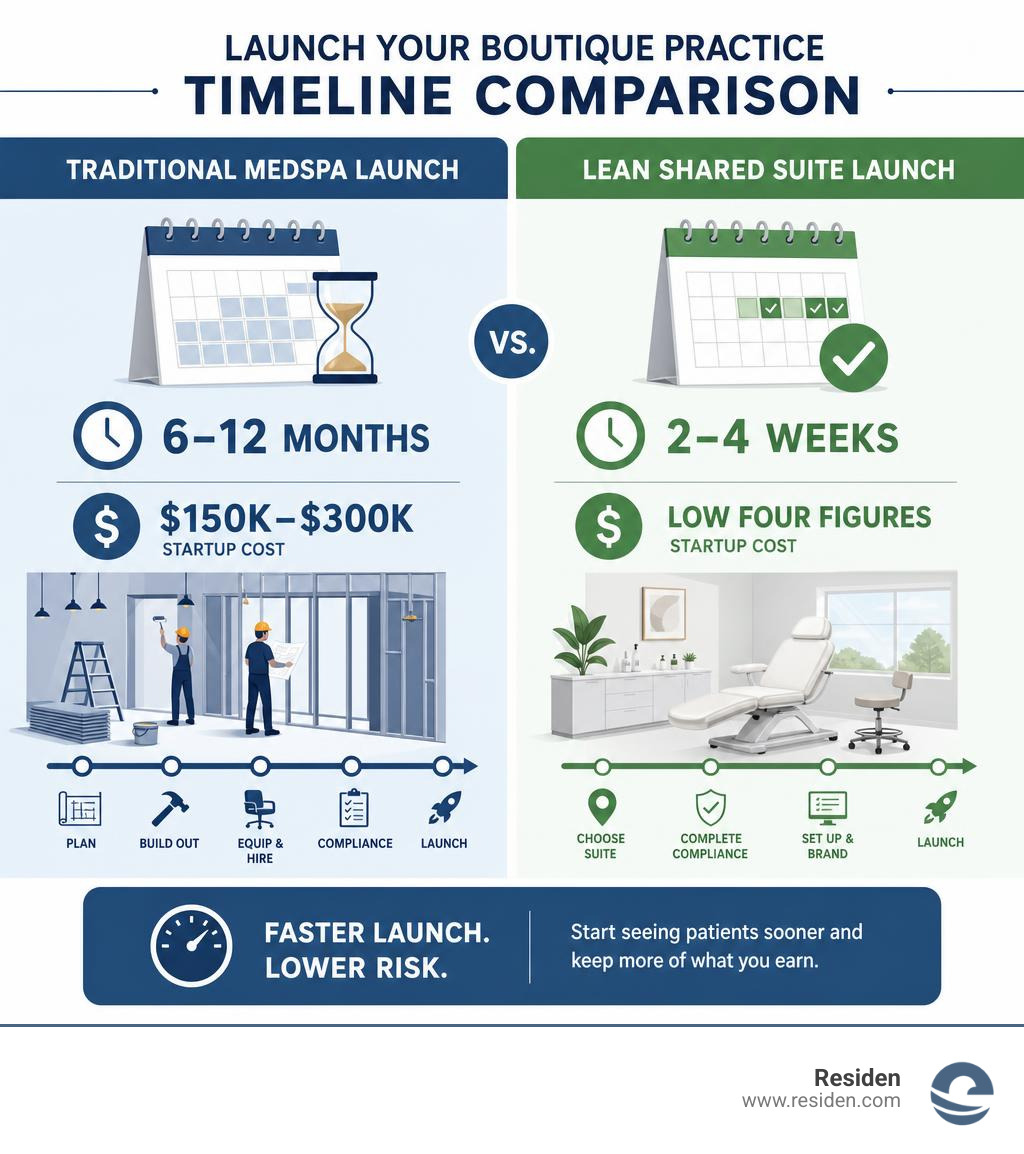
But the traditional path — leasing a space, completing a full build-out, hiring staff, and navigating compliance solo — can take 6–12 months and $150,000–$300,000 before a single patient walks in. That's a major barrier, especially for independent providers who don't have deep pockets or a business background.
The good news is that the model has changed. Shared medical suites, MSO structures, and turnkey launch services have compressed that timeline to 2–4 weeks with startup costs dropping to the low four figures in some cases.
I'm Dr. Jessica Wu, a Harvard-trained dermatologist with over 20 years in private practice in Los Angeles — including serving as a clinical investigator in the FDA approval trials for Juvederm and Latisse. I've seen what separates practices that launch with confidence from those that stall, and I'll walk you through everything you need to know about how injectors and wellness providers can launch a boutique practice faster without overextending your capital or your risk.
The Barriers and Regulatory Hurdles of Starting a Medspa

When clinicians transition from hospital corridors to medical aesthetics, they are often surprised by the regulatory maze. In California, medical aesthetics is not considered a beauty or salon service; it is strictly the practice of medicine.
The biggest operational hurdle is not securing the capital or finding the right syringe; it is navigating the legal architecture of a medical practice. For nurse injectors (RNs) and nurse practitioners (NPs), understanding state-specific compliance is the first non-negotiable step. Before investing heavily in a build-out, providers should confirm ownership rules, supervision requirements, good-faith exam workflows, malpractice coverage, and facility requirements with qualified healthcare counsel.
The Corporate Practice of Medicine (CPOM)
In California, the Corporate Practice of Medicine (CPOM) doctrine dictates that only licensed physicians (or professional medical corporations where a physician holds at least a 51% share) can practice medicine or own a medical clinic. This means an RN or NP cannot independently own 100% of a traditional medical spa.
To work around this while maintaining business autonomy, many providers utilize a Management Services Organization (MSO) structure. Under an MSO model, the injector owns a management company that handles non-clinical aspects (billing, marketing, lease, and administrative support), while a physician-owned Professional Corporation (PC) contracts with the MSO to handle the clinical delivery.
California SB 351 and the Changing Regulatory Landscape
By 2026, California's SB 351 has significantly tightened compliance enforcement. This law removes legal gray areas and makes it clear that management entities (MSOs) are strictly prohibited from interfering with clinical decisions, which includes hiring or firing clinical staff based on clinical competency.
Furthermore, utilizing standing orders or generic clearances without individualized patient evaluations can trigger immediate license suspension. The state has dramatically increased its oversight on compounding pharmacies and medspa operations, meaning that cutting corners on legal structures is no longer just a minor business risk—it is a threat to your professional license.
The Good-Faith Examination (GFE)
Before any new patient receives an injection of a neurotoxin, dermal filler, or an IV therapy drip, a licensed physician, physician assistant (PA), or nurse practitioner (NP) must perform a Good-Faith Examination (GFE). This exam can be completed in person or via a compliant telehealth portal, but it must be documented before any treatments are administered by an RN.
Navigating Compliance: How Injectors and Wellness Providers Can Launch a Boutique Practice Faster
To launch quickly without running into legal roadblocks, you must establish a compliant clinical workflow that operates seamlessly in the background.
- Patient-Specific Orders: Standing orders are a compliance trap. Each patient must have a documented GFE followed by a patient-specific order from the medical director or prescribing NP. This order details the exact product, dosage, and treatment plan.
- Securing a Medical Director: RNs require a collaborating physician to act as their medical director. Finding a compliant medical director who understands aesthetics is a critical first step. Vet the relationship carefully, document the scope of supervision, and make sure the physician's role is meaningful rather than merely nominal.
- Malpractice Insurance: Standard nursing malpractice insurance will not cover independent aesthetic procedures. You need a specialized medical spa liability policy that covers advanced aesthetic treatments, including vascular occlusion protocols, off-label product usage, and IV hydration therapies.
By basing your business in a professionally managed medical environment, you ensure that physical space compliance—such as biomedical waste disposal, HIPAA-compliant patient areas, and secure medical storage—is already solved. This allows MedSpa Nurse Injectors to focus entirely on clinical excellence. Taking these steps is essential when Starting Your Own Practice to protect your license and build long-term value.
Clinical Training and Mentorship Foundations
Having a license does not automatically translate to clinical confidence. Many new injectors make the mistake of launching immediately after a single weekend certification course. In 2026, with highly educated consumers demanding natural-looking results, technical mastery and safety culture are your best marketing tools.
To build a sustainable boutique practice, your training foundation should include:
- Anatomy-First Education: You must master both the superficial and deep facial anatomy, understanding the precise location of facial arteries, nerves, and muscle layers to minimize the risk of vascular complications.
- Supervised Live-Model Training: Seek out small-cohort clinical programs that offer hands-on practice with live models under the direct supervision of experienced aesthetic instructors.
- Continuing Nursing Education (CNE) Credits: Look for courses that offer accredited CNE credits, ensuring the education meets rigorous professional standards.
- Vascular Disaster Drills: You must be fully trained in emergency protocols, including the immediate reconstitution and injection of hyaluronidase (Hylase) to treat accidental vascular occlusions.
- Consistent Portfolio Building: Start documenting your work from day one using standardized lighting, angles, and high-resolution photography. Your portfolio is your primary tool for establishing patient trust.
How Injectors and Wellness Providers Can Launch a Boutique Practice Faster

The traditional model of opening a medical spa is incredibly slow and capital-intensive. It requires signing a 5-to-10-year commercial lease, spending months on architectural permits and construction build-outs, and purchasing expensive energy-based devices. This traditional path often delays your time-to-revenue by up to a year.
For modern providers, the question is how to bypass these barriers. The answer lies in flexible, shared medical real estate. By renting fully equipped, compliant medical suites on an hourly or daily basis, you can completely eliminate the upfront capital demands of a traditional build-out.
This turnkey approach reduces your time-to-launch from months to mere weeks. If you are eager to begin, you can explore How to Start Seeing Patients This Month - 5 Methods to see how quickly you can transition into your own space. Embracing these models helps you unlock The Perks of Private Practice without the burden of heavy commercial debt.
Choosing the Right Business Model for Rapid Growth
Your business model dictates your startup timeline, your margin structure, and your operational complexity. To launch fast, choose a lean, high-margin model that allows you to start generating revenue immediately:
- Shared medical suite: Use a patient-ready room only when you need it.
- Low-overhead services: Start with injectables, skincare, IV therapy, or consultations before investing in expensive devices.
- Early revenue: Reduce build-out delays so cash flow can begin sooner.
Scalable growth: Add days, rooms, services, or equipment as demand becomes predictable.
Medical Coworking Spaces: This is the gold standard for rapid, compliant growth. You rent a private, medical-grade room only for the hours or days you actually see patients. There are no long-term leases, no utility bills, and no facility maintenance headaches.
- IV Therapy and Wellness Clinics: IV hydration and vitamin infusions represent one of the fastest-growing sectors in wellness. Because the equipment requirements are minimal—mainly IV poles, comfortable seating, compliant supplies, and proper clinical protocols—you can start an IV clinic for a fraction of the cost of a device-heavy aesthetic clinic.
- Membership-Based Wellness Programs: Integrating recurring revenue streams—such as weight-loss protocols, skin health plans, or ongoing wellness programs—can stabilize your monthly income. Keep the model lean by using clear patient education, compliant documentation, and reliable clinical follow-up before adding complex services.
- Mobile Aesthetics: While mobile injecting has low overhead, it comes with logistical challenges, travel wear-and-tear, and strict regulatory compliance regarding off-site good-faith exams and medical waste transport. Most providers find that transitioning from mobile to a shared professional medical suite dramatically increases their average ticket price and patient trust.
Patient Acquisition and Retention Strategies
Many new business owners believe that clinical skill is the only thing that matters. However, in a competitive market like Los Angeles, the difference between a high-earning injector and one who struggles to pay their bills is rarely their technical skill—it is their positioning, patient trust, and retention strategy.
To stand out and attract high-value clients:
- Focus on Trust and Education: High-value clients are looking for safety and natural results. Use your digital presence to educate patients on facial anatomy, product science, treatment expectations, aftercare, and realistic outcomes without linking to local competitors.
- Drive Membership Penetration: Aim for 25% to 45% of your active patient base to be on a monthly or quarterly membership program. Regular memberships (e.g., toxin banking or monthly skin health plans) secure predictable recurring revenue and increase patient retention.
- Master Local SEO and Micro-Targeting: When patients in Beverly Hills or Brentwood search for boutique aesthetic services, your practice needs to appear at the top of local search results. Optimize your Google Business Profile, collect high-quality reviews, and target hyper-local search terms.
- Leverage the Power of Before-and-Afters: High-quality, consistent photography is your most powerful sales tool. Ensure your before-and-after photos use identical lighting, background, and patient positioning to build instant clinical credibility.
Lean Startup Costs vs. Traditional Medspa Models
Understanding the dramatic difference in capital requirements between a traditional brick-and-mortar build-out and a lean, shared-space model is eye-opening. For decades, starting a medical aesthetics practice meant taking on hundreds of thousands of dollars in debt before treating your first patient.
According to industry data, a traditional solo medspa build-out can easily range from $400,000 to $1.5 million when accounting for commercial leases, architectural design, construction, and high-end laser devices.
By contrast, utilizing a shared medical suite model reduces your upfront capital requirements by up to 90%. Instead of spending your valuable capital on drywall, plumbing, and long-term lease liabilities, you direct your funds toward high-margin inventory, marketing, and patient care.
| Expense Category | Traditional Medspa Model | Shared Medical Suite Model (Residen) |
|---|---|---|
| Upfront Lease Deposit & Build-out | $80,000 – $150,000+ | $0 |
| Equipment & Laser Purchases | $50,000 – $200,000+ | Optional / Pay-as-you-use |
| Initial Inventory (Toxins & Fillers) | $10,000 – $25,000 | $2,000 – $5,000 (Lean start) |
| Legal & MSO Setup Fees | $5,000 – $15,000 | $2,000 – $5,000 |
| Monthly Fixed Overhead (Staff & Rent) | $12,000 – $25,000/month | $0 (Pay only for hours booked) |
| Time-to-Revenue Timeline | 6 to 12 Months | 2 to 4 Weeks |
Financial Strategies: How Injectors and Wellness Providers Can Launch a Boutique Practice Faster
To protect your margins and achieve profitability within your first few months, you must adopt a lean financial mindset:
- Maintain Equipment Flexibility: Do not buy expensive multi-wavelength laser devices on day one. Start with high-margin, low-overhead services like neurotoxins, dermal fillers, and chemical peels. Once you have a steady, loyal client base, you can reinvest your profits into advanced devices.
- Minimize Fixed Overhead: In business, high fixed overhead is what kills early-stage companies. By utilizing shared medical spaces, your rent becomes a variable cost that scales directly with your patient volume. If you only have three patients scheduled on a Tuesday, you only pay for the room for those specific hours.
- Optimize Your Room Selection: Match your physical space to your daily clinical needs. Why pay for a full procedure room if you are only doing initial consultations? You can easily book specialized Medical Exam Rooms, Medical Procedure Rooms, or Consultation Rooms based on your daily schedule, keeping your Pricing structures highly optimized.
Frequently Asked Questions About Launching a Boutique Practice
What is the fastest way to launch a boutique injector practice in 2026?
The absolute fastest way to launch is by utilizing a shared medical suite model. By bypassing commercial leases, construction, and permitting, you can go from business entity setup to treating your first patient in 2 to 4 weeks. This model allows you to launch with low four-figure startup costs rather than six-figure debt.
How do CPOM and medical director requirements affect solo injectors?
Under California's Corporate Practice of Medicine (CPOM) rules, non-physician injectors (like RNs) cannot independently own a medical corporation. To launch compliantly, solo injectors typically establish a Management Services Organization (MSO) that partners with a physician-owned Professional Corporation (PC) led by a qualified medical director. This structure ensures all clinical treatments, patient-specific orders, and good-faith exams are legally compliant.
What are the most common mistakes that delay medspa profitability?
The most common mistakes include:
- Over-leveraging on long-term commercial leases and expensive equipment debt before building a patient base.
- Ignoring Good-Faith Exam (GFE) protocols, which can lead to immediate regulatory audits and license suspension.
- Failing to focus on patient retention and local SEO, resulting in high patient acquisition costs that eat away at profit margins.
Conclusion
How injectors and wellness providers can launch a boutique practice faster is no longer a secret. It requires moving away from the outdated, high-risk commercial lease model and embracing the flexibility of the modern sharing economy.
At Residen, we provide premium, fully compliant, and beautifully designed turnkey medical office rentals in the most sought-after neighborhoods of Los Angeles, including Beverly Hills and Brentwood (located at 433 N Camden Dr Suite 610, Beverly Hills CA).
Our spaces feature:
- Fully equipped medical exam, procedure, and consultation rooms
- Flexible hourly or daily bookings with absolutely no long-term leases, membership fees, or setup costs
- Professional, patient-friendly environments designed to elevate your brand and build immediate clinical trust
Stop waiting on construction permits and commercial landlords. Your patients are waiting. Ready to take the next step? Get Started today, Book a Tour of our gorgeous Beverly Hills location, or learn more About Us.