
Why Is Securing Local Media Coverage Crucial for Medical Practices?
To get your medical practice featured in local news and publications, start by pitching community-focused clinical angles, offering timely public health commentary, connecting directly with health reporters, and maintaining media-ready practice assets. These steps position you as a local medical authority and give journalists a clear reason to cover your expertise.
When independent physicians launch or expand a private practice, paid advertising is often their first instinct. Digital ads and direct mailers can generate clicks, but they rarely generate genuine clinical trust. In healthcare, patient decisions hinge on authority and reputation. This is where earned media—unpaid television segments, local newspaper features, and quotes in regional magazines—delivers unmatched value.
When a local news outlet features you as a medical expert, they grant you third-party validation that money cannot buy. Research shows that 80% of internet users search for health information online, and 41% of patients actively evaluate healthcare providers through digital and media channels before booking a consultation. While paid advertisements are perceived as self-promotional, a news interview positions you as the definitive healthcare authority in your community.
For clinicians navigating how to get your first 100 patients, securing local media coverage accelerates community recognition. It acts as a powerful amplifier for word-of-mouth referrals, turning single appearances into lasting practice visibility.
What Makes a Medical Practice Genuinely Newsworthy to Local Journalists?
Local newsrooms in major metropolitan areas receive hundreds of pitch emails every day. Editors and reporters work on tight deadlines, constantly filtering through pitches to find stories that directly serve their viewers and readers.
To stand out, we must understand newsworthiness from a journalist's perspective. The CDC media relations principles identify key pillars that make healthcare stories compelling: timeliness, proximity, human impact, prominence, and novelty.
A successful story pitch is never an advertisement for your practice; it is a community-focused narrative where your clinical expertise helps explain a problem, introduce a solution, or educate the public.
Clinical Milestones and Cutting-Edge Technology
Announcing that your practice acquired a new diagnostic tool is rarely newsworthy on its own. However, framing that technology around its concrete clinical impact on local patients turns it into a story.
- Weak Angle: "Beverly Hills clinic purchases advanced ultrasound system."
- Newsworthy Angle: "New non-invasive diagnostic protocol allows Los Angeles specialists to detect early cardiovascular markers in minutes."
Focus on the tangible benefits to patient recovery times, comfort, or preventive outcomes.
Public Health Commentary and Seasonal Angles
Reporters frequently look for local medical voices to explain broader health trends. Position yourself as an accessible expert for:
- Seasonal health developments (e.g., respiratory virus spikes, summer heatstroke prevention, seasonal allergy forecasts)
- State medical board updates, public health alerts, or new preventative screening guidelines
- Breaking clinical research and wellness trends, breaking down complex data into actionable everyday advice
Human-Interest and Patient Transformation Stories
Human-interest pieces are the cornerstone of local news. Highlighting a patient's journey to overcoming a severe health challenge creates an emotional connection with viewers.
When presenting patient transformations:
- Maintain strict HIPAA compliance: Always obtain explicit, signed media releases and written consent before sharing any clinical details.
- Keep the patient at the center: Highlight their resilience and personal experience, utilizing your clinical protocol as the backdrop.
- Tie it to a broader issue: Connect the individual case to an under-diagnosed community health trend or innovative care method.
Community Health Initiatives and Charitable Care
Civic engagement consistently attracts local coverage. Consider pitching events such as:
- Free preventative health screening fairs or blood pressure clinics
- Partnerships with local schools, senior centers, or athletic clubs for wellness education
- Charity-driven care initiatives, clinical milestones, or practice expansions involving local civic leaders
How Do You Structure a Medical Press Release and Pitch That Editors Actually Read?
Studies show that 57% of journalists receive between 50 and 500 pitches every week, yet only a small fraction ever get read. If your release reads like promotional marketing material, it will be discarded immediately.
Following the AAPL guide on press releases for medical practice growth, a professional medical press release should be concise (around 400 to 500 words), factual, and free of sales jargon. When integrated into broader medical practice advertising and publicity strategies, a clean pitch format dramatically increases your pickup rate.
| Media Outreach Format | Primary Target Outlets | Typical Lead Time | Ideal Story Angle |
|---|---|---|---|
| Standard Press Release | Wire services, local city desks, regional news desks | 1–2 weeks | Practice openings, major clinical milestones, new technology launches |
| Direct Pitch Email | Specific beat reporters, health editors, TV segment producers | 3–5 days (hours for breaking news) | Expert clinical commentary, localized patient stories, seasonal health advice |
| Contributed Op-Ed / Byline | Local newspapers, regional business journals, trade magazines | 3–6 weeks | Thought leadership on healthcare access, preventive care trends, clinical insights |
Writing the Inverted Pyramid Lead
Journalists rely on the inverted pyramid style: placing the most critical facts at the top, followed by supporting details, and closing with background context.
Pitching Direct Stories and Trade Outlets
When reaching out to trade publications or individual reporters, use the best practices outlined in guides on pitching healthcare publications:
- Subject line clarity: Keep it direct and localized (e.g., Story Pitch: Why West Los Angeles is seeing an unseasonal surge in respiratory cases).
- Two-paragraph summary: State the news hook, why their specific audience needs to know now, and your clinical credentials.
- Offer multimedia: Mention available high-resolution physician headshots, b-roll footage of clinical procedures, or short explanatory video clips.
How Can Healthcare Providers Build Long-Term Relationships with Local Reporters?
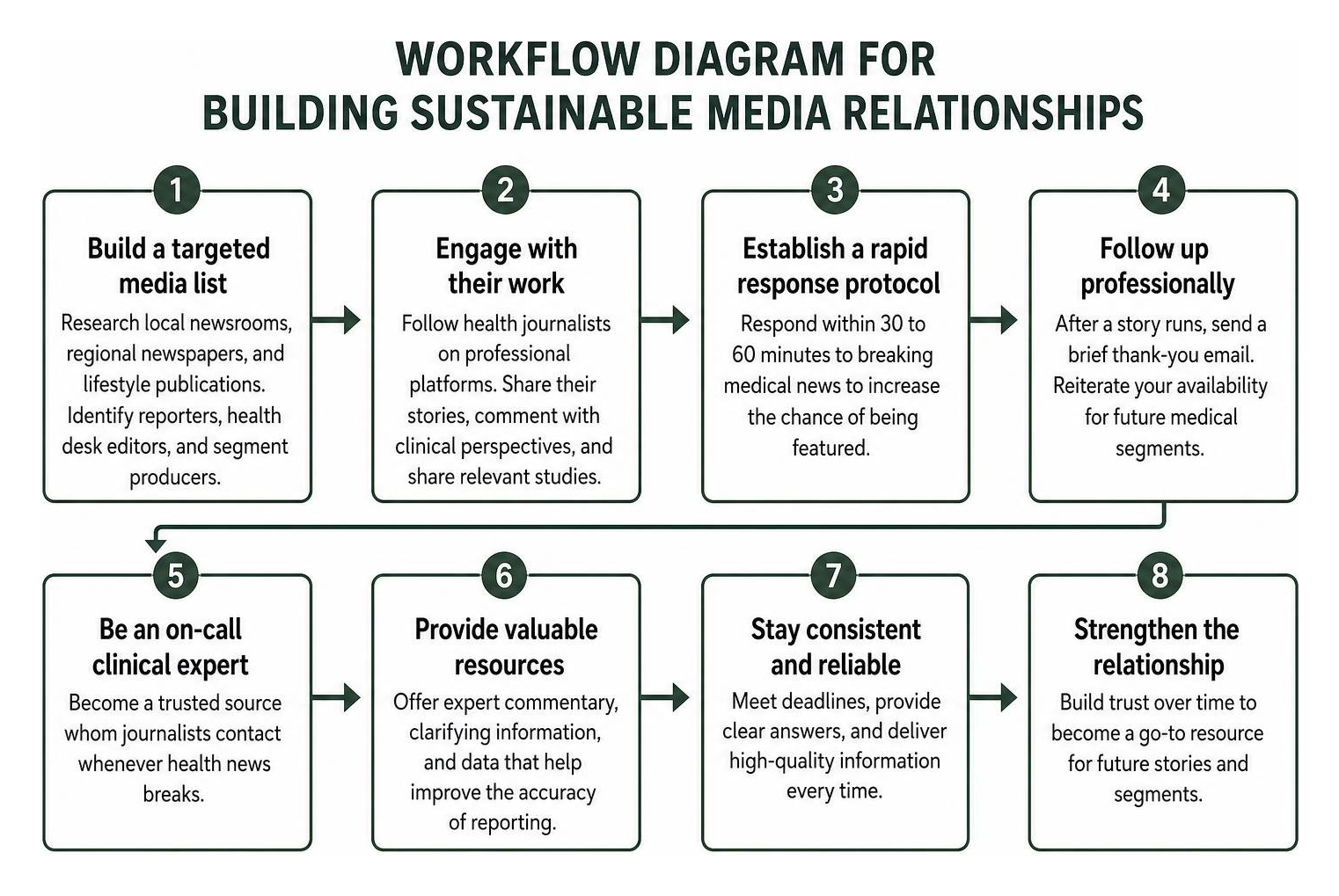
Securing media coverage is not a one-time transaction; it is an ongoing professional relationship. The goal is to transition from pitching stories to becoming an on-call clinical expert whom journalists contact whenever health news breaks.
How Does Your Digital Presence and Physical Office Enhance Media Credibility?
Before a producer books you for an on-camera interview or an editor quotes your practice, they will vet your digital footprint and clinic presence. Your digital assets and office environment must reflect the high level of professionalism portrayed in your pitch.
Aligning Digital Authority with Media Visibility
When prospective patients see your interview on the evening news, their immediate next step is searching for your name and clinic online. To convert this surge of interest into booked appointments:
- Optimize your local SEO for medical practices so your website and local map listings rank at the top of search results.
- Reinforce your public authority by collecting patient reviews ethically on Google, giving new patients confidence in your clinical standard of care.
Creating an Online Press Room and Media Kit
Create a dedicated "Press" or "Media" tab on your practice website. This page should provide:
- High-resolution physician headshots and clinical bios
- A list of clinical specialties, speaking topics, and past media appearances
- Direct media contact details (phone and dedicated email)
- Embedded links or badges showcasing previous news segments
Providing a Media-Ready Practice Environment
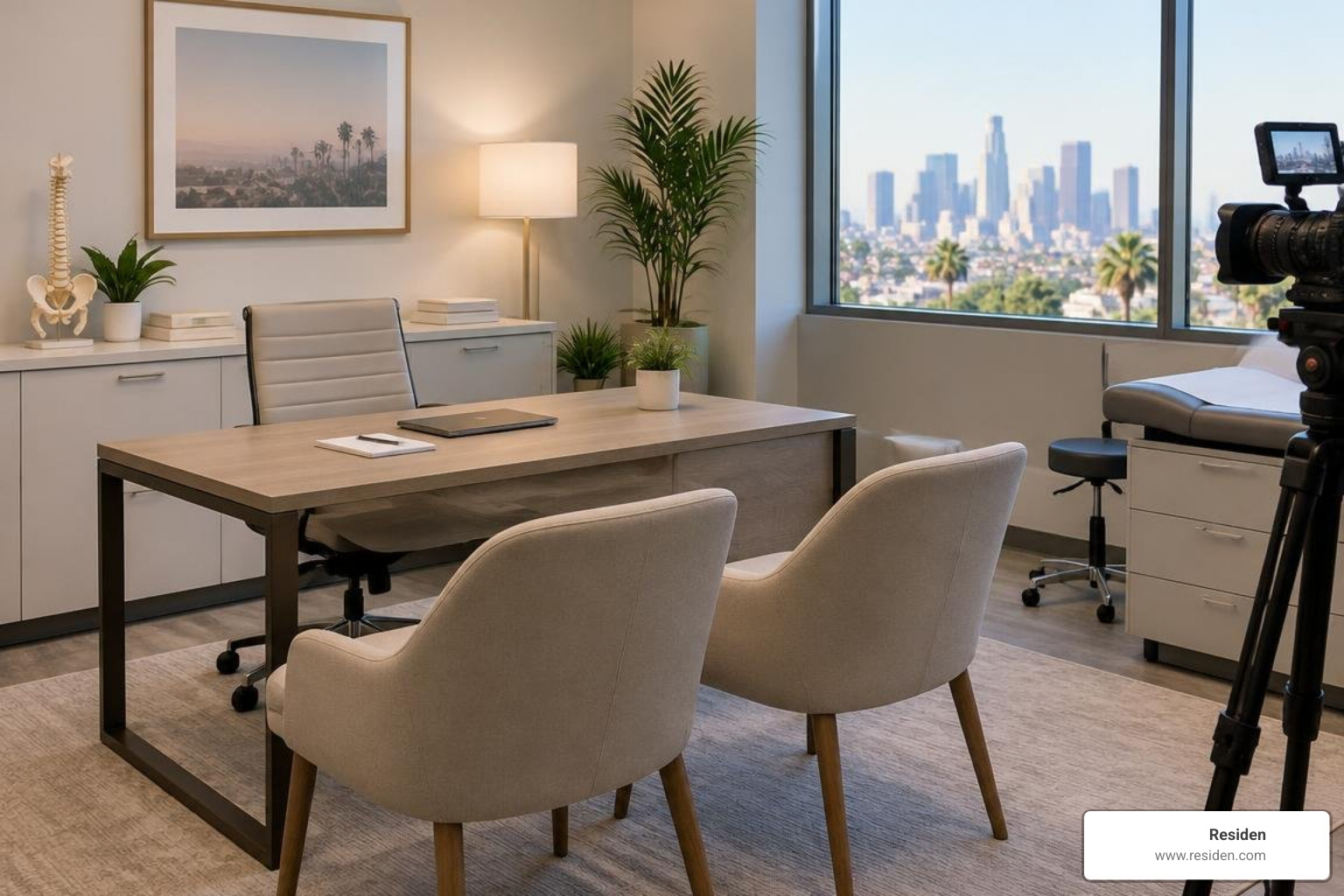
Filming TV segments or hosting photojournalists requires a quiet, aesthetically refined, and private clinical setting. If you are operating an independent practice, you do not need to sign a costly, multi-year commercial lease to access high-end medical facilities.
Medical coworking spaces provide a modern solution for independent physicians, specialists, and wellness providers. Residen offers turnkey medical office rentals in premier Los Angeles locations, specifically Brentwood (11620 Wilshire Blvd) and Beverly Hills (433 N Camden Dr).
These medical coworking spaces feature fully equipped exam rooms, procedure rooms, and consultation rooms available on flexible hourly, daily, or longer-term terms without long-term leases or membership fees. Powered by a no-admin technology platform that enables an efficient medical workspace, Residen allows practitioners to host film crews, conduct media interviews, and provide a high-end patient experience while keeping overhead low.
What Critical PR Pitfalls Should Physicians Avoid During Media Outreach?
Medical public relations requires balancing clinical precision with broad public communication. Avoid these common mistakes:
- Sounding like a commercial: Journalists reject pitches that focus solely on practice pricing, routine services, or self-serving accolades. Always tie your outreach to public benefit.
- Overcomplicating with medical jargon: Speaking to the media requires translating complex pathophysiology into plain, conversational language. Avoid acronyms and clinical terminology that confuse readers.
- Violating patient privacy: Never share case studies, photos, or clinical records without comprehensive, signed HIPAA media release forms.
- Mass emailing reporters: Sending generic pitches to hundreds of unvetted media inboxes damages your credibility. Always personalize your message to the reporter's specific beat.
- Neglecting media training: Before an on-camera segment, rehearse 2 to 3 core takeaway points. Speak in concise, 15-to-20-second soundbites that editors can easily incorporate into broadcast segments.
What Are the Most Common Questions About Getting Medical Media Coverage?
How long does it typically take to secure a feature in a local publication?
Timelines vary based on the medium. Daily newspapers and television stations often cover breaking news or seasonal angles within 24 to 72 hours. Print magazines, lifestyle publications, and health trade journals typically work on editorial calendars 2 to 3 months in advance. For standard feature pitches, anticipate 1 to 3 weeks of follow-up before securing a placement.
Do I need to hire an expensive PR agency to get featured in the news?
No. While large medical groups and hospital systems employ dedicated public relations agencies, independent physicians can achieve outstanding media coverage through direct, personalized outreach. Journalists often prefer hearing directly from the practicing clinician rather than a third-party publicist.
How do I track and measure the return on investment from media coverage?
Track the impact of your media features using three primary metrics:
- Website analytics: Monitor referral traffic and branded search spikes during and immediately after a segment airs or an article publishes.
- Intake surveys: Add a "How did you hear about us?" field on digital intake forms, specifically tracking responses for news coverage and media mentions.
- Content amplification: Share media appearances across your website, social channels, and patient email newsletters to reinforce clinical authority over the long term.
How Can You Turn Media Mentions into Sustained Patient Growth?
Securing local media coverage is one of the most effective ways for independent healthcare providers to build clinical authority, establish patient trust, and expand practice reach. By understanding what journalists need, crafting concise pitches, and maintaining a professional, media-ready practice environment, you can consistently position yourself as the leading medical voice in your community.
Whether you are launching an independent practice, adding a secondary location, or expanding your clinical reach across Southern California, building a sustainable private practice requires agility, reduced overhead, and strategic visibility.
Explore our medical coworking spaces in Brentwood and Beverly Hills, CA, and discover how turnkey, flexible medical office rentals can support your practice's growth. Schedule a tour with us to see how our fully equipped exam, procedure, and consultation rooms provide the ideal foundation for your independent practice.