
Why Is a Structured Physician Referral Network Vital for Independent Practice Growth?

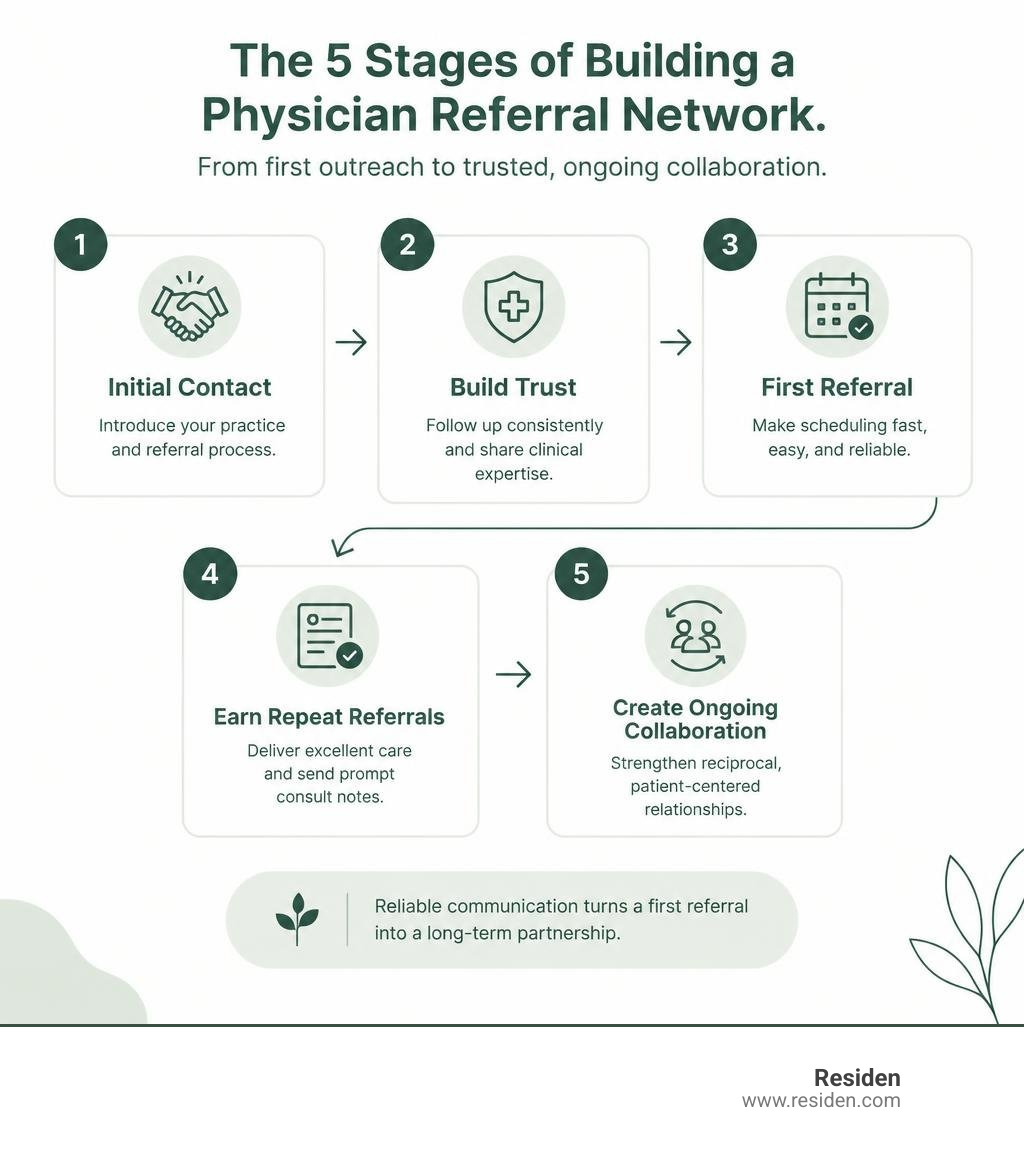
Building a physician referral network from scratch requires four coordinated steps: establishing dedicated intake capacity before outreach, segmenting local primary care and allied health targets, conducting structured multi-touch peer outreach, and closing the communication loop with fast consult notes. When executed consistently, this system creates the highest-converting, most sustainable patient acquisition channel in healthcare.
The primary advantage of clinical networking is the transfer of trust. When a trusted primary care doctor, hospitalist, or allied clinician tells a patient, "I want you to see this specific specialist," that patient arrives at your clinic pre-qualified, informed, and ready to comply with your diagnostic and treatment plans. This borrowed trust dramatically shortens the intake conversion cycle compared to consumer marketing, where prospective patients often require weeks of consideration before booking a consultation. Recognizing the importance of physician networking allows you to build compounding equity in your professional community rather than continually purchasing clicks on digital platforms.
Clinical referrals also follow the Pareto principle: approximately 80% of your incoming referred patient volume will stem from 20% of your referral partners. Cultivating deep, reliable relationships with a core group of high-performing referring colleagues yields higher volume and better-matched clinical cases than casting a wide, superficial net.
Building these relationships takes intentional effort. As we navigate healthcare in 2026, creating a predictable referral pipeline requires 3 to 6 months of steady outreach, operational reliability, and systematic follow-through.
Understanding the Shift Toward Outpatient and Collaborative Care
The modern healthcare landscape strongly favors independent, agile outpatient providers. Specialty physician costs constitute roughly 20 to 25 percent of total medical expenditures in the United States, compared to approximately 5 percent for primary care. Payers, health systems, and cost-conscious patients actively seek out high-value outpatient alternatives to expensive hospital systems.
The cost disparity between facility types is substantial:
- An endoscopy performed in an acute hospital facility costs roughly twice as much as an endoscopy performed in an ambulatory surgical facility.
- A CT scan performed in a hospital setting costs up to six times more than the identical scan in an outpatient freestanding imaging facility.
- An MRI scan in a hospital costs more than double that of an outpatient imaging clinic.
Independent practices operating in modern outpatient environments offer referring providers an essential solution: high-touch, specialized clinical care delivered at a fraction of hospital-associated facility fees. When starting an independent practice, positioning your clinic as an accessible, cost-effective, and highly communicative outpatient partner gives local primary care doctors a compelling clinical and financial reason to direct patients your way.
What Practice Infrastructure Must Be in Place Before You Reach Out to Doctors?

One of the most damaging mistakes a specialist can make is launching provider outreach before their clinic operations can handle incoming volume. If a primary care physician sends you their first patient and that patient is placed on hold for ten minutes, offered an appointment six weeks away, or never receives a booking confirmation, the referral relationship is severed before it begins.
Before distributing introductory packets or booking lunch-and-learns, your practice must establish a zero-friction intake foundation:
- Dedicated Provider Access Lines: Create a direct phone extension or dedicated mobile line for referring providers and their clinical coordinators to bypass the general patient scheduling queue.
- Standardized Appointment Holds: Protect two to four weekly appointment slots exclusively for urgent consults and newly referred patients so you can offer appointments within 48 to 72 hours.
- Structured Intake Protocols: Build a standard intake script ensuring administrative staff log the referring clinician's name, practice, and contact information during the initial phone call or digital submission.
Securing physical clinical space that scales with your growth without draining your initial working capital is equally vital. For independent practitioners establishing a footprint in Southern California, Residen provides premium medical coworking spaces in Los Angeles—specifically in Brentwood (11620 Wilshire Blvd) and Beverly Hills (433 N Camden Dr Ste 610).
Residen offers fully equipped exam rooms, consultation rooms, and procedure rooms available on flexible hourly, daily, or longer-term terms without burdensome long-term commercial leases or upfront capital outlays. Our technology platform enables a streamlined no-admin medical workspace, allowing clinicians to focus entirely on patient care and provider communication rather than facility overhead. Addressing operational capacity early helps independent providers avoid the operational bottlenecks common when avoiding new practice mistakes.
Operational Readiness Checklist for Frictionless Referrals
To prevent referral leakage—where a patient is referred but fails to schedule—your clinic must eliminate scheduling friction. Research indicates that when specialist appointments or diagnostic procedures are scheduled directly at the point of care, completion rates surge from 50% to over 85%.
| Operational Touchpoint | High-Friction Workflow (Fails) | Low-Friction Workflow (Wins) |
|---|---|---|
| Initial Referral Intake | Mandates multi-page manual faxes with redundant demographic forms. | Offers a 1-page secure web form, direct digital fax, or direct phone intake. |
| Scheduling Speed | Patient is placed on a callback list and contacted 3–5 days later. | Patient is called within 2 business hours; referring office can self-book via portal. |
| Appointment Availability | First available slot is 4–8 weeks out. | Protected referral slots guarantee an evaluation within 48–72 hours. |
| Provider Feedback | No post-consult documentation is sent back to the referring clinician. | Comprehensive 1-page consult note transmitted within 24–48 hours of visit. |
Regulatory Compliance and Ethical Safeguards
Physician relationships must operate strictly within federal and state regulatory boundaries. Any referral network strategy must comply with the federal Stark Law, the Anti-Kickback Statute (AKS), and state-level healthcare compliance regulations:
- No Financial Inducements: Never offer, solicit, or accept financial compensation, gifts, gift cards, fee-splitting arrangements, or lavish hospitality in exchange for patient referrals. Referrals must be based solely on medical appropriateness, clinical quality, and patient choice.
- Non-Compensatory Clinical Exchanges: Keep interactions focused on peer-to-peer clinical education, shared treatment protocols, and coordinated care pathways.
- Documented Medical Necessity: Ensure every referred case has clear, documented clinical indications in the medical record.
- HIPAA-Compliant Information Sharing: Transmit patient records, consult notes, and diagnostic summaries using encrypted, HIPAA-compliant electronic channels.
For additional professional guidelines, review A Guide to Maximizing Physician Referral Strategies published by the American Medical Association.
How Do You Identify, Prioritize, and Approach Potential Referral Partners?

When starting with an empty calendar, building your target list requires a focused approach. Rather than contacting every physician in your county, identify providers within a 15- to 20-minute drive who routinely encounter conditions you treat but do not manage them long-term.
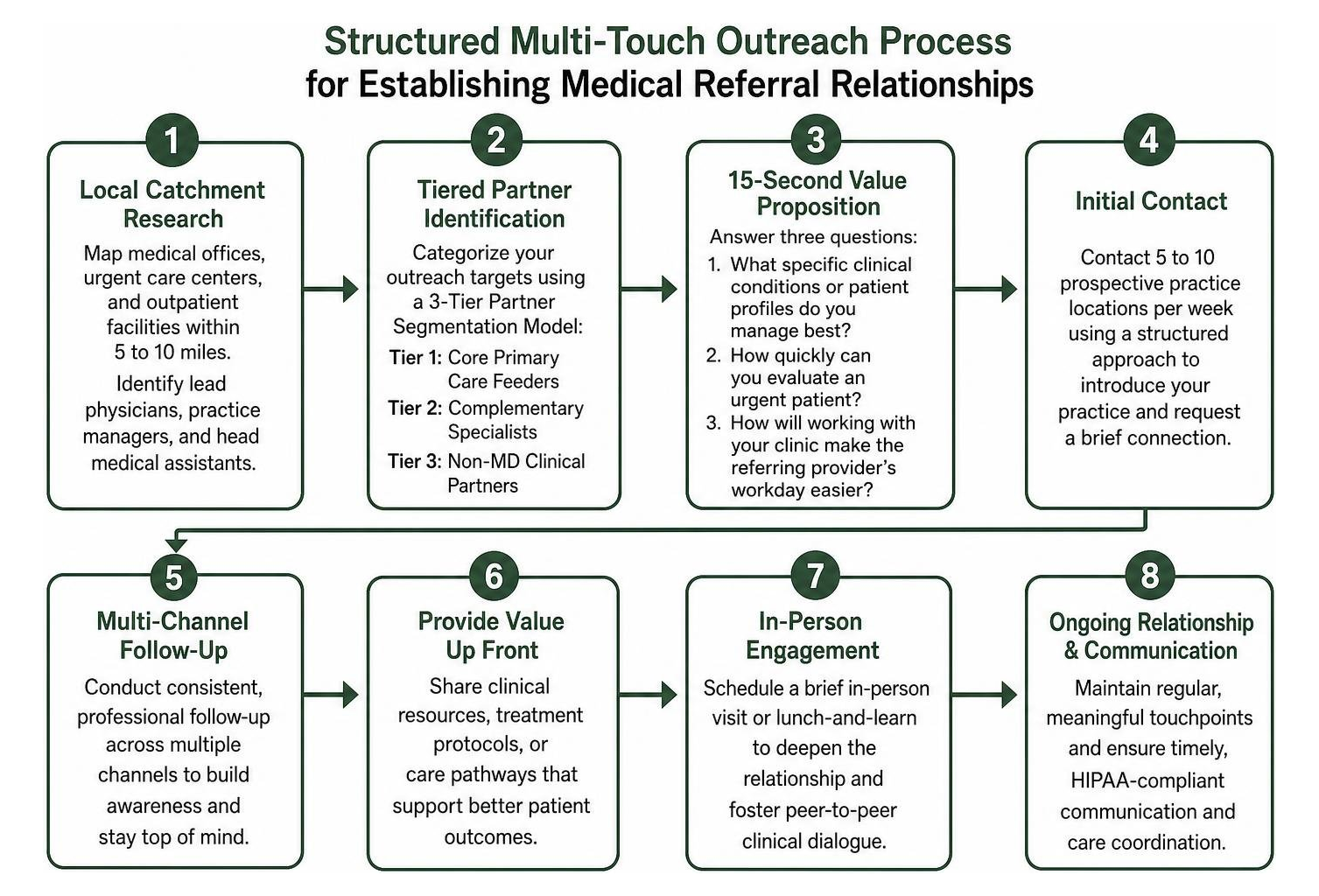
Categorize your outreach targets using a 3-Tier Partner Segmentation Model:
- Tier 1: Core Primary Care Feeders & High-Volume Groups: Family medicine clinics, internal medicine groups, pediatricians (for pediatric specialties), and local urgent care centers within your immediate catchment area.
- Tier 2: Complementary Specialists: Colleagues whose specialties overlap with yours (e.g., orthopedic surgeons networking with rheumatologists and physiatrists; dermatologists networking with plastic surgeons and allergists).
- Tier 3: Non-MD Clinical Partners & Community Health Centers: Physical therapists, psychotherapists, podiatrists, occupational health clinics, and nurse-led community practices.
When introducing your practice, distill your clinical focus into a 15-second value proposition that answers three questions:
- What specific clinical conditions or patient profiles do you manage best?
- How quickly can you evaluate an urgent patient?
- How will working with your clinic make the referring provider's workday easier?
Consistently contacting 5 to 10 prospective practice locations per week using a structured approach is one of the most reliable ways of securing your first 100 patients.
Multi-Touch Outreach Sequence That Builds Professional Rapport
Establishing trust requires consistent, professional touchpoints across multiple channels:
- Step 1: Local Catchment Research: Map medical offices, urgent care centers, and outpatient facilities within 5 to 10 miles. Identify lead physicians, practice managers, and head medical assistants.
- Step 2: Educational Introduction Letter: Send a clean, professional introductory letter along with a concise one-page clinical capability sheet highlighting your sub-specialty services, insurance coverage details, clinic location, and direct provider line.
- Step 3: In-Person Practice Visit: Stop by the target office during mid-morning or mid-afternoon lulls. Introduce yourself to the practice manager and clinical staff, provide physical referral pads or cards, and offer to schedule an informal 15-minute lunch-and-learn or morning coffee case presentation.
- Step 4: Peer-to-Peer Clinical Alignment: When meeting with the physician, discuss specific diagnostic criteria, unique treatment modalities you offer, and your communication turnaround standards.
Expanding Beyond MDs to Non-Physician Clinicians
Independent medical specialists often overlook allied health professionals, who are among the most dedicated referral partners in modern healthcare. Physical therapists, clinical psychologists, chiropractors, licensed counselors, and nurse practitioners routinely evaluate patients who require medical workups, interventional procedures, or prescription management.
Establish bi-directional referral agreements with these clinicians. For example, an interventional pain specialist or physiatrist can partner with independent physical therapy clinics to provide diagnostic imaging and injection therapy, while referring post-procedure patients back to the therapist for structured rehabilitation. This multidisciplinary collaboration delivers comprehensive patient care while sustaining consistent patient volume across both practices.
How Do You Deliver Exceptional Care and Feedback to Keep Referrals Flowing?
Securing a referral is only half the battle; retaining that referral source depends entirely on your performance with the first 10 to 20 patients. If referring physicians do not receive timely feedback or if their patients report poor bedside manner and disorganization, future referrals will evaporate.
In the healthcare sector, closing the communication loop remains an industry-wide vulnerability. Once a referral is initiated, referring physicians receive documentation about that specialist visit less than 40 percent of the time.
By simply sending a structured, concise, one-page consultation summary back to the referring doctor within 24 to 48 hours of every patient visit, your practice immediately stands out in the top tier of local specialists. This level of reliability is central to what successful independent doctors do differently to build thriving private practices.
The Four C’s Framework for Referring Provider Customer Service
To build a professional reputation that drives consistent repeat referrals, organize your clinical operations around the Four C’s:
- Communication: Transmit clear, prompt consultation summaries outlining your diagnostic impressions, diagnostic test results, prescribed interventions, and recommended follow-up schedules.
- Credibility: Adhere to evidence-based clinical protocols, board-certified care standards, and clear scope-of-practice boundaries. Never attempt to assume primary care management of a referred patient; address the specialized consult and return the patient to the referring clinician.
- Capacity: Maintain protected scheduling inventory so that referred patients are seen promptly without multi-week delays. If a referring colleague calls with an acute case, accommodate that patient within 24 to 48 hours.
- Consistency: Ensure every referred patient experiences an identical standard of care, from warm front-desk interactions to comfortable clinical environments and transparent billing practices.
How Can You Track Referral Metrics and Scale Your Network Long-Term?
A referral strategy cannot rely on intuition alone. To optimize your outreach and identify your most valuable professional relationships, implement a clean tracking protocol within your Electronic Health Record (EHR) or Practice Management (PM) software.
Configure your intake workflow so that capturing the referral source is a mandatory field for every new registration. Document:
- Referring Provider Name and NPI
- Referring Practice Name and Specialty
- Date Referral Was Initiated
- Date Patient Completed Consultation
- Clinical Indication / ICD-10 Category
Key Metrics to Review Monthly
- Total Referral Volume by Source: Track which individual providers and clinics generate incoming patient inquiries.
- Referral-to-Appointment Conversion Rate: Measure the percentage of referred patients who successfully schedule and attend their visit (target: >80%).
- Consult Note Turnaround Time: Audit the time elapsed between patient discharge and the transmission of the consult note back to the referring clinician (target: <48 hours).
- Referral Leakage Rate: Identify referred patients who did not schedule within 5 business days, triggering proactive administrative follow-up.
Maintaining Relationships and Scaling Physical Capacity
As your referral network matures, maintain regular contact through quarterly clinical updates, participation in local medical societies, and concise thank-you notes acknowledging patient handoffs.
As patient volume scales from your referral network, your physical facility needs will evolve. Rather than committing to costly commercial real estate leases, using a flexible medical office rental model allows your practice to expand capacity on demand.
Residen provides turnkey medical coworking spaces with fully equipped exam, procedure, and consultation rooms in premier Los Angeles medical submarkets like Brentwood and Beverly Hills. Clinicians can add hourly, daily, or multi-day room blocks as their referral numbers expand, ensuring room capacity matches patient demand without taking on fixed overhead risk.
Frequently Asked Questions About Building a Physician Referral Network
How long does it typically take to build a consistent physician referral network?
Building a predictable, high-volume referral network typically requires 3 to 6 months of steady outreach and consistent clinical follow-through. Initial referrals may begin arriving within the first 30 to 60 days following introductory meetings, but compounding momentum occurs once referring physicians see positive clinical outcomes and receive rapid consultation summaries from their first 10 to 20 referred patients.
What should you do if a referring provider stops sending patients?
When referral volume from a previously active source drops, audit your internal operations first:
- Review your EHR to ensure all consult notes for recent patients were transmitted promptly.
- Confirm with your front desk that no referred patients experienced scheduling delays or billing discrepancies.
- Reach out directly to the referring physician for a brief, professional check-in to ask how your practice can better support their clinical workflows. Addressing minor operational miscommunications directly often restores the relationship immediately.
Can independent medical specialists legally incentivize referral sources?
No. Federal laws (including the Stark Law and the Anti-Kickback Statute) as well as state healthcare regulations prohibit offering, paying, soliciting, or receiving any financial remuneration, gifts, or kickbacks in exchange for patient referrals. Value must be delivered through non-compensatory clinical channels: rapid appointment access, superior clinical outcomes, comprehensive consultation feedback, educational case reviews, and reciprocal, medically appropriate cross-referrals.
What Are the Next Steps to Launch Your Referral Strategy?
Transitioning from an empty schedule to a thriving, referral-driven medical practice requires shifting from passive hope to an active, structured clinical partnership system. By preparing your operational infrastructure, systematically identifying complementary colleagues, communicating back promptly, and tracking your metrics, you can build a self-sustaining referral engine.
If you are expanding your practice in Southern California, Residen supports your growth with fully equipped, turnkey medical coworking spaces in Brentwood and Beverly Hills. Our hourly, daily, and flexible room rental models eliminate expensive commercial leases, high overhead, and facility management burdens—allowing you to focus entirely on patient care and building strong professional relationships.
Ready to grow your independent practice? Explore our medical coworking spaces, learn how Residen can support your practice, or schedule a tour of our Brentwood and Beverly Hills locations today.
References
"Building and Maintaining a Referral Base.." Journal of oncology practice, 2007. PMCID PMC2793808.