
Cash Pay vs Insurance: A Comprehensive Guide to Costs
Why the Cash Pay vs Insurance Decision Could Save You Thousands

When it comes to cash pay vs insurance, the right choice depends on the type of care, your deductible status, and the specific provider — and often, paying cash is significantly cheaper.
Quick answer:
| Situation | Best Option |
|---|---|
| Routine labs, imaging, or outpatient procedures | Cash pay |
| Major surgery, hospitalization, or emergency care | Insurance |
| High-deductible plan, deductible not yet met | Cash pay for predictable services |
| Free preventive care (vaccines, wellness visits) | Insurance (covered at $0) |
| Prescriptions | Compare both — GoodRx often beats copays |
| Catastrophic or chronic conditions | Insurance |
Most people assume their insurance card always gets them the best price. It doesn't.
An MRI billed through insurance at a hospital can run $1,500–$3,000. That same scan at a direct-pay imaging center? Often $300–$600. Routine lab work through insurance can cost hundreds once your deductible kicks in — while cash-pay pricing is frequently 50–80% less.
The reason is simple: when you pay cash, providers skip the expensive, time-consuming process of coding claims, fighting denials, and waiting 30–90 days for reimbursement. They pass those savings on to you.
And with nearly two-thirds of personal bankruptcies in the U.S. tied to medical debt, understanding how to strategically use both cash pay and insurance isn't just smart — it's essential.
I'm Dr. Jessica Wu, a Harvard-trained physician with over 20 years of private practice experience, and navigating the real-world economics of cash pay vs insurance has been central to how I've structured care for my patients. In this guide, I'll break down exactly when each option makes financial sense — and how to use both strategically to protect your health and your wallet.
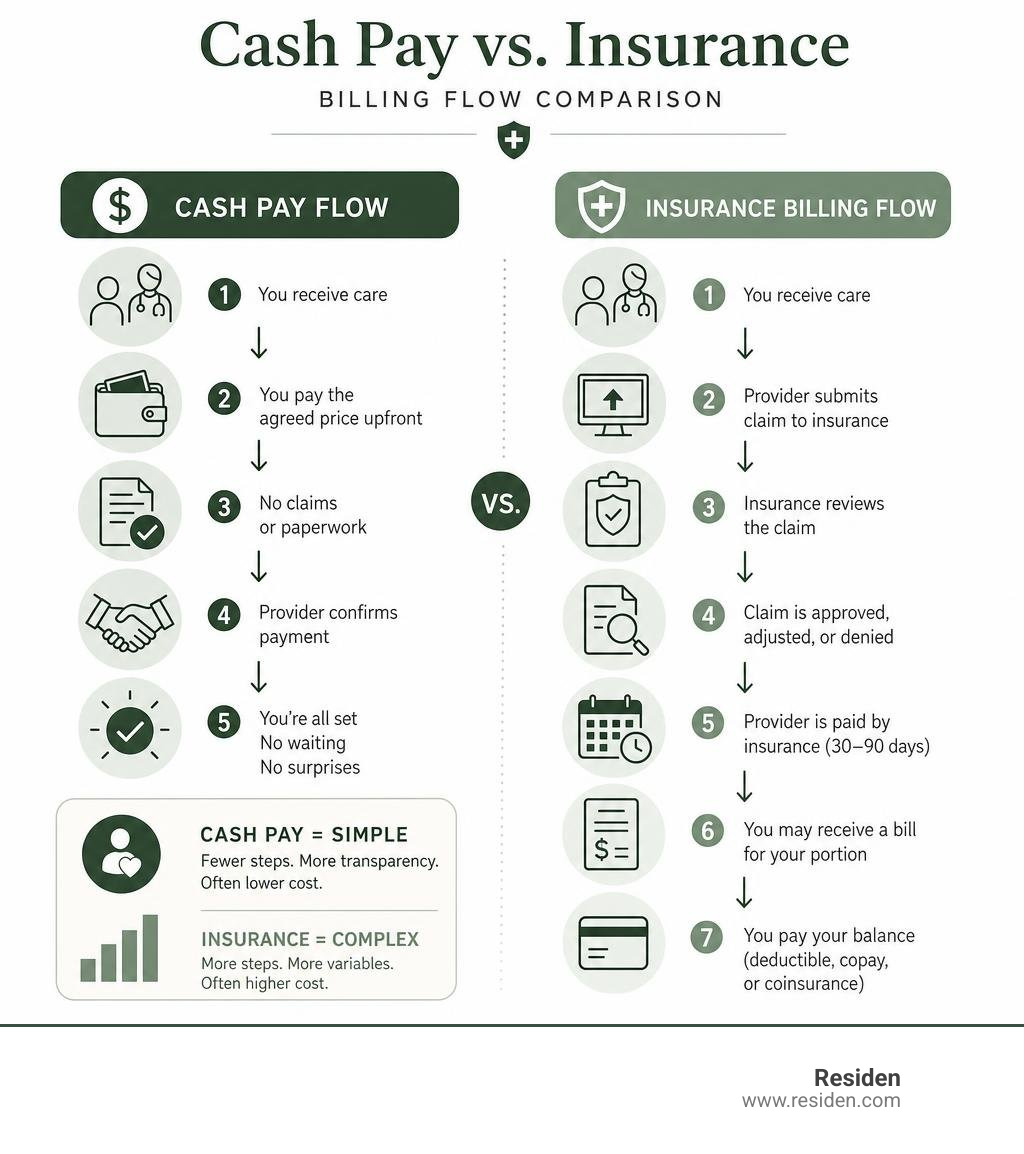
Cash Pay vs Insurance: Understanding the Core Differences

To make smart choices about your health and finances, it helps to understand what happens behind the scenes when you choose direct cash pay versus traditional insurance billing.
At its core, cash pay (often called self-pay) means you pay the healthcare provider directly for services rendered without involving an insurance company. There are no claims to file, no prior authorizations to wait for, and no surprise bills months down the road. You get transparent, upfront pricing.
Insurance billing, on the other hand, relies on a complex network of contracts, negotiated rates, copays, deductibles, and co-insurance. While this model is designed to protect you from catastrophic financial ruin, it often obscures the actual cost of care until long after you leave the clinic.
When comparing these two paths, we can look at how they stack up across several key operational areas:
| Feature | Cash Pay Model | Insurance Billing Model |
|---|---|---|
| Pricing Transparency | Upfront, guaranteed flat rates or bundled pricing | Complex, variable rates based on individual policy contracts |
| Administrative Friction | None; no prior authorizations or insurance claims | High; requires coding, pre-approvals, and utilization reviews |
| Payment Timing | Paid at the time of service | Reimbursed 30 to 90 days later (with potential patient balance billing) |
| Provider Autonomy | High; care is dictated solely by doctor and patient | Moderate; insurance guidelines often restrict covered treatments |
| Out-of-Pocket Risks | Limited to the agreed cash price | Variable; high deductibles can lead to unexpected out-of-pocket bills |
Choosing cash pay doesn't mean you are opting out of the healthcare system; rather, it represents a conscious choice to simplify the transaction. For a detailed breakdown of how choosing the cash option can yield substantial savings on common procedures, check out this guide on Self-Pay vs Insurance: When Paying Cash Saves You More.
The Financial Mechanics of Cash Pay vs Insurance
The key to navigating the financial mechanics of cash pay vs insurance lies in understanding how your money moves. When you use traditional health insurance, you are bound by your plan's deductible — the amount you must pay out of pocket before your coverage kicks in. For a single individual, the average deductible now hovers around $1,886, meaning you are essentially a cash-pay patient for your routine care anyway.
If you have not met your annual deductible, paying an insurance-negotiated rate can actually cost you more than paying a direct cash price. For example, if your insurance has a negotiated rate of $800 for a diagnostic service, and you haven't met your deductible, you will pay the full $800. However, if the clinic offers a self-pay cash rate of $350 for that same service, you could save $450 by bypassing your insurance card.
The catch? When you choose cash pay, those payments typically do not count toward your annual insurance deductible or out-of-pocket maximum because no claim is submitted to the insurer. For physicians trying to understand how these dynamics play out on the business side of the desk, our resource on What New Physicians Need to Know About Billing Insurance offers a deep dive into the operational realities of insurance contracts.
Direct Primary Care and the 2026 Regulatory Landscape
A rapidly growing subset of the cash-pay movement is Direct Primary Care (DPC). Under a DPC model, patients pay a flat monthly membership fee — typically ranging from $50 to $150 — directly to their primary care physician. In exchange, they receive unlimited access to routine office visits, virtual care, and deeply discounted laboratory and imaging services, entirely bypassing the insurance middleman.
This model has been supercharged by the regulatory environment of 2026. Specifically, the federal One Big Beautiful Bill Act (OBBBA) has officially cleared the way for patients to use their Health Savings Account (HSA) and Flexible Spending Account (FSA) funds tax-free to cover DPC membership fees. Under these rules, individuals can use up to $150 per month (and families up to $300 per month) from their HSAs to fund their direct primary care.
This regulatory milestone makes pairing a DPC membership with a low-cost, high-deductible health plan (HDHP) one of the most financially savvy healthcare strategies available today. To understand how these models fit into the broader shift toward bespoke, patient-centric medicine, read our analysis on The Rise of Personalized Healthcare.
Why Cash Prices Are Often Lower Than Insurance Rates
It seems counterintuitive at first: why would a doctor charge an uninsured or cash-paying patient less than what they would bill a multi-billion-dollar insurance corporation?
The answer lies in the "billing tax" — the massive administrative overhead required to process insurance claims. To accept insurance, a medical practice must employ dedicated billing staff or outsource to a revenue cycle management company, which typically charges 4% to 9% of the practice's total monthly collections. Providers must spend hours coding, filing claims, tracking down delayed payments, and appealing denials.
Furthermore, outpatient claim denials have skyrocketed, reaching nearly 19% for in-network claims and a staggering 37% for out-of-network claims. When a claim is denied, the practice must either absorb the loss or spend more administrative time fighting the decision.
By offering a direct self-pay rate, providers eliminate this administrative friction entirely. They receive guaranteed, immediate payment at the time of service, which dramatically stabilizes their cash flow. Consequently, they are highly motivated to pass these operational savings directly to the patient in the form of prompt-payment discounts, which typically range from 20% to 50% off standard billing rates.
The Administrative Burden of Insurance Billing
The administrative burden of accepting insurance is one of the leading causes of professional burnout among independent healthcare providers. Managing prior authorizations — where an insurance bureaucrat must approve a treatment before it can be administered — can delay patient care by days or weeks and costs practices an estimated $99,000 per year in lost time and resources per physician.
Additionally, the credentialing process required to join an insurance network can take anywhere from 90 to 180 days, during which a new physician cannot bill for seeing patients in that network. For independent clinics, managing these complex revenue cycles requires a massive amount of energy that could otherwise be spent on patient care. Many modern practices are actively looking for ways to streamline their operations and bypass these headaches. If you are a provider looking to simplify your business model, consider these Simple Ways to Run the Lean Medical Practice.
Where Patients Save the Most Paying Cash
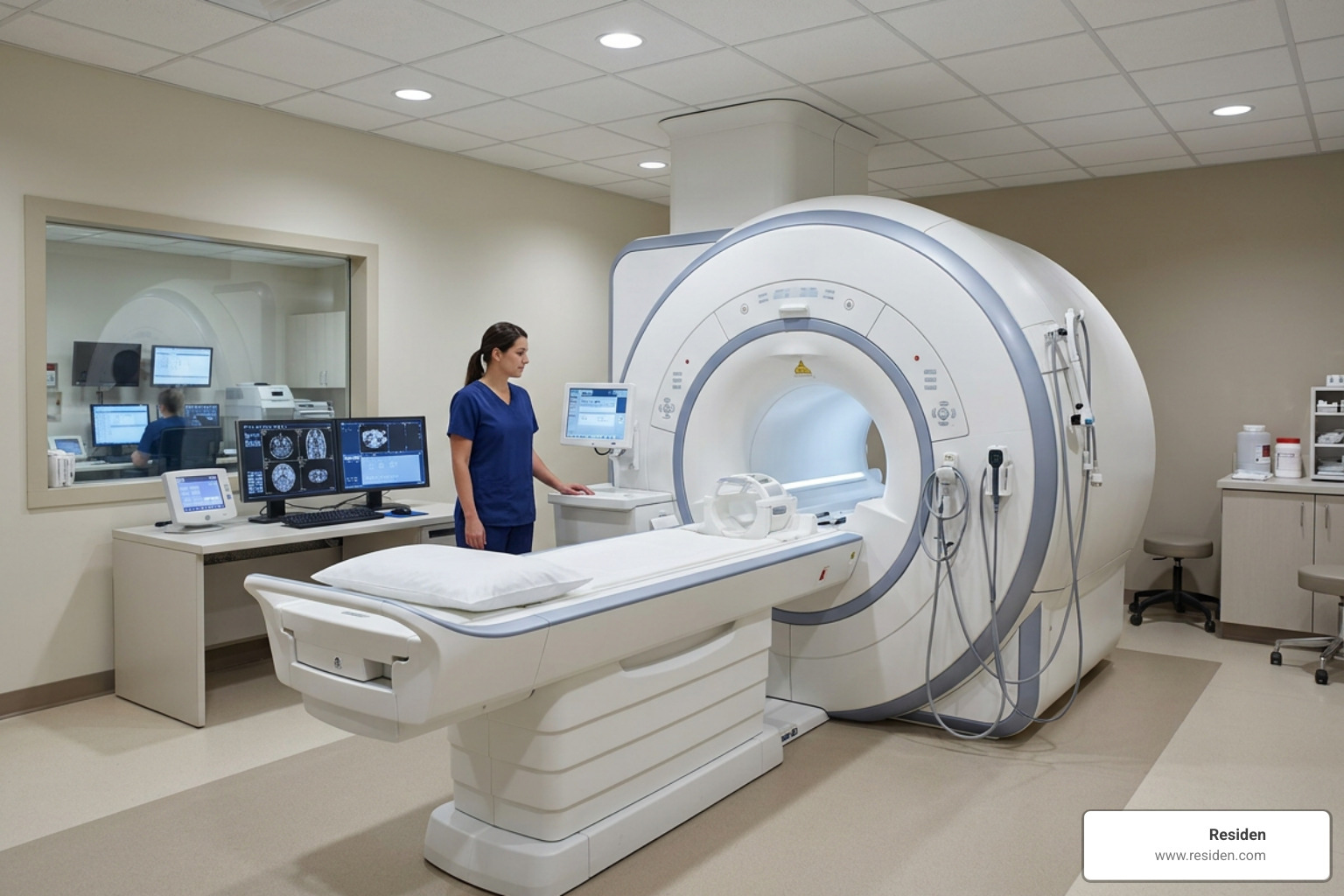
While insurance is indispensable for major emergencies, certain "shoppable" medical services offer dramatic savings when you choose to pay cash. Knowing which services have the highest price markups through insurance can help you decide when to leave your insurance card in your wallet.
- Diagnostic Imaging (MRIs, CT Scans, X-Rays): Hospitals frequently charge massive facility fees for imaging. An MRI billed through insurance at a hospital can easily cost between $1,500 and $3,000. If you call an independent, direct-pay imaging center, the exact same scan often costs between $300 and $600.
- Routine Laboratory Work: Basic blood panels, lipid screens, and metabolic tests that might cost $200 to $400 when processed through your insurance deductible can frequently be purchased directly through cash-pay lab services for $30 to $60 — a savings of up to 80%.
- Outpatient Procedures: Minor, scheduled surgeries and diagnostic procedures are highly competitive. For instance, a routine screening colonoscopy (CPT 45378) that might carry an insurance-negotiated rate of $2,470 can often be secured at a direct-pay outpatient surgical center for an all-inclusive cash price of around $541.
- Prescription Medications: Insurance copays for generic medications are sometimes higher than the direct cash price of the drug. Using discount tools like GoodRx or direct-to-consumer online pharmacies can often secure your prescriptions for a fraction of your insurance copay.
Dental and Vision Care: Cash Pay vs Insurance
Dental and vision benefits operate on a completely different financial logic than major medical insurance. Standard dental insurance plans typically carry low annual benefit caps — usually between $1,000 and $2,000 per year. If you require a major procedure like a crown, root canal, or dental implant, you will quickly exhaust your insurance benefit and be responsible for the remaining balance out of pocket.
Many independent dentists offer in-house dental membership plans or direct cash discounts for routine cleanings and exams that are highly competitive with insurance premiums.
Vision insurance is similarly limited. A typical vision policy costs between $100 and $200 annually in premiums. If your only eye care need is a basic annual exam, which typically costs $75 to $150 out of pocket, paying cash is mathematically cheaper than paying monthly premiums for a dedicated vision plan.
For specialty services like LASIK or high-end custom contact lenses, which are almost universally excluded from standard vision insurance, cash pay is the standard and often comes with bundled promotional pricing.
Navigating High-Deductible Health Plans and the Hybrid Strategy
If you have a High-Deductible Health Plan (HDHP), the most effective way to manage your healthcare costs is to adopt a hybrid strategy. This model combines the best of both worlds: you use traditional insurance to cover catastrophic events and free preventive services, while strategically paying cash for routine, predictable care.
Under the Affordable Care Act (ACA), almost all insurance plans are legally required to cover routine preventive care — such as annual physicals, immunizations, and mammograms — at absolutely zero cost to you. You should always use your insurance for these services.
However, for non-preventive services like specialist visits, physical therapy, diagnostic imaging, and lab work, you will be paying out of pocket until your deductible is met. This is where you should shop around for cash rates.
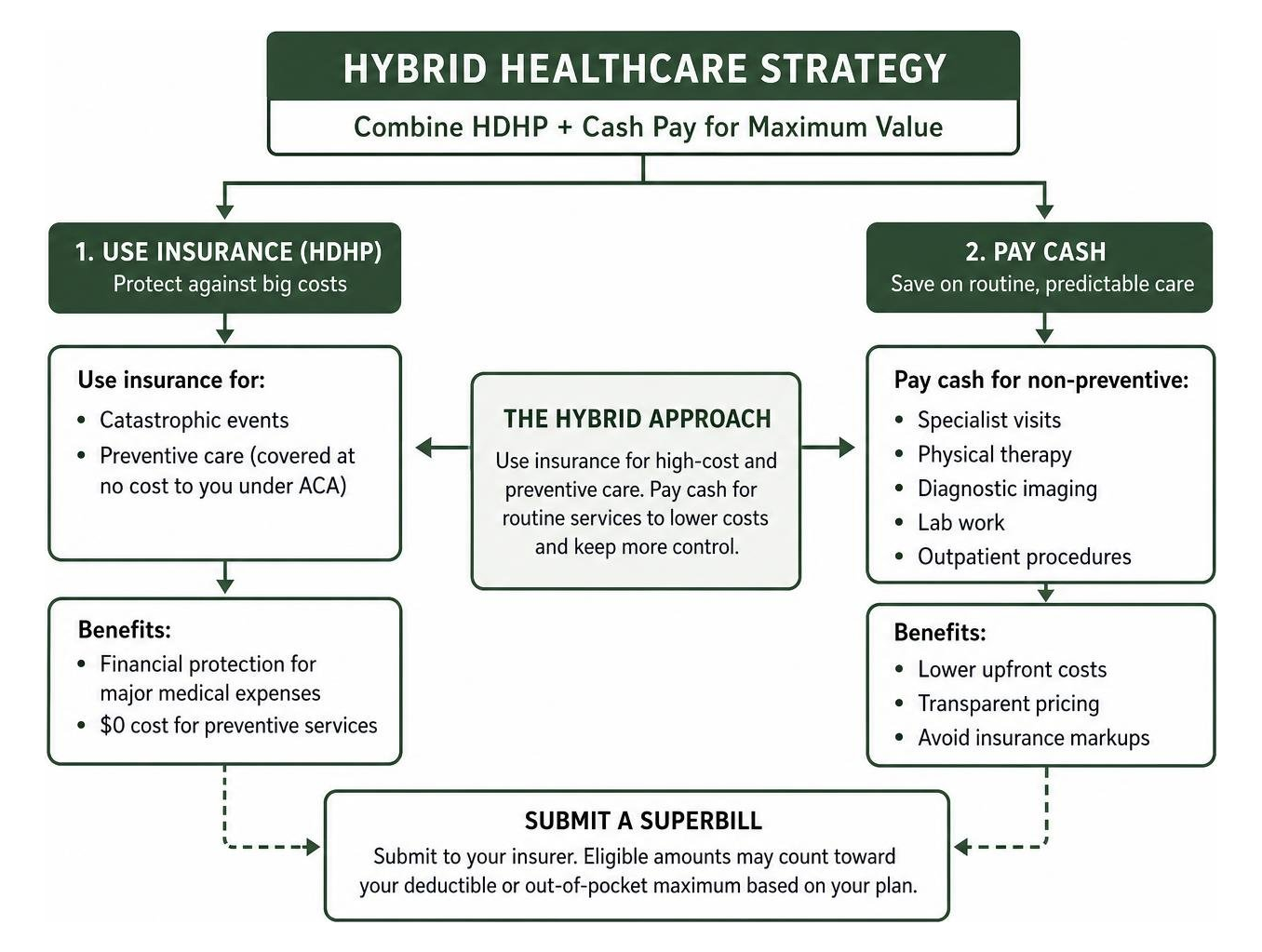
If you do choose to pay cash for a service, you can ask the provider for a superbill. This is an itemized receipt marked with standard medical diagnosis (ICD-10) and procedure (CPT) codes. You can submit this superbill directly to your insurance company. Depending on your plan's out-of-network benefits, your insurer may apply some or all of the cash amount you paid toward your annual deductible or out-of-pocket maximum.
How to Find and Compare Cash Prices
Thanks to federal regulations, patients have more leverage than ever to find and compare cash prices. Under the Hospital Price Transparency Rule, hospitals are legally required to post a user-friendly list of standard charges for at least 300 "shoppable" services online.
Furthermore, the No Surprises Act mandates that if you are uninsured or plan to pay cash (self-pay) for a scheduled service, providers must give you a written Good Faith Estimate (GFE) of your expected costs at least 1 to 3 business days before your appointment. This estimate must include the cost of the primary service as well as any associated facility fees, equipment fees, or anesthesia charges.
To get the most accurate pricing, we recommend calling independent clinics directly. When you call, use this simple script:
"I am a self-pay patient and would like to request a Good Faith Estimate for [Name of Procedure/CPT Code]. Can you please provide your lowest cash-pay or prompt-pay rate, and confirm if that price includes all associated facility and provider fees?"
By calling independent ambulatory surgery centers (ASCs) and private practices rather than major hospital systems, you will almost always find significantly lower cash rates.
Frequently Asked Questions About Healthcare Costs
Is cash-pay healthcare legal?
Yes, paying cash for healthcare is completely legal. Under the federal No Surprises Act, patients have a legally protected right to choose the self-pay option even if they have active health insurance. Providers are legally required to furnish a written Good Faith Estimate outlining the expected costs before any scheduled cash-pay service is rendered.
Can I use my HSA or FSA to pay for cash-pay visits?
Yes. Health Savings Account (HSA) and Flexible Spending Account (FSA) funds can be used tax-free to pay for any qualified medical expenses, which includes cash-pay doctor visits, imaging, labs, and prescriptions. Additionally, under the 2026 OBBBA regulations, you can use your HSA to pay for monthly Direct Primary Care memberships up to $150/month for individuals and $300/month for families.
Does paying cash count toward my insurance deductible?
Generally, direct cash payments do not automatically count toward your insurance deductible because the provider does not submit a claim to your insurer. However, you can request a "superbill" from your provider and submit it to your insurance company yourself. If your plan has out-of-network benefits, they may credit the amount toward your deductible or reimburse you directly.
Conclusion
The debate between cash pay vs insurance isn't about choosing one over the other; it's about learning how to use both strategically to get the highest quality care at the lowest possible price. By utilizing insurance for catastrophic protection and free preventive care, while paying cash for routine imaging, labs, and primary care, you can take control of your healthcare spending and avoid the administrative headaches of the traditional system.
This shift toward flexible, direct-pay medicine is also transforming how doctors practice. At Residen, we support this healthcare evolution by providing turnkey, shared medical office rentals in Los Angeles, Beverly Hills (located at 433 N Camden Dr Suite 610), and Brentwood.
Our fully equipped, patient-friendly exam, procedure, and consultation rooms are available for flexible hourly or daily bookings with no long-term leases, setup costs, or administrative fees. This allows independent physicians to easily launch or transition to a low-overhead, cash-pay, or hybrid practice model, giving them the freedom to focus entirely on what matters most: delivering exceptional, personalized patient care. Learn more about Residen and how we are helping build the future of independent medicine.