
Luxury Patient Experience Survival Guide
Why Building a Luxury Patient Experience Matters
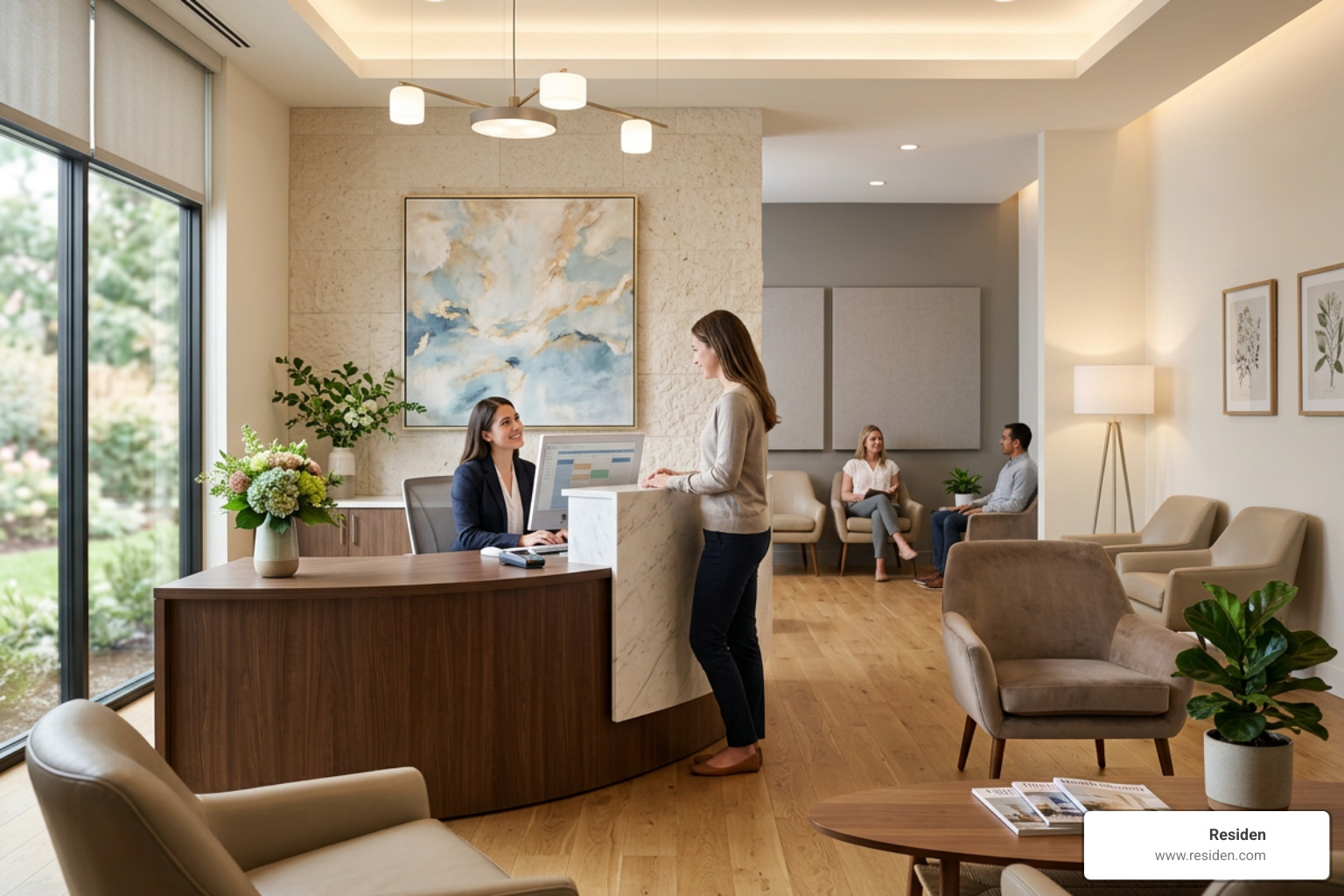
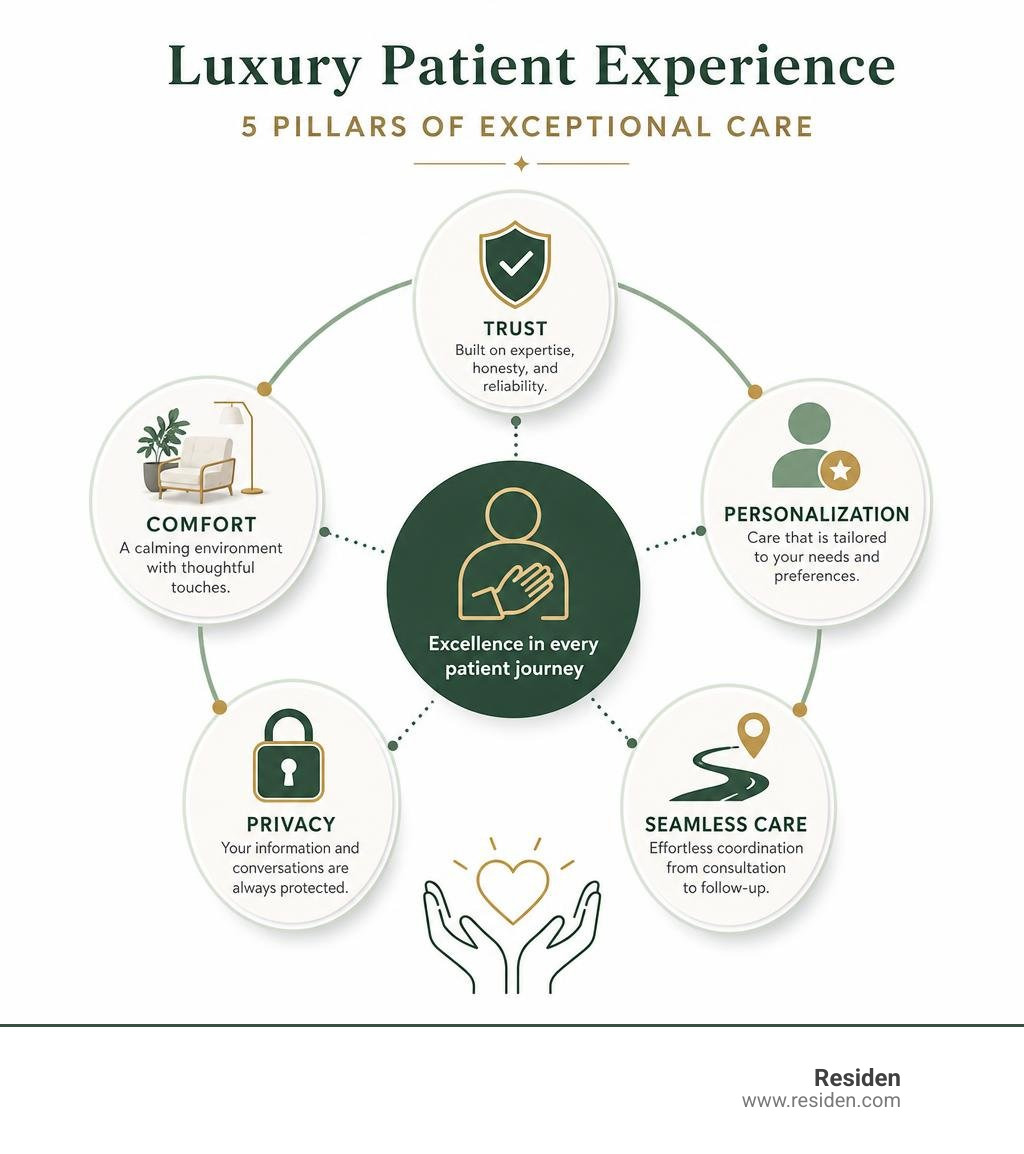
Building a Luxury Patient Experience means pairing excellent clinical care with an effortless, personal, and calming service journey. It is not about excess. It is about making patients feel heard, safe, respected, and never rushed - from their first online search through follow-up after care.
A premium experience usually includes:
- Personal attention: Clear communication, active listening, and care plans built around the individual.
- Low-friction access: Simple booking, digital forms, prompt answers, and discreet payment.
- Comfort and privacy: A serene, polished setting with thoughtful amenities and private conversations.
- Consistent hospitality: Every team member delivers the same warm, prepared, professional welcome.
- Trustworthy technology: AI and automation remove admin delays, while clinicians remain accountable for care decisions.
This matters because satisfaction is only the baseline. Patients may be satisfied when an appointment meets expectations. A luxury experience earns loyalty by anticipating needs and creating confidence at every touchpoint. Research also shows that patients who feel their provider listens are far more likely to trust them.
For an independent clinician, this does not require a costly long-term lease or an oversized build-out. A flexible medical office or medical coworking space can provide a polished setting for consults, exams, and procedures while keeping overhead manageable. Residen offers premium, fully equipped healthcare workspace in Brentwood, California, and Beverly Hills, California, with rooms available hourly, daily, or long-term.
I am Dr. Jessica Wu, a Harvard Medical School-trained dermatologist who has spent more than 20 years in private practice serving patients with high expectations for discretion, safety, and personal care. My experience Building a Luxury Patient Experience starts with clinical credibility, then extends to the small details that make each patient feel genuinely cared for.
Defining the Med Lux Standard: Patient Satisfaction vs. Luxury Experience
In traditional clinical settings, success is evaluated through basic patient satisfaction: was the procedure clinically accurate, did the appointment start reasonably on time, and were safety requirements met? However, more than 70% of adults feel that traditional healthcare systems fail to meet their needs in at least one key way. Meeting basic expectations is no longer enough to build enduring client loyalty.
The emerging "Med Lux" (Medical Luxury) standard redefines care by blending rigorous medical efficacy with high-touch hospitality. Rooted in academic frameworks surrounding the Luxury Patient Experience (LPX), this approach shifts practice operations from transactional "healthcare" to personalized "wealthcare." High-net-worth individuals and discerning care seekers prioritize privacy, individual attention, and seamless efficiency over simply finding the lowest cost provider.
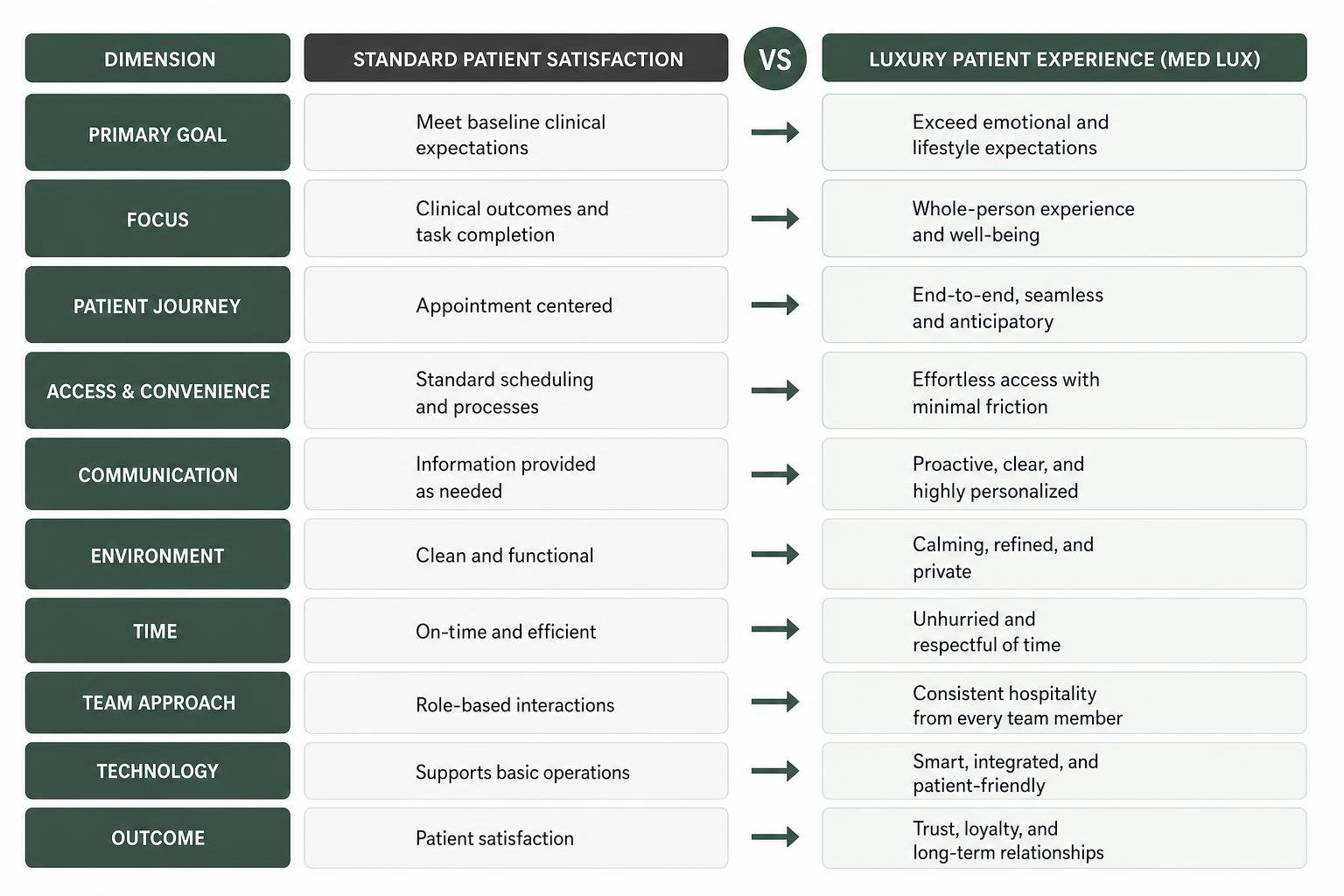
When a patient evaluates their visit, clinical expertise is assumed as a baseline. The true differentiator lies in emotional connection and psychological comfort. As detailed in our analysis on A Comprehensive Guide to How Aesthetic Spaces Increase Patient Trust, physical environments and empathetic interaction patterns directly influence how deeply a patient trusts their care provider.
| Dimension | Standard Patient Satisfaction | Luxury Patient Experience (Med Lux) |
|---|---|---|
| Primary Goal | Meet baseline clinical expectations | Exceed emotional and lifestyle expectations |
| Time Allocation | 10–15 minute standard encounters | 30–45 minute unhurried, dedicated visits |
| Environment | Sterile, cold, utilitarian aesthetic | Serene, hospitality-inspired boutique setting |
| Communication | Transactional, clinical jargon | Empathetic, active listening, clear clarity |
| Logistics | Paper clipboards, crowded waiting rooms | Pre-visit digital intake, private ushering |
| Financial Focus | Insurance-driven or commoditized fees | Value-based, transparent, premium out-of-pocket |
Building a Luxury Patient Experience Through Bespoke Sensory Design
The physical clinic environment communicates brand values long before a doctor enters the room. Across the country, boutique clinics are embracing the "boutique hotel-ification" of medical practice, abandoning industrial lighting and antiseptic odors in favor of calm, restorative architecture.
If a patient steps out of a elevator and immediately smells harsh medical disinfectants, their sympathetic nervous system triggers a fight-or-flight stress response. Building a Luxury Patient Experience requires intentional sensory branding that replaces anxiety with calm:
- Acoustic design: Clinical noise, equipment hums, and adjacent room conversations should be masked using soundproof architectural barriers and ambient soundscaping.
- Lighting layering: Swap fluorescent overhead fixtures for layered, dimmable LED lighting set to warm color temperatures (2700K–3000K) in consultation zones, switching to high-visibility clinical modes only during precise procedures.
- Biophilic integration: Incorporate natural stone, warm wood tones, live indoor greenery, and organic textures to ground the physical space.
- Olfactory management: Subtle air scenting using natural elements like white tea or light botanical aromas shifts perception away from traditional hospital settings.
For practices seeking architectural inspiration, reviewing insights on Designing a Bespoke Treatment Suite for High-End Clients demonstrates how layout, material selection, and zoning create an atmosphere where patients feel like honored guests rather than medical cases.
Building a Luxury Patient Experience Across the Complete Care Journey
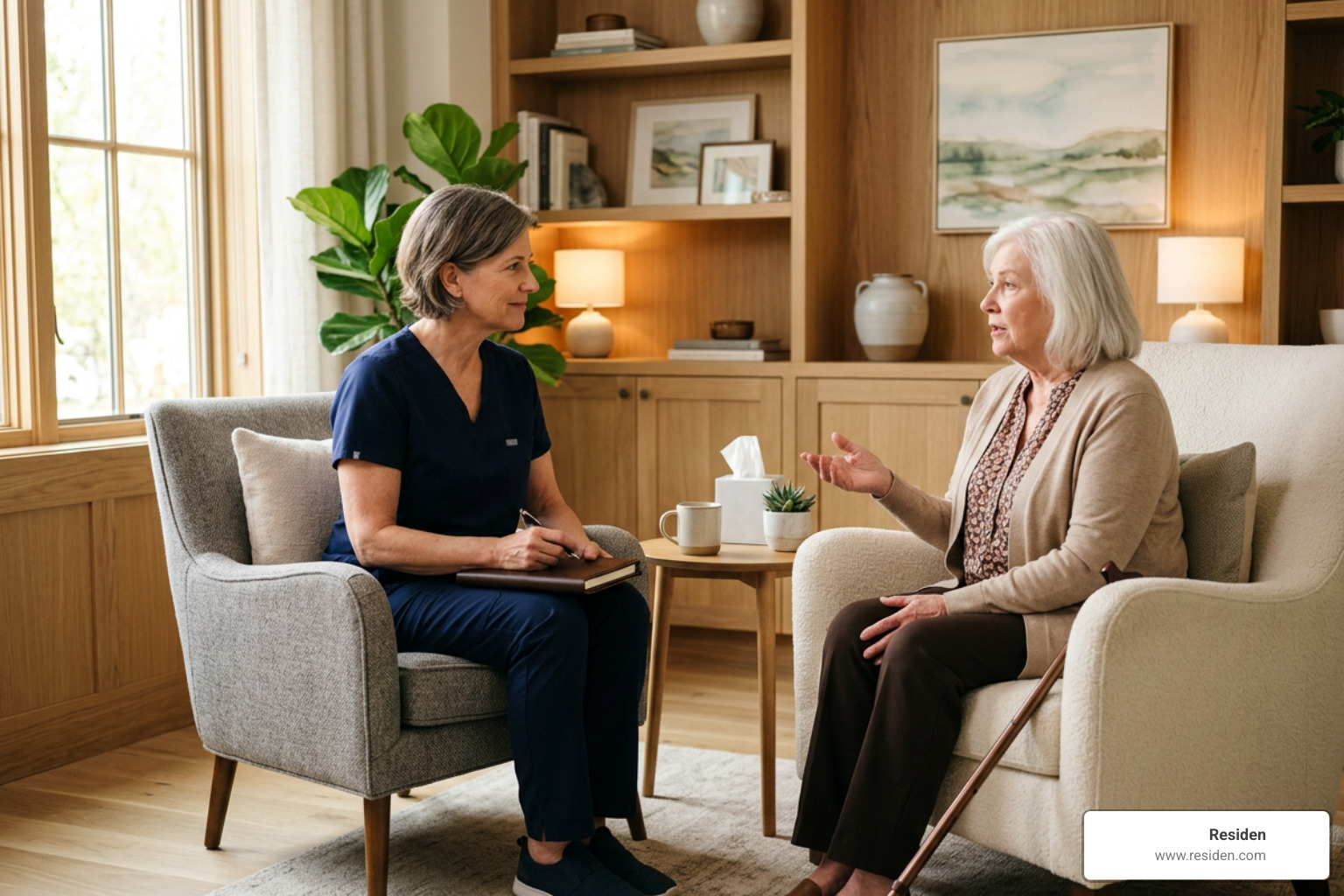
A luxury experience is not limited to the time spent inside an exam room; it spans seven distinct phases across the care journey. Omitting attention from any single phase breaks the perception of white-glove service.
- Pre-Visit Concierge Touchpoint: 48 hours prior to an appointment, patients receive a personalized text or email welcome. Digital intake forms are completed securely on mobile devices, eliminating waiting room clipboards.
- Arrival & Private Welcome: Patients are greeted by name within 30 seconds of stepping through the door. In a modern turnkey medical office solution, front-desk concierges escort guests directly into private rooms within 5 minutes, avoiding crowded waiting areas.
- The Unhurried Consultation: In dedicated, high-end Medical Exam Rooms, clinicians allocate 30 to 40 minutes per visit. Providers utilize active listening—a practice proven to make patients 267% more likely to trust their healthcare team.
- Transparent Treatment Planning: Treatment recommendations are explained without medical jargon, utilizing 3D visualization tools or high-resolution imaging to illustrate outcomes clearly.
- Private Checkout: Financial transactions and scheduling for follow-up visits occur discreetly within the private suite or digitally via SMS, protecting financial privacy.
- Departure Touches: Guests are offered complimentary designer refreshments or tailored home-care instructions packaged in polished brand collateral.
- Proactive Post-Care Outreach: Within 24 to 48 hours, clinicians or dedicated patient coordinators follow up directly to answer questions, monitor recovery, and confirm comfort.
Strategic ROI: Building a Luxury Patient Experience in Independent Practice
Investing in an elevated patient journey is not an unnecessary expense; it is a sound financial strategy for boutique clinics and independent practitioners. When perceived value is high, practices tap into significant price elasticity, commanding higher out-of-pocket rates while cultivating deep patient loyalty.
Data highlights the economic impact of prioritizing patient experience:
- A 1% increase in patient retention can drive millions in long-term revenue gains over a practice lifecycle.
- Clinics with superior experience rankings experience 15% to 25% higher rebooking rates and up to 20% lower no-show rates.
- MD-led aesthetic and specialty practices operating under a high-touch service model frequently achieve higher average revenue per visit compared to volume-based traditional clinics.
Physical and operational comfort functions as a biological driver of healing that directly fuel word-of-mouth referrals. Discerning patients who experience superior care become active brand advocates within their personal networks.
Furthermore, moving toward an independent, high-end care model frees clinicians from the burn-out trap of high-volume, low-reimbursement schedules. In our guide on The Perks of Private Practice, we detail how controlling practice pace allows physicians to deliver better care while scaling profitability.
Leveraging Technology and AI Without Sacrificing Human Touch
A primary challenge in luxury medical care is modernizing operations without making care feel cold or robotic. When implemented thoughtfully, artificial intelligence and modern clinic automation enhance human relationships by handling repetitive administrative burdens.
Key integration strategies include:
- Predictive Administrative Systems: AI-driven tools streamline appointment scheduling, anticipate cancellations, and automate pre-procedure reminders, completely eliminating phone delays.
- Virtual Concierge Services: Automated, 24/7 post-procedure check-ins gather patient recovery metrics, alerting the clinical team immediately if personalized human intervention is required.
- Enhanced Data Security: High-net-worth patients require complete discretion. Robust cybersecurity protocols and transparent data privacy policies reassure clients that their medical data remains strictly protected.
- Human Oversight Messaging: Marketing and patient communications must always emphasize that technology serves to empower—not replace—physician expertise.
When hosting consultations in specialized Consultation Rooms, technology like ambient clinical voice AI allows physicians to maintain complete eye contact with patients, taking notes automatically in the background while keeping human connection at the forefront.
Overcoming Common Misconceptions in Premium Healthcare Branding
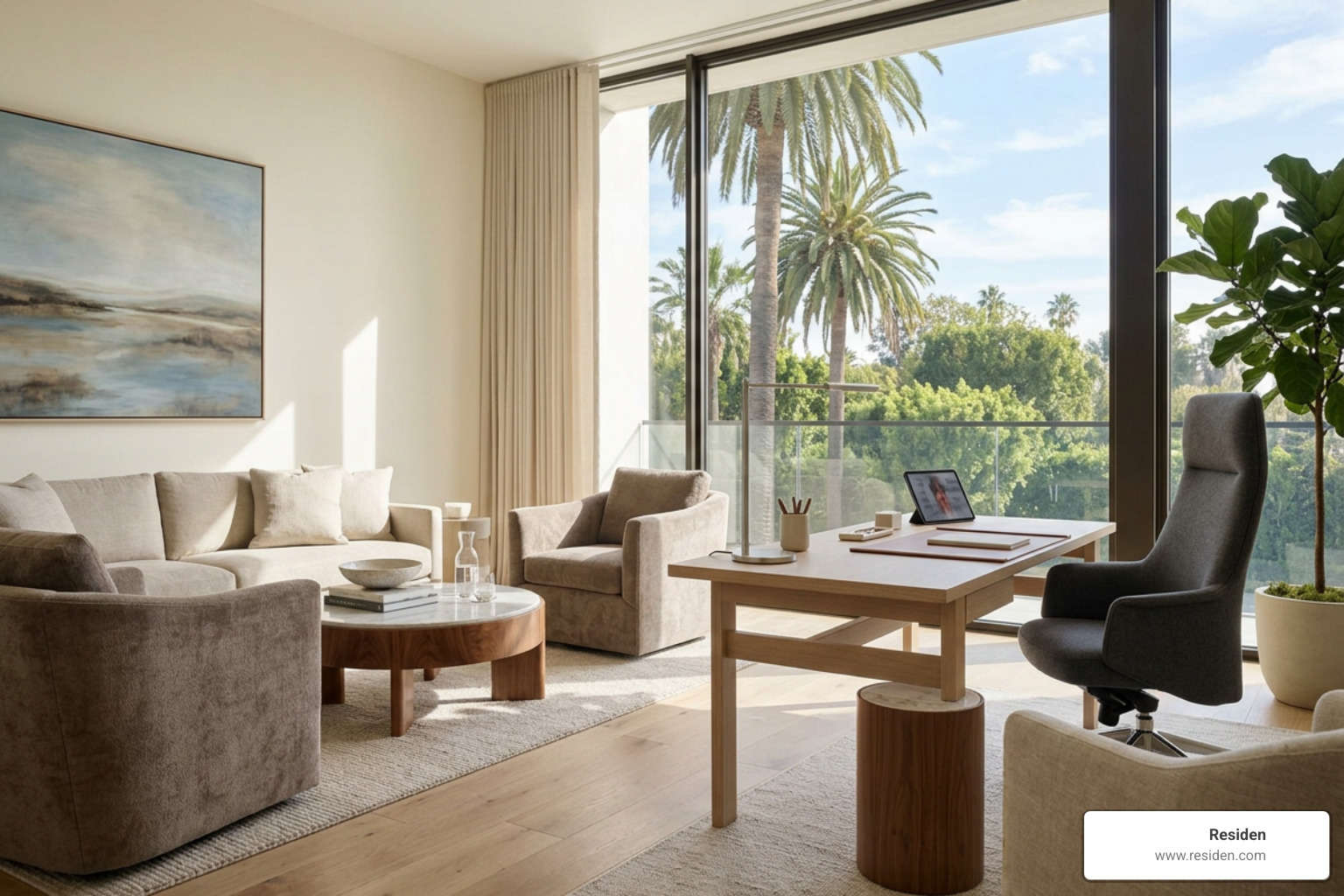
Many independent practitioners hesitate to adopt luxury practice positioning due to persistent industry myths. Overcoming these misunderstandings allows providers to unlock the full potential of their practice.
- Misconception 1: "Luxury branding is only for cosmetic surgery or aesthetics." Reality: Patients seeking primary care, integrative medicine, orthopedic consultations, or foot care value time, comfort, and direct physician access just as much as aesthetic clients.
- Misconception 2: "Luxury means exclusionary or pretentious care." Reality: In modern healthcare, luxury is defined by warmth, empathy, clear communication, and unhurried focus—qualities every patient deserves.
- Misconception 3: "Building a luxury experience requires millions in upfront capital." Reality: Upfront capital expenditures on real estate are no longer a barrier. Utilizing a flexible medical office or medical coworking space allows practices to operate out of prestigious facilities without capital-intensive leases or construction debt.
For clinicians practicing in competitive healthcare markets, reading The Ultimate Guide to How Beverly Hills Attracts High-Value Patients provides actionable frameworks for positioning services to appeal to selective clientele.
Operationalizing Hospitality: Staff Training, Trust, and Concierge Service
Even the most beautiful medical clinic will fail to impress if staff interactions feel disengaged or transactional. Staff performance and practice culture serve as the foundation of any luxury brand. Neighboring health institutions like Cedars-Sinai Primary Care - West Los Angeles demonstrate that clinical reputation is built upon consistent, patient-centered care delivery.
Hospitality Culture and White-Glove Service Training
To deliver five-star service, independent practices must borrow operational methodologies from luxury hospitality leaders. Front-desk teams, medical assistants, and nursing staff require continuous training in empathetic communication, active listening, and refined service standards.
Key elements of white-glove staff training include:
- Immediate Engagement: Greet arriving patients by name within 30 seconds of entry with warm eye contact and professional body language.
- Empathetic Phrasing: Train administrative staff to replace transactional phrasing (e.g., "Fill out these papers and sit down") with welcoming hospitality phrasing (e.g., "Welcome, we have everything prepared for your visit today. May I offer you a warm beverage?").
- Proactive Problem Solving: Empower team members with immediate authority to resolve minor patient inconveniences, such as parking validation issues or minor schedule adjustments, without requiring managerial sign-off.
- Service Recovery Protocols: When delays or operational oversights occur, execute structured service recovery—listening sincerely, offering a genuine apology, and delivering a thoughtful remedy (such as complimentary follow-up care or curated skincare gifts).
Actionable Steps to Launch a Concierge-Level Aesthetic Clinic
Launching or elevating an independent practice to a luxury standard can be accomplished in actionable phases:
- Define Your Unique Value Proposition (UVP): Identify the unique lifestyle and medical benefits your practice offers, focusing on unhurried access, personalized care plans, and pristine comfort.
- Secure Flexible, High-End Practice Space: Avoid multi-year commercial leases and heavy build-out costs. Leverage fully equipped, flexible medical coworking spaces to instantly access prime real estate. For example, our locations in Beverly Hills and Brentwood, CA provide turn-key, polished clinical environments.
- Standardize Arrival and Departure Protocols: Draft step-by-step checklists for daily practice operations, covering room setup, beverage service presentation, and check-out workflows.
- Refine Digital Touchpoints: Ensure your practice website is modern, mobile-responsive, and intuitive, matching the high-end experience delivered inside the clinic.
- Implement Continuous Feedback Loops: Collect real-time patient feedback through digital follow-up surveys to continually refine operations and maintain high service standards.
Frequently Asked Questions About Luxury Patient Experience
What is the difference between patient satisfaction and a luxury patient experience?
Patient satisfaction measures whether standard clinical expectations were met, such as clinical safety and acceptable wait times. A luxury patient experience elevates care by prioritizing emotional connection, unhurried physician consultations, personalized amenities, sensory environmental comfort, and high-touch concierge hospitality.
How can small independent practices afford to offer a luxury patient experience?
Independent practices can deliver premium care without heavy capital investment by utilizing flexible medical office solutions. Renting turn-key, fully equipped exam and procedure rooms on hourly or daily schedules eliminates overhead costs, long-term commercial leases, and initial construction expenses, allowing practices to invest capital directly into patient amenities and service quality.
Can technology like AI be integrated into luxury care without alienating high-net-worth patients?
Yes. When integrated thoughtfully, technology enhances the human element of care by eliminating administrative friction, simplifying scheduling, and automating post-treatment tracking. Clinicians must maintain oversight of all care decisions and position technology as a tool that enables more dedicated face-to-face physician time.
Elevating Care Delivery Through Flexible Healthcare Workspaces
Building a Luxury Patient Experience is the most effective strategy for independent clinicians seeking to differentiate their brand, attract high-value clients, and build a sustainable practice. By aligning clinical excellence with sensory environment design, white-glove staff hospitality, and streamlined digital touchpoints, providers create lasting patient trust and advocacy.
At Residen, we empower independent physicians, specialists, and aesthetic providers to deliver elevated care without the financial risk of traditional real estate leases. As a premier medical coworking space, Residen provides turnkey medical office rentals in prestigious Los Angeles locations—including 11620 Wilshire Blvd in Brentwood, CA, and 433 N Camden Dr in Beverly Hills, CA.
Our fully equipped exam, procedure, and consultation rooms are available on flexible hourly, daily, or long-term terms with no setup costs or long-term commitments. We invite you to explore our healthcare workspaces and discover how our flexible medical office solution can support your practice goals. Elevate your practice with Residen and schedule a tour today.