
A Comprehensive Guide to How Aesthetic Spaces Increase Patient Trust
Why the Look of Your Space Is a Clinical Decision, Not Just a Design Choice
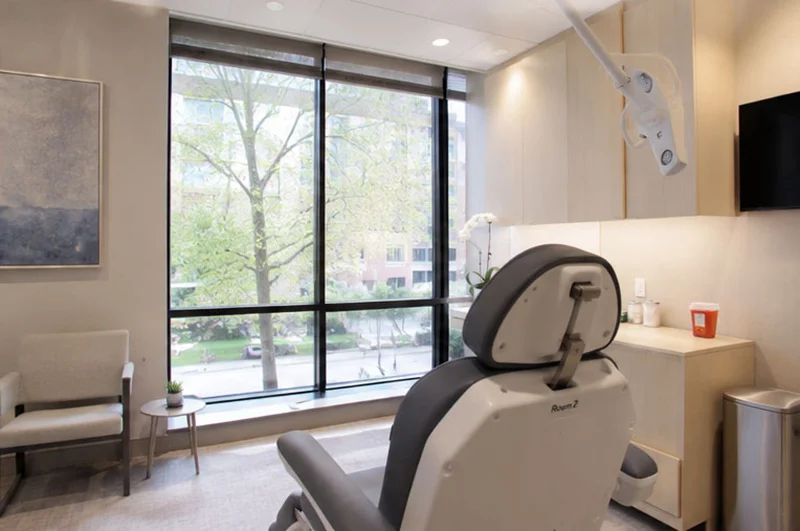
How aesthetic spaces increase patient trust (backed by psychology) is one of the most underappreciated levers in healthcare today. Before a patient hears your credentials or experiences your care, their nervous system has already made a judgment — based entirely on what they see, hear, and feel when they walk through your door.
Here's a quick summary of how aesthetic spaces build patient trust:
- Color matters: Soft blues and greens lower perceived stress and signal calm and competence
- Lighting signals safety: Warm, layered lighting reduces anxiety better than harsh fluorescents
- Cleanliness = credibility: Clutter and disorganization unconsciously suggest poor attention to detail
- Sensory comfort builds trust: Controlled sound, temperature, and even scent put the nervous system at ease
- Biophilic elements aid healing: Plants, natural light, and nature-inspired design lower cortisol levels
- First impressions are instant: Patients form trust judgments within seconds of entering a space
- Digital aesthetics matter too: Your website and social presence shape trust before the visit even begins
Research in psychology and healthcare design consistently shows that beautiful, intentional environments trigger dopamine release in the brain — the same chemical linked to pleasure and reward. Patients don't just prefer well-designed spaces. They trust them more, stay longer, and return more often.
In April 2026, as patients increasingly treat healthcare like a consumer experience, the design of your practice is no longer a "nice to have." It is a core part of the care you deliver.
I'm Dr. Jessica Wu — Harvard-trained dermatologist, clinical researcher, and practitioner with over 20 years of experience observing how environment shapes the patient-provider relationship firsthand. My work across private practice, medical education, and clinical trials has given me a front-row seat to how aesthetic spaces increase patient trust (backed by psychology) — and why independent practitioners can no longer afford to overlook it.
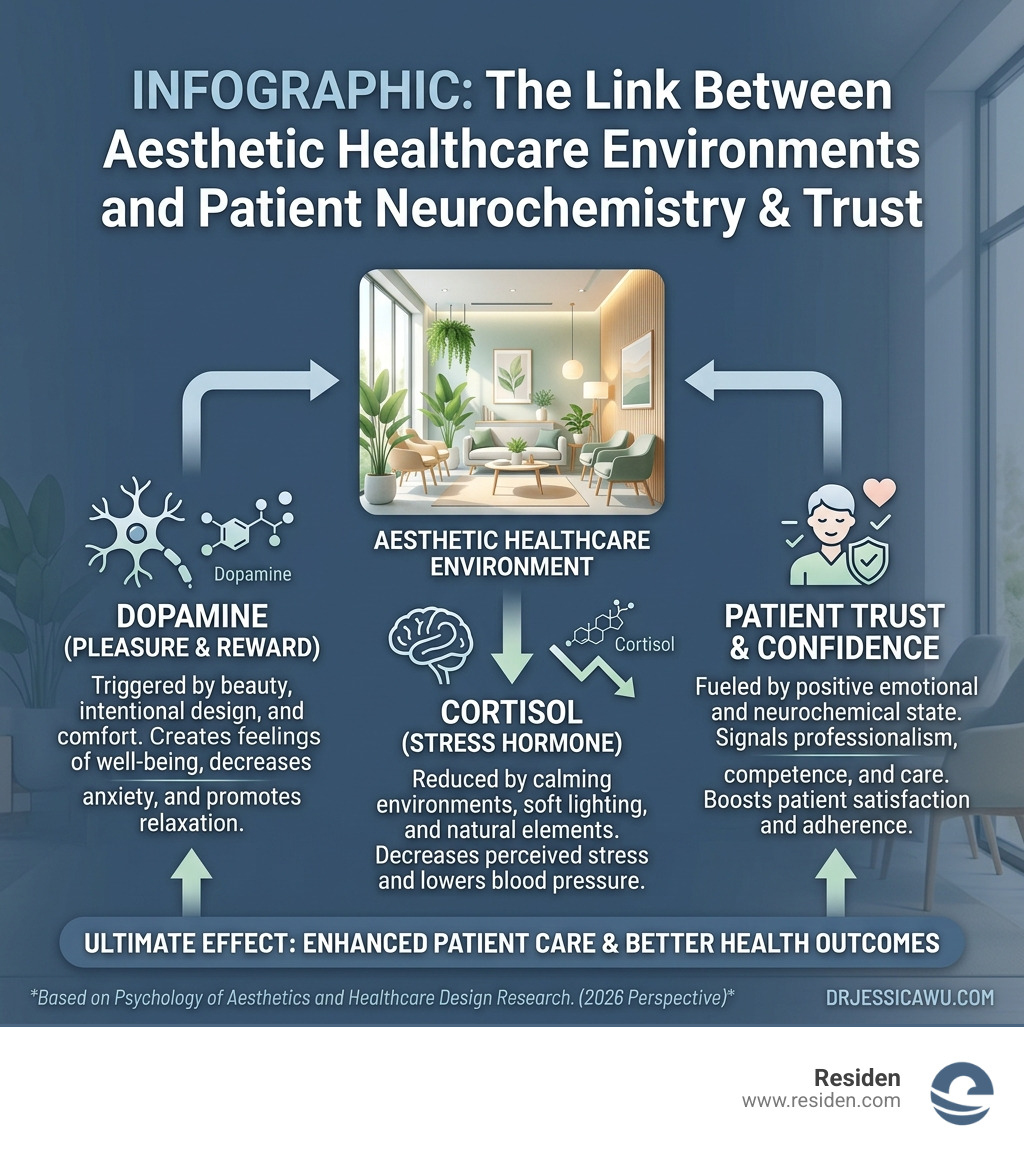
The Science of First Impressions: How Aesthetic Spaces Increase Patient Trust (Backed by Psychology)
We often think of trust as something earned through clinical outcomes, but the Psychology of Aesthetics suggests that trust begins at a much deeper, neurological level. When we enter a space, our brains immediately scan for "safety cues." If a medical office is cluttered, poorly lit, or starkly clinical, the amygdala — the brain's "alarm system" — can trigger a cortisol spike. This stress response makes it harder for patients to listen to medical advice and lowers their overall satisfaction.
Conversely, an aesthetically pleasing environment triggers the release of dopamine. This neurotransmitter is associated with pleasure and reward, helping to regulate the nervous system and put the patient in a "receptive" state. From an evolutionary biology perspective, humans are hard-wired to prefer symmetry and balanced proportions. In a clinical setting, symmetry in design translates to a perception of health, genetic fitness, and professional order.
When we consider Choosing a Provider: What Factors Matter Most to Consumers and Patients, we see that patients often use environmental aesthetics as a proxy for clinical skill. If a provider pays attention to the "small things" like the curve of a chair or the quality of the art on the walls, patients assume they will pay equal attention to their medical diagnosis.
The Aesthetic Patient’s Hierarchy of Needs
To understand this better, we can look at a specialized framework for healthcare psychology. Much like Maslow’s hierarchy, patient trust is built on levels:
- Safety & Trust: "Is this place clean and professional?"
- Comfort & Care: "Do I feel at ease here?"
- Technical Mastery: "Does the environment reflect high-quality care?"
- Confidence: "Does being here make me feel better about myself?"
- Self-Actualization: "Is this provider a partner in my personal growth?"
If the physical space fails at Level 1 (Safety & Trust), the patient never moves up the pyramid.
The Role of Color in How Aesthetic Spaces Increase Patient Trust (Backed by Psychology)
Color is one of the most powerful tools in our design arsenal. According to the PDF: Color in Healthcare Environments, different hues have measurable physiological effects on the human body. For instance, soft blues and leafy greens are consistently proven to lower heart rates and blood pressure. These colors evoke a "biophilic effect," reconnecting us with nature and signaling stability and tranquility.
In our Los Angeles facilities, we’ve seen how moving away from "clinical white" toward a more nature-inspired palette can transform the patient experience. While white might symbolize purity in some contexts, in a medical office, it often feels cold and anxiety-inducing.
| Color Category | Recommended Hues | Psychological Effect | Best Use Case |
|---|---|---|---|
| Calming | Soft Sky Blue, Sage Green | Reduces anxiety, lowers heart rate | Patient rooms, waiting areas |
| Grounding | Taupe, Sand, Warm Gray | Provides comfort and stability | Reception, consultation rooms |
| Energizing | Muted Yellow, Soft Coral | Invokes hope and warmth | Pediatrics, physical therapy |
| Agitating | Bright Red, Stark White | Increases heart rate, feels sterile | Avoid in large quantities |
Sensory Regulation: How Aesthetic Spaces Increase Patient Trust (Backed by Psychology)
Trust isn't just seen; it’s heard, felt, and even smelled. How Medical Office Design Impacts Patient Trust & Retention highlights that "sensory regulation" is the invisible factor in patient satisfaction.
- Layered Lighting: Harsh fluorescent lights are the enemy of trust. They create deep shadows and a "staged" feel. We recommend layered lighting — combining natural light with warm LED fixtures and task lighting — to create a residential, comforting feel.
- Acoustic Privacy: Nothing erodes trust faster than a patient in a consultation room hearing a private conversation in the hallway. Soundproofing and acoustic panels are not just luxury additions; they are essential for HIPAA compliance and emotional safety.
- Thermal Comfort: A room that is too cold feels clinical and unwelcoming. Maintaining a consistent, comfortable temperature is a subtle way to signal that the patient’s physical needs are being prioritized.
- Olfactory Branding: The "doctor's office smell" (usually antiseptic) can trigger medical trauma. Using subtle, spa-like scents (think lavender or citrus) can help rebrand the experience as one of wellness rather than illness.
When these elements are in "energetic alignment," the space feels intentional. This intentionality tells the patient: "We have thought of everything, so you don't have to worry about anything."
Designing for Healing: Biophilic Elements and Spatial Flow
The concept of "biophilia" suggests that humans have an innate tendency to seek connections with nature. Aesthetics sets patients 'free' to recover during hospitalization explains that nature-inspired design isn't just about looking pretty — it actually speeds up recovery times.
Incorporating indoor plants, natural materials like wood and stone, and nature-themed art helps reduce cortisol levels. In a busy city like Los Angeles, creating an "urban oasis" within a medical office is a powerful way to build trust.

We find that A Modern Medical Coworking Space that prioritizes natural light creates a much more positive "flow" for both staff and patients. Speaking of flow, the way a patient moves through your office is a silent ambassador for your professionalism.
Wayfinding and Flow:
- Same-entry same-exit: Patients prefer returning to where they started. It feels familiar and controlled.
- Clear Signage: Intuitive navigation reduces the "where do I go?" anxiety that many patients feel when they are already vulnerable.
- Open Layouts: While privacy is key in treatment rooms, open and airy waiting areas reduce the feeling of being trapped or "processed."
Balancing Function and Form in Practice Design
As we often discuss, a patient's first impression is critical and is shaped by the facility's environment. However, aesthetics should never come at the expense of function. An attractive office that is inefficient will eventually frustrate both the staff and the patients.
We use the "Priority Pyramid" for space planning:
- Physician Flow: The doctor must be able to move efficiently between rooms.
- Staff Efficiency: The team needs a clear line of sight and ergonomic workstations.
- Patient Experience: Only when the first two are met can the patient experience truly shine.
When you are starting a medical office: your complete checklist for success, consider ergonomic furniture that looks high-end but is easy to sanitize. Clutter management is also vital. A stack of unfiled papers on a front desk isn't just a mess; to a patient, it’s a sign that their medical records might also be handled sloppily.
Digital Aesthetics and the Pre-Visit Trust Journey
In 2026, the "first impression" often happens on a smartphone screen. If your website is slow, clunky, or uses low-quality stock photos, the patient has already decided you aren't "top-tier" before they even call.
Key Digital Trust Signals:
- Mobile Responsiveness: Most patients book appointments on their phones.
- High-Quality Imagery: Use real photos of your beautiful office space. This bridges the gap between the digital and physical worlds.
- AI-Driven Interactions: Use AI chat tools that are helpful and personalized, not robotic.
- Social Media Consistency: Your Instagram or LinkedIn should reflect the same "vibe" as your physical office.
For those using shared medical office space: pros and cons for healthcare professionals, digital aesthetics are even more important. You need to show that while you share a space, your brand and professional comportment are distinct and high-level.
Common Aesthetic Mistakes That Erode Patient Confidence
Sometimes, the best way to understand how aesthetic spaces increase patient trust (backed by psychology) is to look at what doesn't work. Practice aesthetics as medicine warns against the "ugly practice" trap.
- The "Desert of Shriveled Plants": If you can't keep a plant alive, a patient might wonder how well you'll care for them.
- Harsh Fluorescents: As mentioned, these make everything look "sickly."
- Outdated Medical Posters: A poster from 1998 about the dangers of smoking doesn't scream "cutting-edge medicine."
- Noise Pollution: Hearing a TV blaring in the waiting room or staff gossiping in the breakroom erodes the professional "energetic alignment."
- Visible Clutter: Boxes in the hallway or messy reception desks signal a lack of control.
Frequently Asked Questions about Aesthetic Healthcare Spaces
What is aesthetic conversion in a medical context?
Aesthetic conversion is the process of using design, psychology, and digital presence to turn a curious prospect into a loyal patient. It’s about creating a seamless brand perception where the physical space reinforces the promises made in your marketing.
Which colors are best for reducing patient anxiety?
Soft blues and sage greens are the gold standard. They provide a "psychological grounding" effect. We also recommend warm neutrals like taupe or sand to make the space feel more like a home and less like a laboratory.
How can I measure the impact of my office design on patient trust?
The most direct metrics are your patient retention rates and referral growth. You can also use post-visit satisfaction surveys that specifically ask about the "comfort" and "atmosphere" of the office. Often, patients will mention the "beautiful space" in their 5-star Google reviews.
Conclusion
At Residen, we understand that the environment is not separate from the care — it is the care. We provide turnkey, shared medical office rentals in Los Angeles, including prime locations like Beverly Hills and Brentwood. Our spaces are designed with The Residen Difference in mind: fully equipped, patient-friendly, and aesthetically optimized to build trust from the moment your patient walks in.
Whether you are a specialist or looking for more info about medspa and injector services, we offer flexible hourly and daily bookings with no long-term leases or setup costs.
Ready to see how a high-end space can transform your practice? Explore our locations at 433 N Camden Dr Suite 610, Beverly Hills, and across Los Angeles today. Let us provide the aesthetic foundation so you can focus on what you do best: providing world-class care.