
All About Beverly Hills Patient Demographics, What Every Physician Should Understand
Why Every Physician Should Understand Beverly Hills Patient Demographics Before Seeing Their First Patient
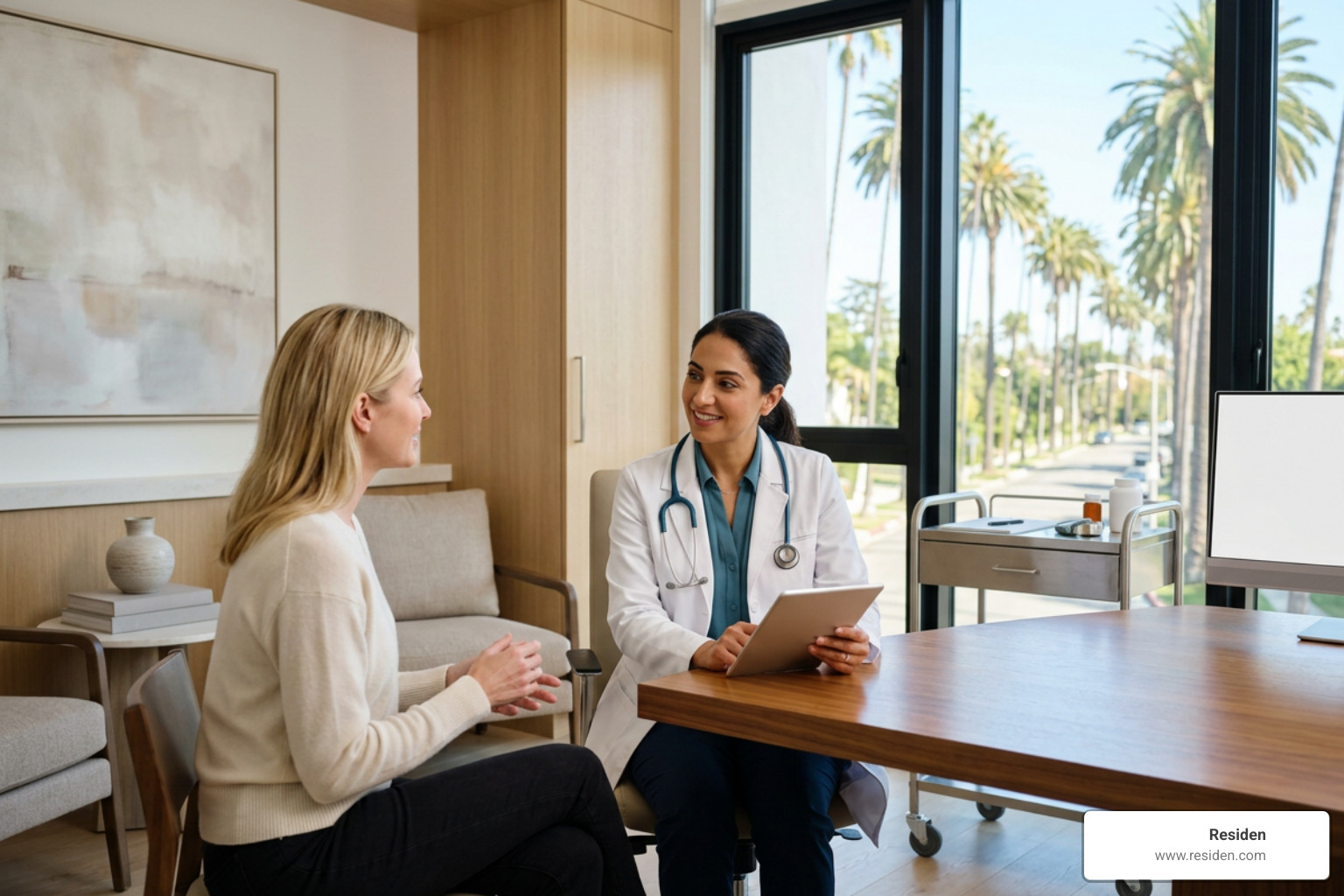
Beverly Hills patient demographics every physician should understand reveal a community that looks very different from the national average — and that gap has real consequences for how you practice medicine.
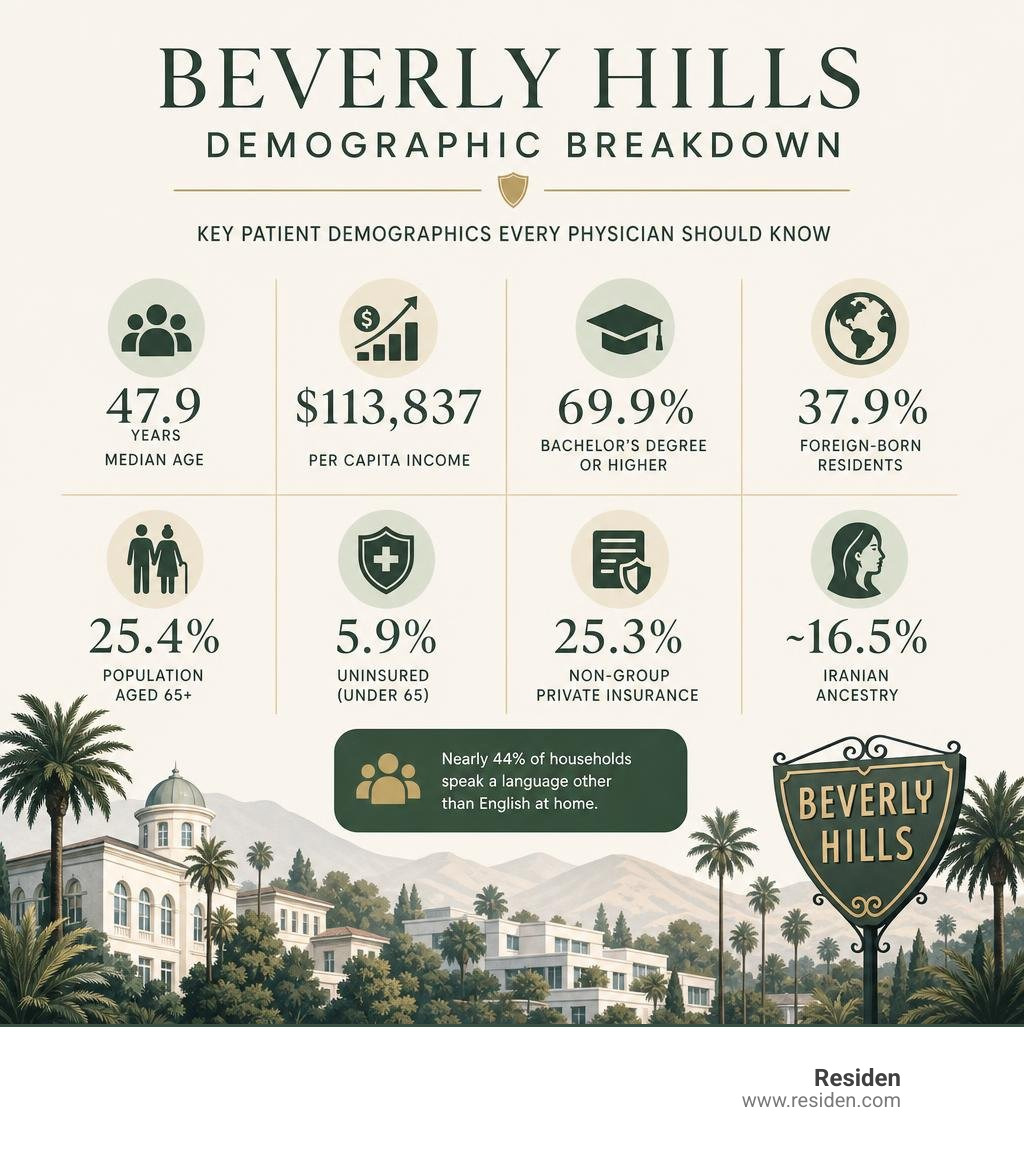
Here is a quick snapshot of what makes this patient population unique:
| Demographic Factor | Beverly Hills | U.S. Average |
|---|---|---|
| Median age | 47.9 years | 38.9 years |
| Per capita income | $113,837 | $44,673 |
| Bachelor's degree or higher | 69.9% | ~35% |
| Foreign-born residents | 37.9% | 14.1% |
| Population aged 65+ | 25.4% | ~17% |
| Uninsured (under 65) | 5.9% | ~10% |
| Non-group private insurance | 25.3% | ~10% |
| Iranian ancestry | ~16.5% | <1% |
In short: Your average Beverly Hills patient is older, wealthier, highly educated, and more likely to arrive with strong opinions about their own care.
This is not a typical urban patient panel. The community is aging, culturally diverse, and accustomed to premium services — whether that means concierge medicine at $535 per month or same-day diagnostics without insurance friction. Nearly 44% of households speak a language other than English at home. And despite the postcard image of limitless wealth, roughly 1 in 10 residents lives below the poverty line.
For physicians, that combination demands more than clinical skill. It demands demographic fluency.
I'm Dr. Jessica Wu, a Harvard-trained dermatologist who has spent over 20 years practicing privately in Los Angeles and making house calls to Hollywood sets — experience that has given me a front-row view of how Beverly Hills patient demographics every physician should understand can shape everything from your consent process to your scheduling model. In this guide, I'll walk you through the data, the cultural nuances, and the practical steps that help you build a practice that actually fits this community.
Beverly Hills Patient Demographics Every Physician Should Understand
When we analyze the local medical landscape, we see a healthcare market that is as lucrative as it is complex. According to the U.S. Census Bureau QuickFacts: Beverly Hills city, California, the local healthcare and social assistance sector generated over $2.19 billion in revenue in recent census tracking. This massive financial footprint proves that the demand for medical care in the 90210 zip code is exceptionally strong.
However, capturing a share of this market requires looking past the glamour. The city has a population density of 5,729 people per square mile packed into just 5.71 square miles of land. This high concentration of residents means your clinical space is competing in a highly dense, fast-moving environment where patient expectations are shaped by extreme convenience, rapid diagnostics, and personalized communication.
Age Distribution and the Aging 90210 Population
One of the most critical data points for any practicing physician is the age of the local population. With a median age of 47.9 years, Beverly Hills is significantly older than the rest of California and the United States.
Over a quarter of the population (25.4%) is aged 65 or older. This means that out of approximately 30,374 residents projected in the Beverly Hills, California Population 2026 data, more than 8,000 are seniors.
For clinical practices, this high concentration of older adults shifts the focus toward:
- Advanced geriatric care and age-related wellness.
- Chronic disease management (especially cardiovascular health, joint care, and oncology).
- Cognitive health monitoring and mobility-friendly physical spaces.
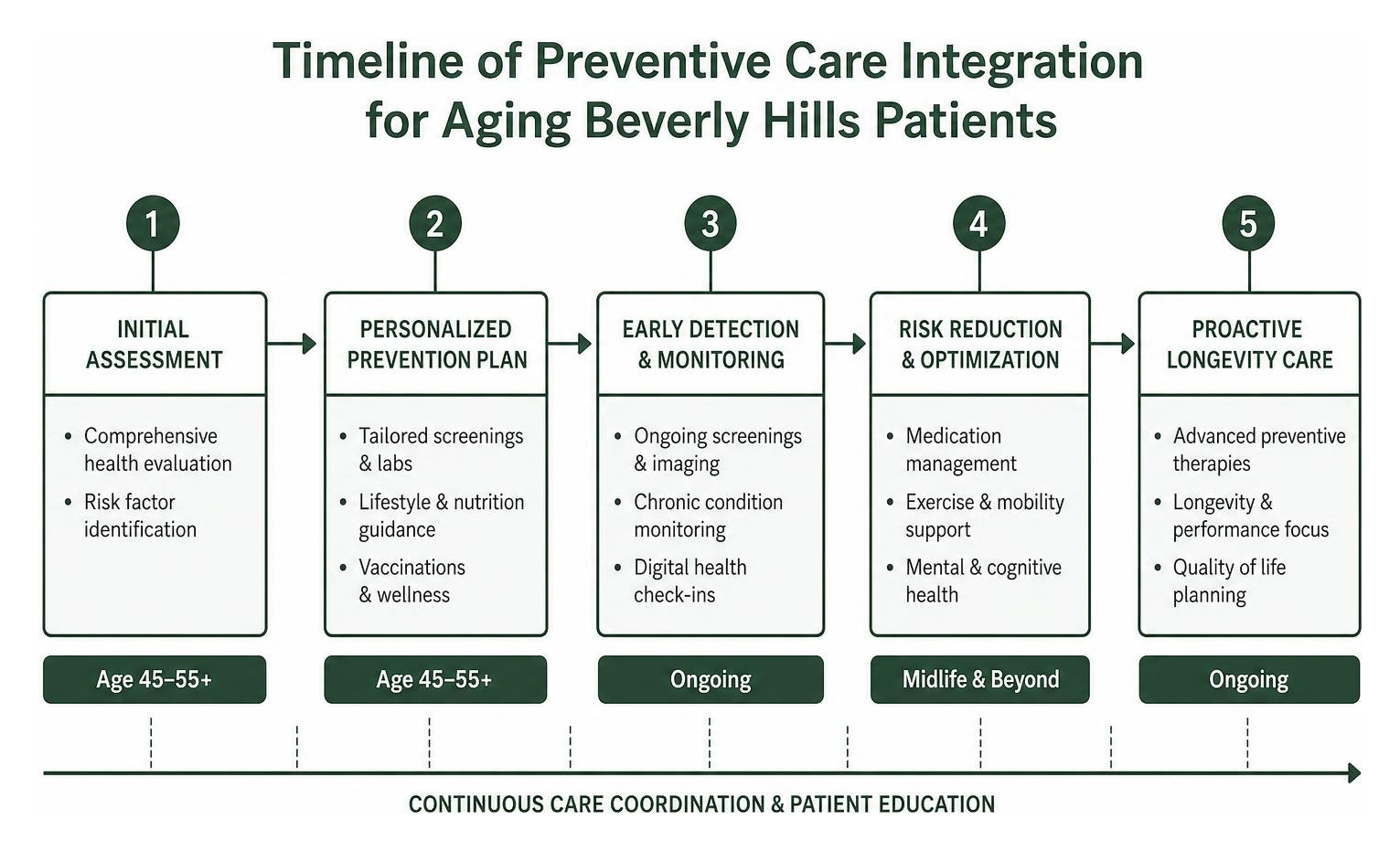
To successfully manage this aging demographic, we must design care pathways that balance preventative longevity therapies with structured, empathetic chronic care.
Income Disparities and Insurance Coverage Realities
The economic profile of Beverly Hills is highly bifurcated. While the median household income is $132,977 and the per capita income is more than double the national average at $113,837, these numbers do not tell the whole story.
According to data compiled by Beverly Hills, CA | Beverly Hills Demographics in 2026 | Zip Atlas, the homeownership rate in the city is only 41%. The remaining 59% of residents are renters, living primarily in the multifamily units of "the flats." Furthermore, the city has a 9.59% poverty rate. Interestingly, the largest demographic living below the poverty line in Beverly Hills consists of older females aged 55 to 74.
This wealth gap directly influences how residents access healthcare:
- Private and Non-Group Insurance: A staggering 25.3% of residents utilize non-group (direct purchase) private insurance plans. This is significantly higher than national averages and signals a patient base that is highly comfortable with out-of-network benefits or direct-pay arrangements.
- Medicare and Medicaid: Around 19.5% of the population relies on Medicare, while 8.57% utilizes Medicaid (Medi-Cal).
Physicians must remain financially agile, offering premium out-of-pocket packages for affluent patients while maintaining accessible, compliant billing structures for the substantial portion of the community relying on public programs.
Cultural Diversity and Communication in Beverly Hills Clinics

A common mistake is assuming Beverly Hills is a culturally homogenous enclave. In reality, 37.9% of the population is foreign-born, and 43.6% of households speak a language other than English at home. This makes cultural competency and multilingual clinical communication essential for building patient trust.
How Persian and Russian Ancestry Shapes Beverly Hills Patient Demographics, What Every Physician Should Understand
Aside from those identifying generally as White or Caucasian, individuals of Iranian ancestry represent the largest specific cultural group in Beverly Hills, accounting for approximately 16.5% of the population (exceeding 5,300 residents).
This prominent Persian community heavily influences local clinical practice:
- Language Access: Farsi is widely spoken. Having bilingual clinical staff or Farsi-language intake forms can dramatically improve patient onboarding and compliance.
- Family-Centric Decision Making: In many Persian households, medical decisions are made collectively, with adult children heavily involved in the care of their aging parents.
- Russian-Speaking Demographics: Similarly, a substantial Russian-speaking population resides in the West Los Angeles area. Understanding Eastern European communication styles—which often favor highly detailed, direct clinical explanations—is key to managing these patient-physician relationships.
Health Literacy, Informed Consent, and Highly Educated Patients
With 69.9% of adult residents holding a bachelor's degree or higher, Beverly Hills is home to one of the most highly educated patient bases in the world. This is particularly evident in pediatric and obstetric practices; local data shows that 73.1% of all births in the area occur to women holding graduate or professional degrees.
These highly educated patients routinely conduct independent online research before their appointments. While this high level of health literacy is beneficial, it changes the dynamics of informed consent:
- The Standard of Disclosure: Legally and ethically, valid informed consent requires clear disclosure of all risks, benefits, and alternatives. Highly educated patients will expect you to cite peer-reviewed literature, clinical trials, and statistical probabilities.
- Capacity Assessments: Given the aging population, clinicians must carefully distinguish between legal competency (determined by courts) and clinical capacity (determined by the physician using tools like the Montreal Cognitive Assessment, or MOCA).
- Trust through Design: Affluent, educated patients associate professional, clean, and aesthetically pleasing clinical spaces with high-quality medical standards. Designing your clinic to reflect clinical excellence can significantly enhance initial patient trust. Learn more about this dynamic in our Blog: A Comprehensive Guide to How Aesthetic Spaces Increase Patient Trust.
The Concierge Boom and Shifting Physician-Patient Power Dynamics
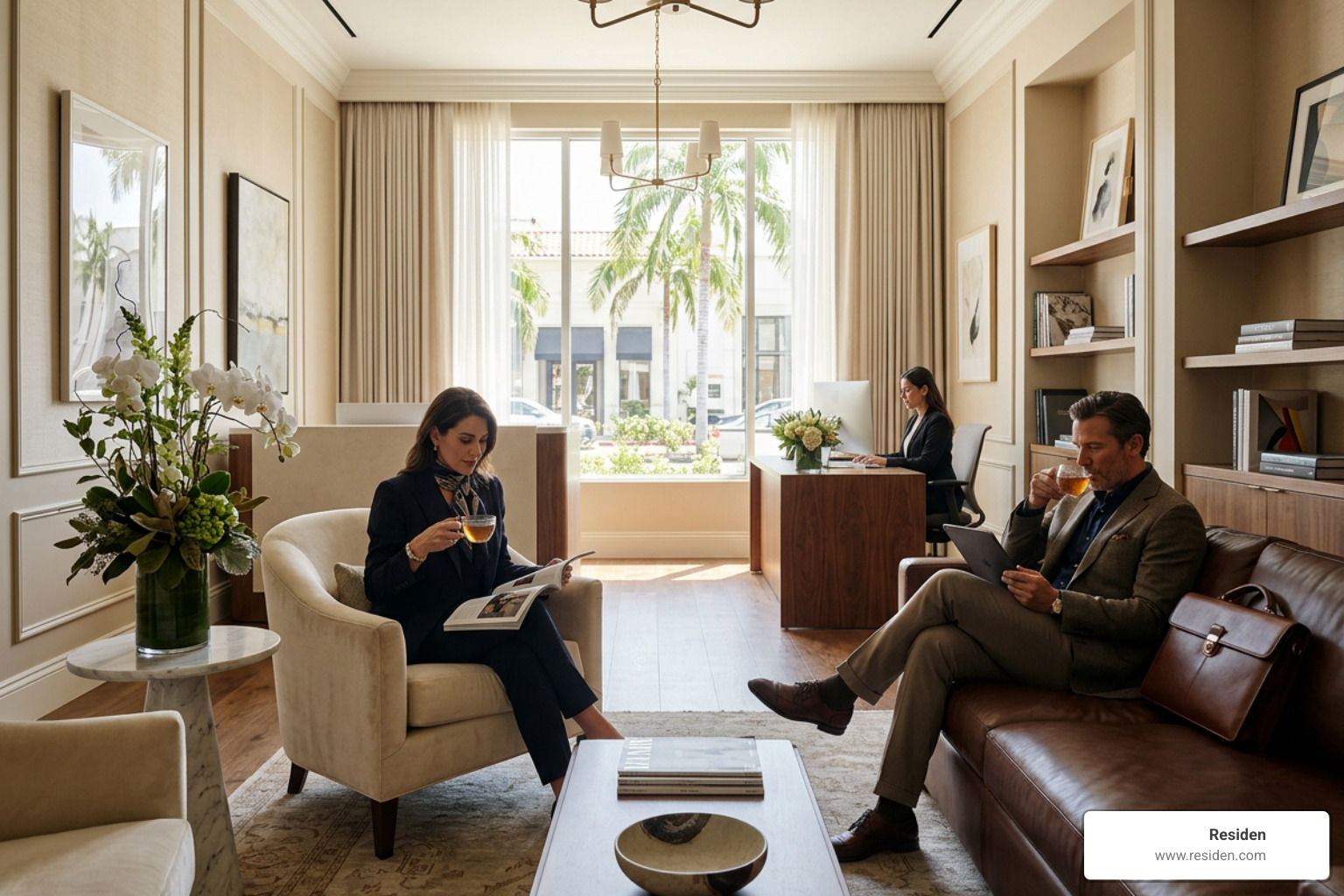
Beverly Hills is the undisputed epicenter of concierge medicine in Southern California. The city hosts 32 dedicated concierge practices for a population of just 33,000 residents, compared to only 20 practices in the entire rest of Los Angeles proper.
Navigating Patient Autonomy Within Beverly Hills Patient Demographics Every Physician Should Understand
According to market data, the average concierge membership in Beverly Hills is $535 per month. Traditional models range from $3,500 to $5,100 annually, while ultra-premium multi-specialty tiers can cost up to $48,000 per year. Interestingly, there are zero Direct Primary Care (DPC) practices in Beverly Hills; the local market is entirely retainer-based concierge.
This commercialization of medicine shifts the traditional physician-patient power dynamic. In a qualitative study of experienced physicians (practicing an average of 16 years), clinical power was perceived in three ways:
- Holding and Managing Power: Clinicians actively guide the encounter while respecting patient input.
- Power as Waning: Clinicians feel their authority is eroded by consumerist demands (e.g., patients demanding specific brand-name medications or unindicated diagnostic imaging).
- Power as Non-Existent: Clinicians view the relationship as a completely flat, collaborative partnership.
In Beverly Hills, patients often view themselves as consumers buying a high-end service. To protect professional boundaries while respecting patient autonomy, we must pivot toward shared decision-making models. This approach empowers patients with information while maintaining clear clinical boundaries. For physicians looking to transition to this model, exploring Concierge Primary Care frameworks can provide a structured path forward.
The Rise of Personalized Longevity and Metabolic Medicine
The intersection of high purchasing power and an aging, health-conscious demographic has created a massive boom in personalized longevity and metabolic medicine.
Beverly Hills patients are highly focused on extending their "healthspan"—the period of life spent free from chronic disease. This has led to a surge in demand for:
- Metabolic Health & Weight Management: Highly structured, medically supervised weight loss protocols, including advanced GLP-1 therapies combined with body composition tracking to preserve muscle mass.
- Hormone Optimization & IV Therapy: Personalized preventive care aimed at maintaining vitality and physical performance.
- Advanced Screenings: High demand for early-detection screenings, such as full-body MRI scans and genetic testing.
Physicians practicing in this market must stay at the forefront of these preventive trends. Integrating personalized metabolic and longevity options into a standard internal medicine or family practice is a highly effective way to align with local patient demand. To understand how these trends are reshaping modern medicine, read our analysis on Blog: The Rise of Personalized Healthcare.
Frequently Asked Questions About Beverly Hills Medical Practices
What is the median age of patients in Beverly Hills?
The median age of Beverly Hills residents is 47.9 years, which is nearly a decade older than the national median of 38.9 years. Over 25.4% of the population is aged 65 or older, creating a high demand for geriatric care, chronic disease management, and preventative longevity medicine.
How prominent is concierge medicine in Beverly Hills?
Beverly Hills has the highest concentration of concierge medical practices per capita in Southern California, with 32 active practices. The average membership fee is $535 per month, and the market is entirely retainer-based, with no active Direct Primary Care (DPC) practices.
What are the primary languages spoken by Beverly Hills patients?
While English is the primary language, nearly 44% of households speak a non-English language at home. Farsi (spoken by the large Persian-American community, which makes up 16.5% of the population) and Russian are the most common secondary languages spoken by patients in local clinics.
Conclusion
Succeeding in the Beverly Hills medical market requires a deep, data-driven understanding of the local population. From the high concentration of highly educated seniors to the unique cultural nuances of the Persian community, these demographics shape how you must communicate, bill, and deliver care.
However, establishing a traditional medical office in the highly competitive Golden Triangle of Beverly Hills comes with massive financial barriers, including long-term commercial leases, expensive build-out costs, and high monthly overhead.
At Residen, we remove those barriers. We provide turnkey, shared medical office rentals (including fully equipped exam rooms, procedure rooms, and consultation spaces) designed specifically for modern healthcare professionals. Located in the heart of the medical community at 433 N Camden Dr Suite 610, Beverly Hills CA, our spaces offer flexible hourly or daily bookings with no long-term leases, setup costs, or hidden fees.
Whether you are looking to launch a new boutique concierge practice, expand your existing West LA footprint, or see patients in a premium, patient-friendly environment, we have you covered. Explore our premium Beverly Hills Location today and start practicing medicine on your own terms.