
Primary Care Gear You Can't Live Without
What Every Primary Care Clinic Needs to Get Started

A solid primary care clinic equipment list is the foundation of any well-run practice — without the right tools, even the most skilled clinician can't deliver safe, efficient care.
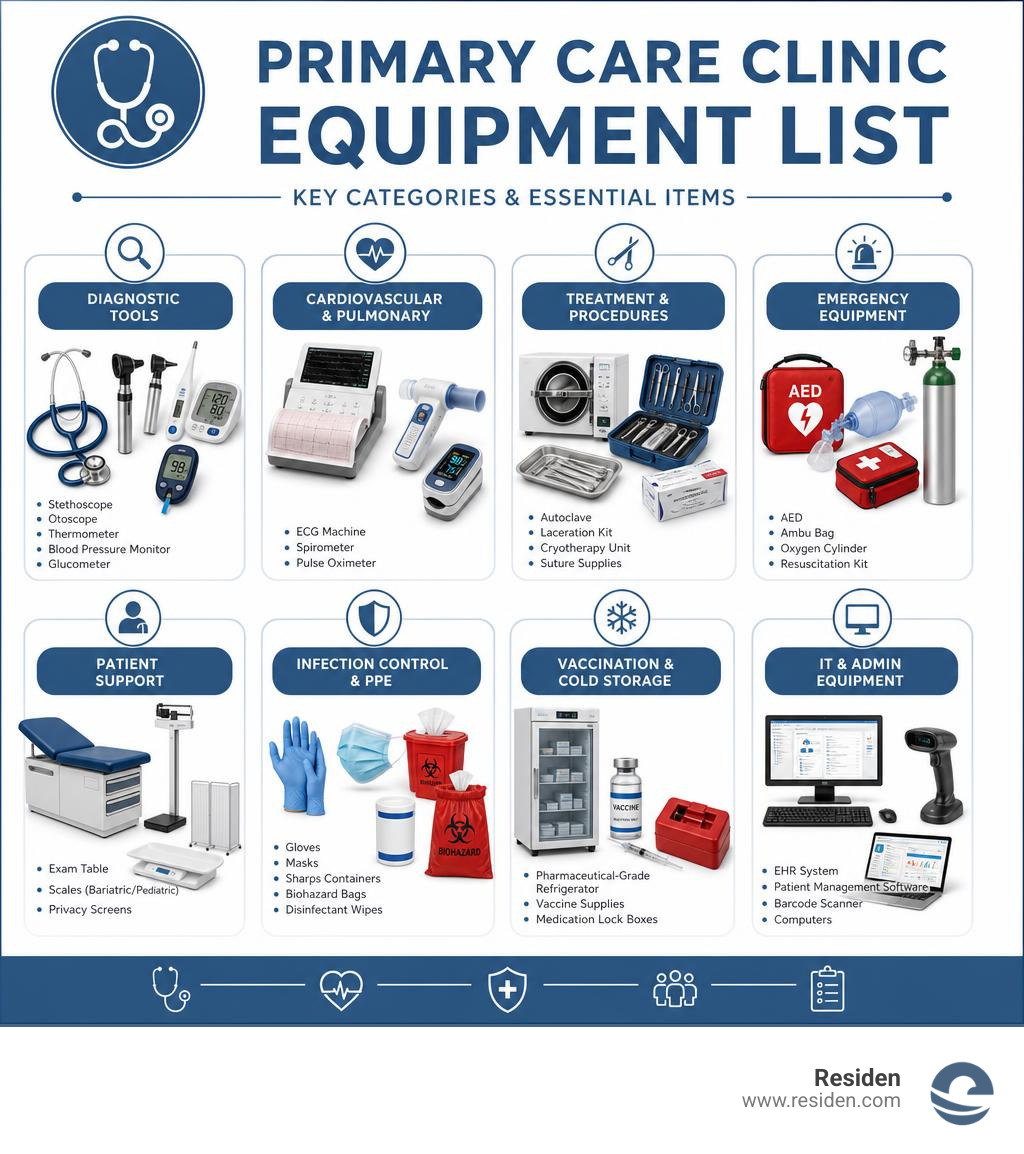
Here's a quick overview of the essential categories:
| Equipment Category | Key Items |
|---|---|
| Diagnostic Tools | Stethoscope, otoscope, thermometer, blood pressure monitor, glucometer |
| Cardiovascular & Pulmonary | ECG machine, spirometer, pulse oximeter |
| Treatment & Procedures | Autoclave, laceration kit, cryotherapy unit, suture supplies |
| Emergency Equipment | AED, Ambu bag, oxygen cylinder, resuscitation kit |
| Patient Support | Exam table, scales (bariatric/pediatric), privacy screens |
| Infection Control & PPE | Gloves, masks, sharps containers, biohazard bags, disinfectant wipes |
| Vaccination & Cold Storage | Pharmaceutical-grade refrigerator, vaccine supplies, medication lock boxes |
| IT & Admin | EHR system, patient management software, barcode scanner, computers |
Getting this right matters more than most new practitioners realize. According to the Pan American Health Organization (PAHO), a fully equipped primary care facility requires up to 337 priority medical devices — spanning general care, dental, imaging, and laboratory modules. That's a lot of decisions before you even see your first patient.
The good news? You don't have to figure it all out at once. This guide breaks it down by category so you can plan smart, stay compliant, and avoid costly gaps.
I'm Dr. Jessica Wu, a Harvard Medical School graduate with over 20 years of clinical practice experience. Navigating the right tools and equipment has been central to running an efficient, patient-first practice throughout my career, including helping colleagues think through their own primary care clinic equipment list. In the sections below, I'll walk you through exactly what you need, room by room and function by function.
Core Diagnostic and Examination Tools
To deliver high-quality, comprehensive care, your clinic rooms must be stocked with reliable diagnostic instruments. Having these tools immediately available saves valuable clinical time and prevents the frustration of hunting down a working thermometer or otoscope probe cover mid-exam.
Essential Diagnostic Devices for Your Primary Care Clinic Equipment List
Every standard examination space requires a core set of diagnostic tools to perform routine assessments. When building out your primary care clinic equipment list, ensure you have the following high-quality items on hand:
- Stethoscopes: High-grade acoustic or digital stethoscopes with adult and pediatric diaphragms.
- Wall-Mounted Diagnostic Sets: Integrated wall units containing an otoscope (for ear exams) and an ophthalmoscope (for eye exams). These ensure your devices are always charged and exactly where you need them.
- Thermometers: Temporal artery scanners or tympanic (ear) thermometers provide rapid, non-invasive, and highly accurate temperature readings.
- Blood Pressure Monitors: A combination of automated digital monitors and manual sphygmomanometers with a variety of cuff sizes (ranging from pediatric to bariatric) is essential for accurate vitals.
- Point-of-Care Glucometers: For immediate blood glucose assessments during routine checkups or acute diabetic evaluations.
When you tour our medical exam rooms, you will find that we have pre-configured each space with these exact diagnostic essentials, allowing you to walk in and begin treating patients immediately without upfront hardware costs.
Cardiovascular and Pulmonary Assessment Tools
Primary care practices routinely perform baseline cardiovascular and pulmonary evaluations, whether for pre-operative clearances, chronic asthma management, or acute chest pain triage. To support these clinical pathways, your facility needs specialized diagnostic equipment that complies with modern standards, such as the RACGP Clinical Equipment Guidelines.
- Electrocardiogram (ECG) Machines: Modern 12-lead ECG machines are critical for detecting arrhythmias, ischemia, and other cardiac events. Opting for digital ECG systems allows for seamless integration into your Electronic Health Record (EHR) system, making it easy to save, print, or share results with cardiologists.
- Spirometers: Digital spirometry devices are vital for assessing lung function, diagnosing COPD or asthma, and monitoring therapeutic responses. Digital versions offer automatic calibration and real-time visualization of flow-volume loops.
- Pulse Oximeters: Both portable fingertip units and integrated vital signs monitors should be distributed throughout the clinic to measure oxygen saturation levels instantly.
Treatment, Minor Procedures, and Emergency Equipment
A well-equipped primary care clinic must be prepared to perform minor outpatient procedures and handle acute medical emergencies. Stocking the right procedural and life-support tools ensures you can provide definitive care on-site, reducing unnecessary transfers to the emergency department.
Minor Procedure Room Essentials
Performing minor surgeries, skin biopsies, and wound care requires specialized tools and sterile environments. If you are equipping medical procedure rooms, ensure these key items are included:
- Autoclaves and Sterilizers: Ensuring proper sterilization of surgical instruments is non-negotiable. Modern autoclaves should feature programmable cycles and digital printouts to verify that sterilization parameters (temperature and pressure) have been met.
- Cryotherapy Equipment: Liquid nitrogen delivery systems or portable cryosurgical devices are essential for treating common dermatological issues like warts, skin tags, and actinic keratoses.
- Laceration Repair and Minor Surgery Kits: Pre-packaged, sterile kits containing needle holders, forceps, surgical scissors, scalpel handles, and sterile drapes streamline the process of suturing and wound care.
- Ear Lavage Systems: Automated or manual ear irrigation systems are necessary for safe, effective cerumen removal.
Emergency Resuscitation and Life Support
While primary care clinics are not emergency rooms, acute crises do happen. Your staff must have immediate access to life-saving equipment to stabilize patients during cardiac or respiratory arrest. When reviewing your Primary Care Practice Equipment Checklist, verify that the following emergency items are fully functional and easily accessible:
- Automated External Defibrillator (AED): Every medical office must have an AED on-site. Ensure your AED is placed in a central, highly visible location, and that its batteries and pads are checked monthly.
- Manual Resuscitators (Ambu Bags): Handheld tools used to provide positive pressure ventilation. Your resuscitation kit should include Ambu bags that deliver precise tidal volumes (ranging from 250 ml for pediatric patients to 1000 ml for adults) along with masks in multiple sizes.
- Oxygen Cylinders and Regulators: Pressurized oxygen tanks equipped with flowmeters, nasal cannulas, and non-rebreather masks are vital for managing acute hypoxia.
The Ultimate Primary Care Clinic Equipment List for Patient Support
Patient comfort, accessibility, and safety are central to a positive clinical experience. The furniture you choose and the infection control protocols you establish directly impact how patients perceive your practice.
Exam Room Furniture and Patient Support
Your exam room layout must accommodate a diverse patient population, including pediatric, geriatric, and bariatric individuals.

- Power Exam Tables: Power-adjustable exam tables make it much easier for patients with limited mobility, wheelchair users, or elderly patients to safely get onto the table. They also reduce the risk of occupational back injuries for your clinical staff.
- Medical Scales: Accurate weight tracking is essential for dosing medications and monitoring chronic conditions. Stock your clinic with high-capacity bariatric scales, wheelchair-accessible scales, and specialized pediatric infant scales.
- Privacy Screens and Curtains: Mobile partitions or wall-mounted tracks ensure patient modesty and privacy during physical examinations.
Infection Control and Biohazard Disposal
Maintaining a sterile, hygienic environment is critical for patient safety and regulatory compliance (such as OSHA guidelines in the United States). To keep your team and patients protected, source reliable Wholesale Medical Supplies and keep your clinic stocked with these essentials:
- Personal Protective Equipment (PPE): Maintain a robust inventory of medical-grade exam gloves (nitrile, latex-free) in all sizes, surgical masks, N95 respirators, face shields, and fluid-resistant isolation gowns.
- Sharps Containers: Rigid, puncture-resistant containers must be mounted near the point of use in every exam and procedure room for the safe disposal of needles, scalpels, and syringes.
- Biohazard Waste Bags: Color-coded (usually red) and clearly labeled bags for disposing of infectious waste, blood-soaked dressings, and organic matter.
- Disinfectant Wipes and Sterilization Pouches: EPA-registered, medical-grade disinfectant wipes for cleaning high-touch surfaces between patient visits.
Administrative, IT, and Specialized Clinic Infrastructure
Behind every successful clinical interaction is a robust administrative and technical infrastructure. Streamlining your administrative tools reduces overhead and allows your clinical team to focus entirely on patient care.
IT and Inventory Management Tools
Modern primary care relies heavily on digital workflows. To keep your practice running smoothly, focus on optimizing staff stations with the following technology:
- Electronic Health Record (EHR) and Patient Management Software: A centralized system to manage patient charts, scheduling, billing, and electronic prescribing.
- Barcode Scanners: Used for scanning patient wristbands, tracking medications, and managing clinical inventory.
- Secure Data Storage and Firewalls: HIPAA-compliant servers or secure cloud storage systems to protect sensitive patient health information (PHI).
Specialized Modules for Your Primary Care Clinic Equipment List
Depending on the scope of your practice, you may require specialized diagnostic and storage equipment. Referencing the Technical Specifications for Primary Health Centres can help you establish high standards for laboratory and cold-chain storage:
- Point-of-Care Testing (POCT) Analyzers: Small, benchtop devices for rapid, in-office testing (such as urine analyzers, rapid strep, rapid flu, HbA1c, and lipid panels). Ensure your lab equipment aligns with your clinic’s CLIA (Clinical Laboratory Improvement Amendments) waiver status.
- Pharmaceutical-Grade Refrigerators and Freezers: Standard household refrigerators are not safe for storing vaccines or temperature-sensitive medications. You must use dedicated medical-grade units equipped with digital temperature monitoring, buffered probes, and minimum/maximum temperature alarms to comply with CDC vaccine storage guidelines.
Frequently Asked Questions about Clinic Equipment
What is the most critical emergency equipment for a primary care clinic?
At a minimum, every primary care clinic must have an Automated External Defibrillator (AED), a reliable source of medical oxygen with delivery masks, and manual resuscitation bags (Ambu bags) in multiple sizes. These core tools allow clinical staff to stabilize patients experiencing cardiac arrest or severe respiratory distress while waiting for emergency services to arrive.
How often does clinical equipment require calibration and certification?
Most clinical equipment — including vital signs monitors, ECG machines, and autoclaves — requires annual inspection, calibration, and certification by a qualified biomedical technician. Regular maintenance ensures diagnostic accuracy, extends the lifespan of your equipment, and keeps your clinic in compliance with local healthcare regulations and accreditation standards.
What are the vaccine storage requirements for primary care?
Vaccines must be stored in specialized, pharmaceutical-grade refrigerators and freezers that maintain strict, stable temperature ranges (typically 2°C to 8°C for refrigerators and -50°C to -15°C for freezers). The CDC requires the use of digital data loggers (DDLs) with a buffered temperature probe to continuously record temperature data and sound alarms if the temperature fluctuates.
Conclusion
Building out a comprehensive primary care clinic equipment list and purchasing all the necessary hardware can require a massive upfront financial investment, extensive vendor negotiations, and ongoing maintenance headaches. For independent physicians and medical groups, these startup costs and administrative burdens can be a significant barrier to entry.
At Residen, we do things differently. We provide turnkey, shared medical office rentals in premier Southern California locations, including Beverly Hills (located at 433 N Camden Dr Suite 610) and Brentwood.

By choosing Residen, you can enjoy:
- Zero Upfront Capital: No expensive equipment leases, build-out costs, or long-term financial commitments.
- Fully Equipped Spaces: Our exam, consultation, and procedure rooms are pre-stocked with state-of-the-art diagnostic and clinical equipment.
- Flexible Bookings: Book professional medical space by the hour or by the day to match your actual patient volume.
If you are interested in starting your own practice with lower overhead while maintaining the highest clinical standards, we invite you to take the next step. Book a tour of our fully equipped medical exam rooms in Beverly Hills or Brentwood today and see how easy launching or expanding your practice can be.