
How to Choose a Mail Service for Doctors Without Losing Your Patience
Securing Communications with HIPAA-Compliant Mail Service for Doctors

In our modern practice environment, the standard "send" button on a generic email account is a liability. As we move further into 2026, the definition of secure communication has evolved. A mail service for doctors must do more than just deliver a message; it must safeguard Protected Health Information (PHI) at every junction.
When we talk about digital mail, we are really talking about encryption. Standard email services like Gmail or Yahoo are not inherently HIPAA-compliant because messages pass through unsecured servers in "plain text." To meet federal standards, you need a service that provides a Business Associate Agreement (BAA) and utilizes high-level encryption.
Services like MailHippo have become the gold standard for many of us. They utilize AES 256-bit encryption, which is essentially the same level of security used by the military and banks. One of the most useful features for a busy practice is the HIPAA-Compliant Email For Doctors "SendSafe" address. This allows a patient or a colleague who doesn’t have an encrypted email service to send you secure files via a unique, protected URL.
This eliminates the "I couldn't open the attachment" phone calls that plague our front office staff. Whether you are sending blood test results or sharing a complex medical history, these platforms ensure the data is encrypted both at rest and in transit.
Essential Features of a Mail Service for Doctors
When you are evaluating a digital mail service for doctors, don't just look for the HIPAA badge. You need a tool that fits into a clinician's workflow. Look for these non-negotiables:
- Message Tracking and Auditing: You should be able to see exactly when an email was opened. This is vital for "proof of delivery" regarding critical patient notices.
- Mobile Functionality: We are rarely tied to a desk. Your secure mail must work as seamlessly on an iPhone or Android as it does on a desktop.
- Secure Cloud Storage: Many services offer tiered storage (from 2GB up to 10GB or more) to house those heavy imaging files or long-term patient records.
- Two-Factor Authentication (2FA): This is your first line of defense against account takeovers.
- Message Recall and Expiration: Ever sent an email to the wrong "John Smith"? Secure services allow you to "kill" the message or set it to expire after a certain timeframe.
Navigating Medicare and PSHB Mail Service for Doctors Requirements
As of April 2026, the regulatory landscape for Medicare and the Postal Service Health Benefits (PSHB) program has become more integrated. For those of us treating Medicare beneficiaries, understanding the mail-order pharmacy benefits is crucial for patient adherence.
Under the PSHB program (which transitioned from FEHB for postal employees in 2025), there are specific mandates regarding Medicare Part B enrollment. For our patients in these programs, mail service pharmacies are often the most cost-effective way for them to manage chronic conditions. These plans often include:
- Insulin Cost Caps: A $35/month cap on insulin products.
- Out-of-Pocket Limits: An annual cap (currently around $2,000) on Part D drug costs.
Ensuring your office can reliably deliver the necessary documentation for these reimbursements via a secure mail service for doctors ensures that your patients don't face unexpected gaps in coverage or medication access.
Modernizing Physical Correspondence and Medical Records
Even in a digital world, physical mail remains a reality for medical practices. We still have to send invoices, legal notices, and sometimes physical copies of medical records to patients who aren't tech-savvy.
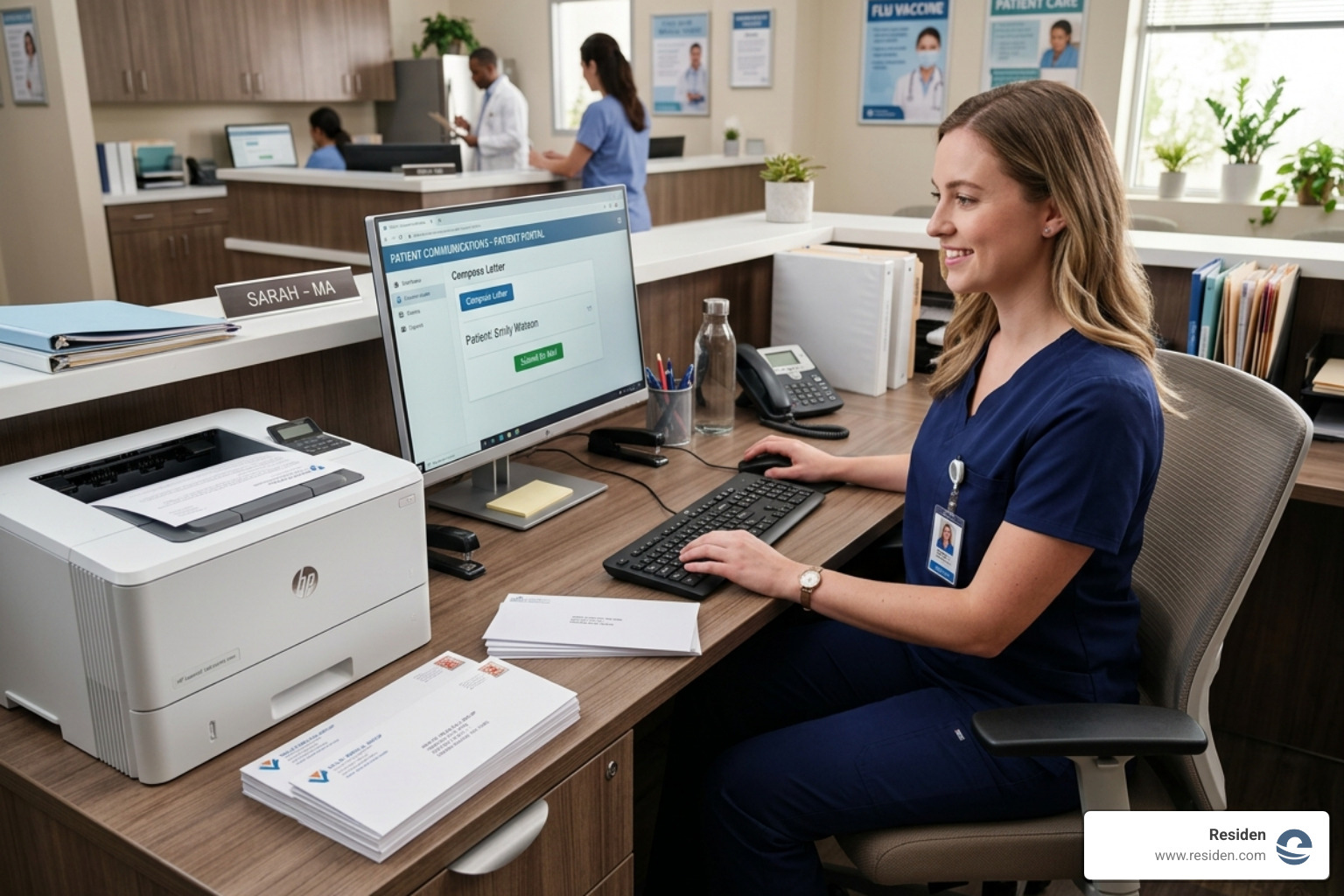
The "old way" involved a printer, a stack of envelopes, a postage meter, and a daily trip to the blue USPS box. That is a massive waste of your staff's time. Modern solutions like Mailform for Health Care Providers allow you to upload a PDF from your computer and have it printed, stuffed, and mailed via USPS (including Certified Mail with tracking) without anyone in your office touching a piece of paper.
For doctors in Los Angeles who prefer a hybrid approach—or those who need a prestigious professional presence without the overhead of a massive suite—using a Medical Business Address Mailbox provides a centralized location for all incoming professional correspondence. This is especially helpful for maintaining privacy, as it keeps your home address off of public medical registries.
Streamlining EHR and Patient Portal Integration
The ultimate goal of any mail service for doctors is to reduce the "clicks" required to finish a task. Integration is the key.
Many modern eFax solutions, such as e-Fax Zone, now offer API connectivity that links directly to major EHR systems like Epic, Cerner, or Athenahealth. This means when a lab result comes in via fax, it doesn't sit on a thermal paper tray; it is automatically routed to the patient's digital chart.
Furthermore, tools like Doximity DocFax provide a free, HIPAA-compliant mobile fax number. I’ve personally used this to sign and send a prior authorization while waiting for a flight at LAX. It turns your smartphone into a secure document hub, allowing you to annotate, sign, and send faxes with a few taps. This significantly reduces referral turnaround times—moving the process from days to minutes.
Digital Alternatives: Fax and Professional Identity
In our community, your email address is often your first impression. Using a generic @gmail.com or @yahoo.com address can feel unprofessional—like wearing flip-flops to a surgical consult.
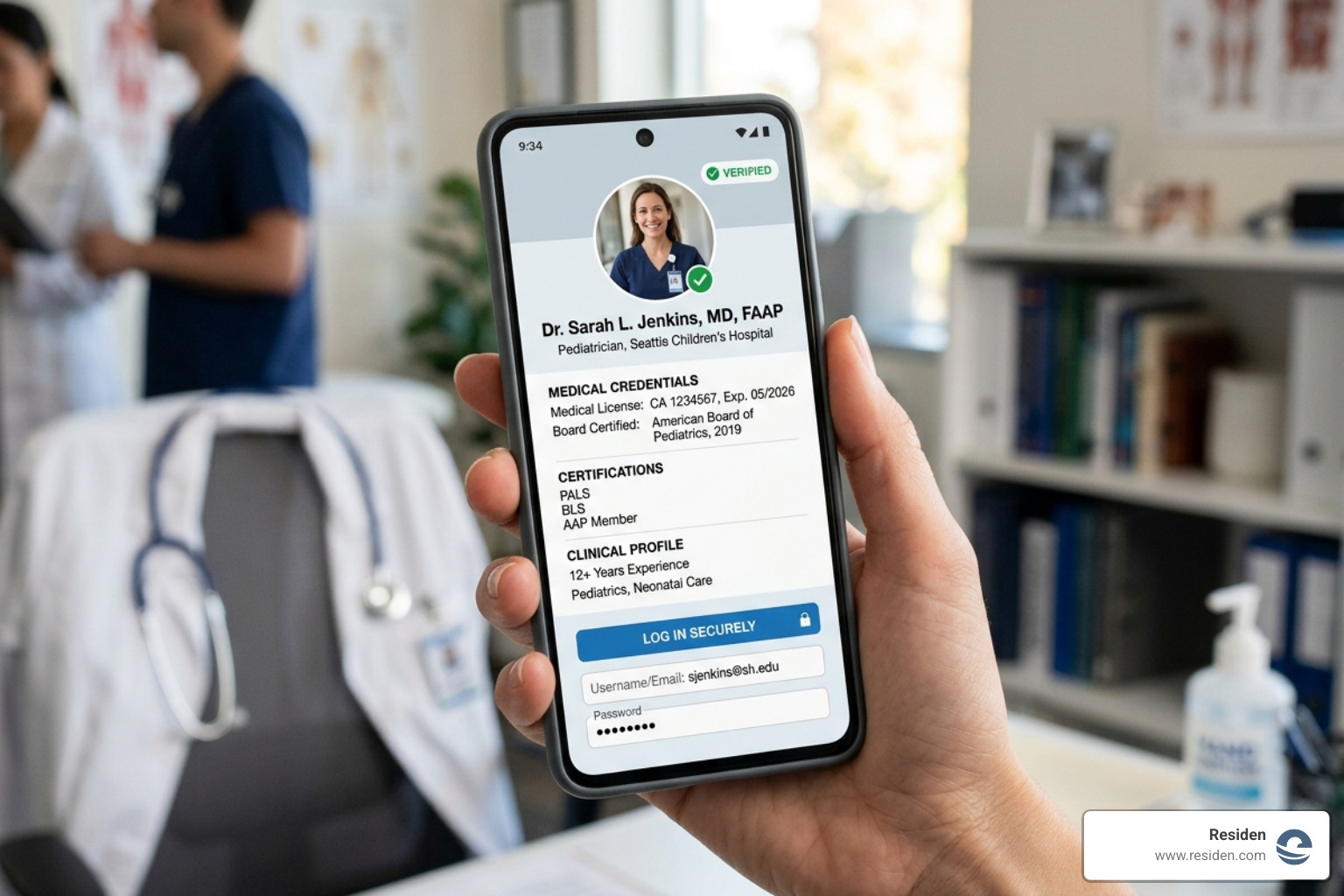
Services like MDinbox provide an exclusive "alumni-style" email for verified medical doctors. It signals credibility to recruiters, colleagues, and patients immediately. Similarly, platforms like Sermo have grown into massive hubs for peer insights, with over 1 million verified physicians sharing over 2 million insights annually. Last year alone, medical professionals on Sermo earned over $25 million by participating in paid surveys—all while networking in a secure, doctor-only environment.
This digital identity is the backbone of the telehealth expansion. With over 100 million Americans now having access to Teladoc Health, the "office" is no longer just a physical room; it is a digital presence. However, even the most digital-forward practice needs a home base. In Los Angeles, Beverly Hills, and Brentwood, we see more doctors moving toward flexible models that combine high-tech mail solutions with high-touch patient care.
Optimizing Patient Care with Pharmacy Mail Services
When we talk about mail service for doctors, we cannot ignore the pharmacy side. For patients with chronic conditions like hypertension or diabetes, mail-order pharmacies are a godsend.
| Feature | Retail Pharmacy | Mail-Order Pharmacy (CVS Caremark/Aetna/Express Scripts) |
|---|---|---|
| Supply Duration | Usually 30 days | Up to 90 days |
| Shipping | Must pick up in person | Free standard shipping to home/office |
| Cost | Standard co-pay | Often lower co-pays for 90-day supplies |
| Safety | Pharmacist on-site | Multiple pharmacist checks + unmarked secure packaging |
| Refills | Manual or automated | Automatic refills and reminders |
Major players like CVS Caremark and Aetna's mail order benefits make care simpler. These services offer unmarked, temperature-controlled packaging and 24/7 access to registered pharmacists for patient questions.
Steps to Set Up or Switch Patient Prescriptions
Helping a patient switch to a mail-order mail service for doctors is a powerful way to improve adherence. Here is the typical workflow:
- Patient Consent: Ensure the patient wants to switch and understands their plan’s specific provider (e.g., Express Scripts).
- Electronic Prescribing: Send a 90-day prescription (rather than 30) directly to the mail-order pharmacy through your EHR.
- Member Portal: Advise the patient to log in to their member website or app to "activate" the script and confirm their shipping address.
- Automatic Refills: Encourage the patient to opt-in to auto-refills to prevent gaps in therapy.
According to the Latest Medicare telehealth updates, the flexibility for virtual check-ins (HCPCS code G2012) makes it easier than ever to facilitate these pharmacy switches during a brief 5-10 minute digital consultation.
Frequently Asked Questions about Medical Mail
Is regular email HIPAA-compliant for patient records?
No. Standard email services do not use end-to-end encryption and do not provide a signed Business Associate Agreement (BAA). Without these, sending PHI via regular email is a violation of HIPAA's Security Rule.
How do mail service pharmacies save money for patients?
Most insurance plans (like Aetna or Cigna) offer a "90-day supply for the price of two 30-day supplies" incentive. Additionally, the elimination of travel costs and the inclusion of free shipping further reduce the financial burden on patients.
Can I keep my existing fax number when switching to eFax?
Yes. Most reputable providers like e-Fax Zone offer free "number porting." This allows you to move your existing clinic fax number to a cloud-based service, ensuring that your colleagues and pharmacies don't have to update their contact lists.
Conclusion
Choosing the right mail service for doctors is about reclaiming your time and protecting your patients. Whether you are automating your physical mailings with Mailform, securing your digital footprint with MailHippo, or leveraging the convenience of mail-order pharmacies for your patients, the tools available in 2026 are designed to make the administrative side of medicine invisible.
At Residen, we understand that modern physicians need more than just a room; they need a comprehensive ecosystem. We provide turnkey, shared medical office rentals in prime Los Angeles locations like Beverly Hills and Brentwood. Our spaces are fully equipped and patient-friendly, offered on a flexible hourly or daily basis with no long-term leases or setup fees.
By combining our flexible medical spaces with a Medical Business Address Mailbox, you can run a prestigious, fully compliant practice with a fraction of the traditional overhead. Stop worrying about the mail—and get back to the medicine.