
A Day in the Life of a Beverly Hills Private Practice Provider
What a Typical Day Looks Like for a Beverly Hills Private Practice Provider
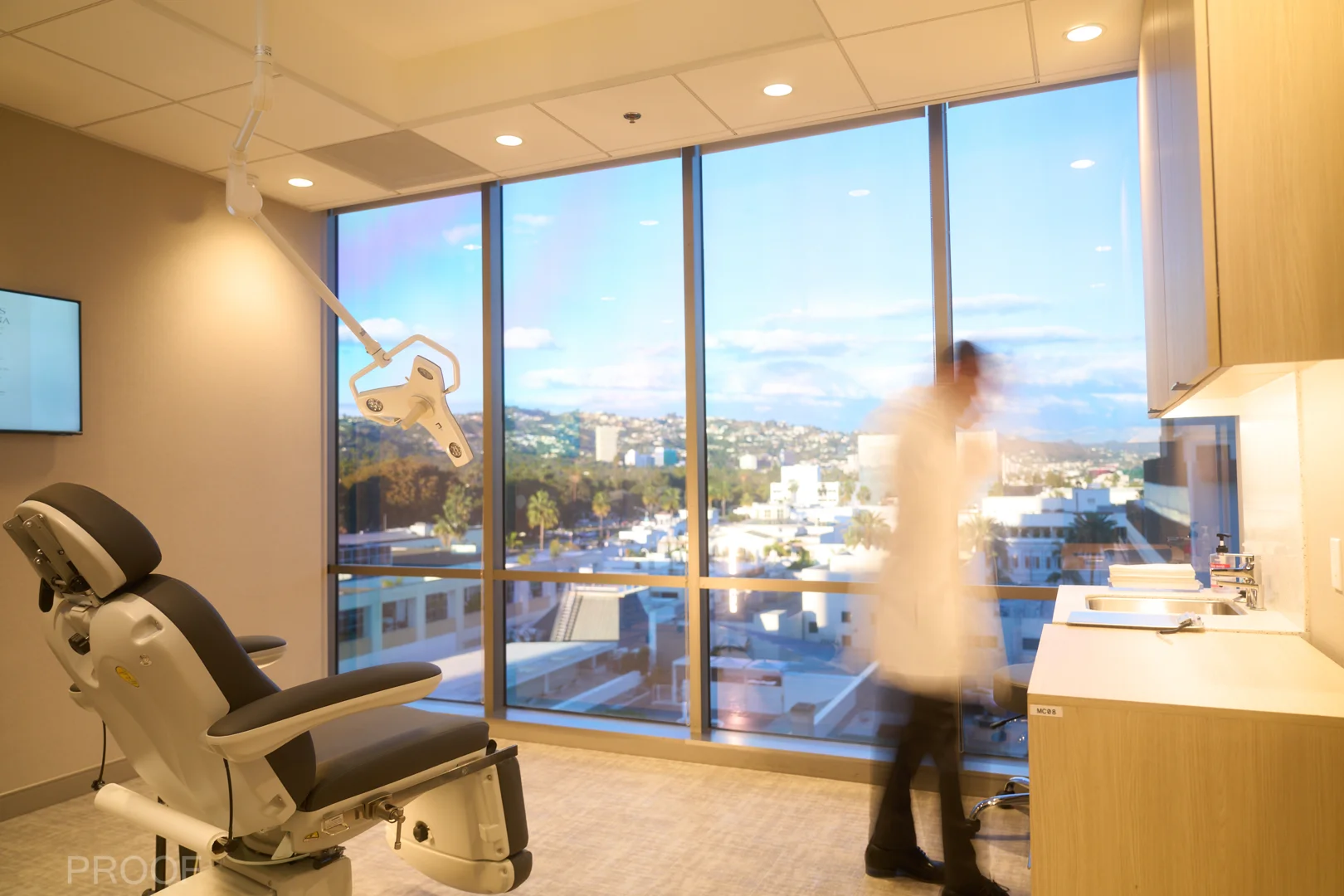
A day in the life of a Beverly Hills private practice provider is anything but ordinary — it blends high-touch patient care, careful scheduling, and real business management, all inside one of the most competitive healthcare markets in the country.
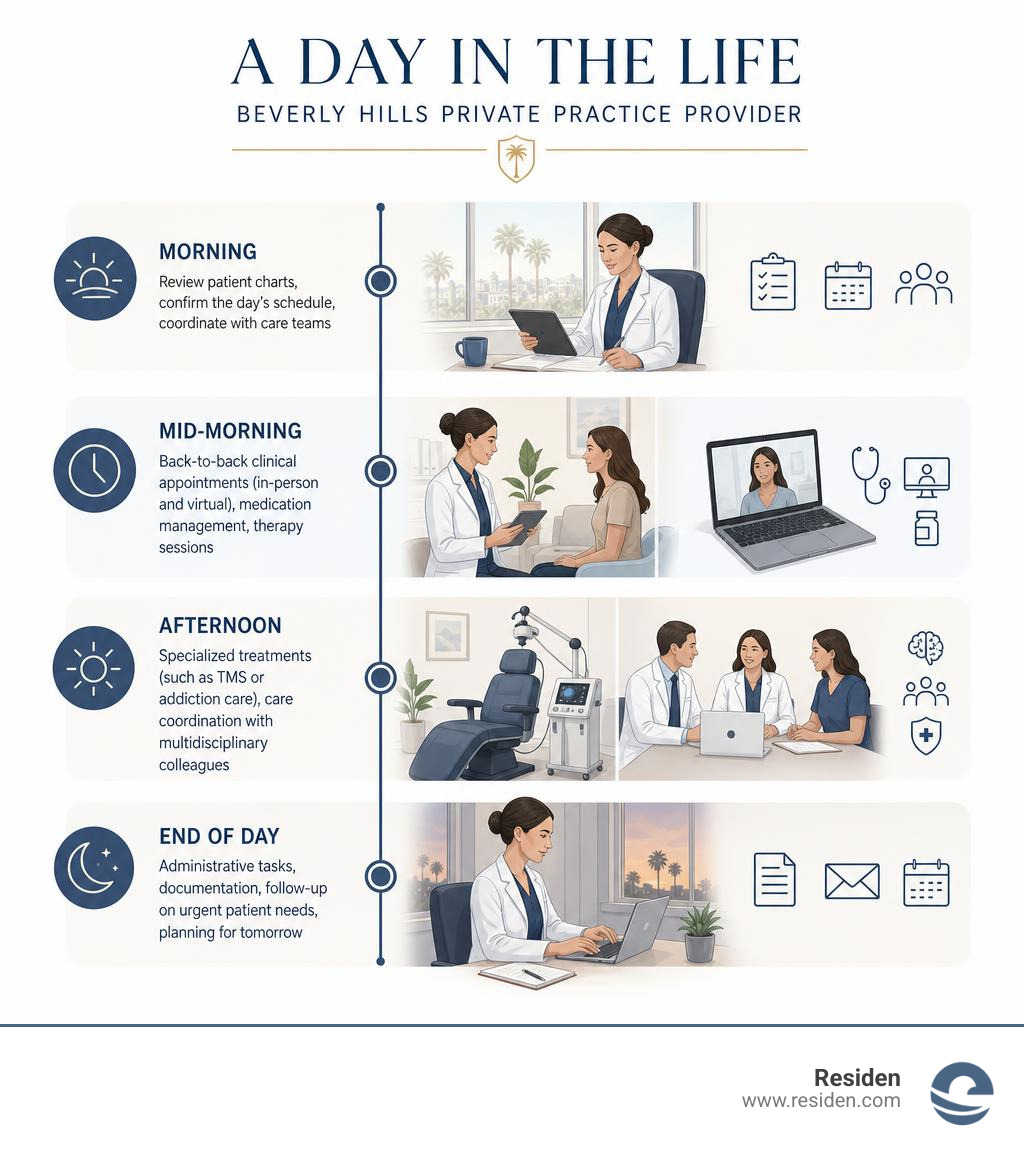
Here's a quick snapshot of what that day typically looks like:
- Morning — Review patient charts, confirm the day's schedule, coordinate with care teams
- Mid-morning — Back-to-back clinical appointments (in-person and virtual), medication management, therapy sessions
- Afternoon — Specialized treatments (such as TMS or addiction care), care coordination with multidisciplinary colleagues
- End of day — Administrative tasks, documentation, follow-up on urgent patient needs, planning for tomorrow
Providers in Beverly Hills often operate in a concierge-style model, spending an average of 30 minutes per appointment — more than twice the national average of 13 minutes. That level of care requires smart systems, flexible space, and a well-coordinated team.
I'm Dr. Jessica Wu, a Beverly Hills-based dermatologist with over 20 years of private practice experience — including house calls to Hollywood sets — which gives me a front-row view of a day in the life of a Beverly Hills private practice provider across specialties. That experience shapes everything I share here.
Morning Routine: A Day in the Life of a Beverly Hills Private Practice Provider

The morning sun over Beverly Hills brings a unique energy. For a provider at a premier practice like Oak Health Center, founded by Dr. Esther Park, the morning arrival is about setting a calm, focused tone for the day. Stepping into a quiet, beautifully appointed office on Camden Drive, the day begins long before the first patient walks through the door.
At 7:45 AM, the physical space is prepped. In a high-demand area, the environment matters just as much as the clinical expertise. Providers immediately huddle with their patient care coordinators to review the daily schedule. This coordination is critical for managing a complex mix of medication management appointments, deep-dive therapy sessions, and specialized clinical treatments.
Having a dedicated support team ensures that administrative friction is minimized. While the front desk handles check-ins and initial inquiries, the clinical provider can focus entirely on preparing for the unique needs of each patient. For those exploring the freedom of running their own clinic, understanding The Perks of Private Practice highlights how autonomy over your schedule and environment transforms the quality of care you can deliver.
Morning Consultations and Clinical Prep
By 8:30 AM, the first round of clinical prep is complete. Providers carefully review patient charts to track treatment progress, check lab results, and note any specific concerns raised in pre-visit intake forms.
In 2026, the modern Beverly Hills patient expects seamless integration of in-person and virtual services. This means a provider’s morning scheduling routines are highly dynamic:
- 8:30 AM – 9:00 AM: Virtual medication management follow-up with a busy entertainment executive.
- 9:00 AM – 9:45 AM: In-person psychiatric evaluation or diagnostic consultation.
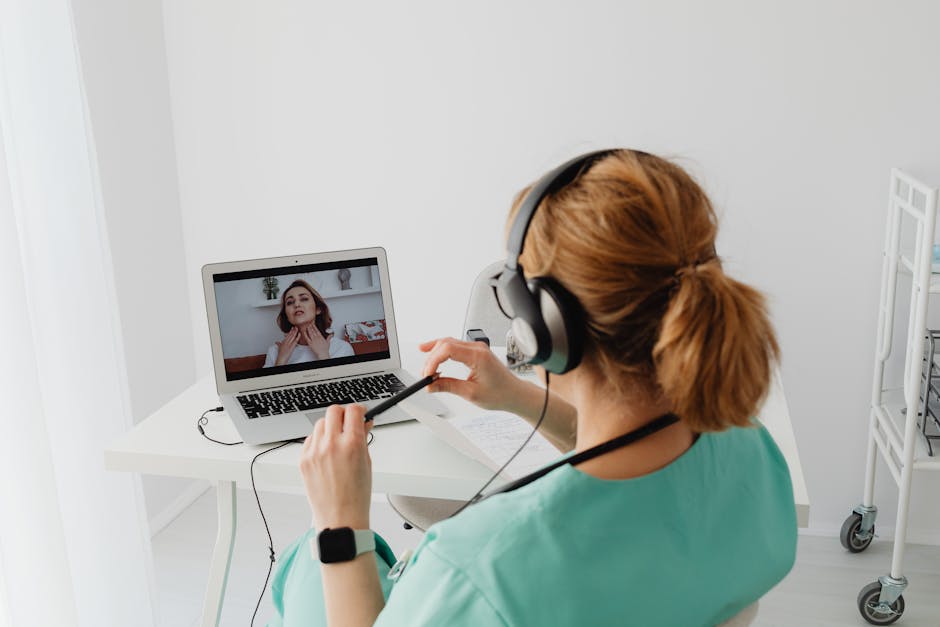
- 9:45 AM – 10:30 AM: Telehealth therapy session for a patient traveling internationally.
This hybrid workflow requires a physical layout that supports rapid transitions. A provider needs to pivot from a secure, high-definition video setup to a warm, face-to-face consultation room without skipping a beat.
Balancing Clinical Care and Administrative Demands
As midday approaches, the balancing act between clinical care and administrative demands intensifies. A Beverly Hills provider does not just write prescriptions or conduct therapy sessions; they may also oversee advanced, specialized treatments like Transcranial Magnetic Stimulation (TMS) or coordinate complex addiction care programs.
Managing these diverse clinical responsibilities alongside essential business tasks—like insurance billing, compliance, and marketing—can easily lead to burnout. This is why more practitioners are moving away from traditional, high-volume insurance models and shifting toward personalized, lower-volume models that allow doctors to reclaim their time.
To prevent clinical fatigue, smart providers utilize structured administrative blocks. Instead of squeezing documentation into the last five minutes of an hour, they dedicate specific windows to review treatment plans, answer emails, and coordinate with pharmacies. Setting these clear boundaries is one of the most effective Strategies for Maintaining Work-Life Balance, ensuring that providers remain energized and fully present for their patients.
Personalized Care: A Day in the Life of a Beverly Hills Private Practice Provider
In the heart of Beverly Hills, concierge-style care has become the gold standard. Patients seek out private practices because they want to feel heard, not rushed. While a traditional medical practice might require a doctor to manage a panel of 2,000 to 3,000 patients, a concierge provider typically caps their active panel between 300 and 600.
This dramatic difference in volume directly impacts patient satisfaction, which is reported to be 73% higher in concierge models compared to traditional primary care. With more time per visit, pediatricians and family doctors can focus heavily on early development and preventive wellness. For example, knowing that 90% of a child's brain development happens by age 5, and that a baby's brain forms over 1 million new neural connections per second during the early years, concierge pediatricians dedicate their extended visits to discussing nutrition, sleep patterns, and cognitive milestones rather than just checking vitals.
The table below illustrates the stark contrast between these two approaches:
| Care Metric | Traditional Insurance-Based Practice | Concierge / VIP Private Practice |
|---|---|---|
| Patient Panel Size | 2,000 to 3,000 patients | 300 to 600 patients |
| Daily Patient Volume | 30 to 40 patients per day | 6 to 10 patients per day |
| Average Appointment Length | 10 to 15 minutes | 30 to 90 minutes |
| Direct Doctor Access | Through answering services & triage | Direct phone, text, and secure messaging |
| Wait Times | Often 45+ minutes in crowded rooms | Minimal to no wait; immediate rooming |
| Home Visits | Extremely rare or unavailable | Available for newborns, acute illness, or convenience |
Multidisciplinary Care Coordination and Practice Evolution
The afternoon shifts toward collaboration. High-quality mental health and medical care in Beverly Hills rarely happens in a vacuum. Providers work within a tight-knit, multidisciplinary team that includes psychiatrists, therapists, nurse practitioners, and dedicated specialists.
For instance, when treating complex cases such as substance use, a psychiatrist will coordinate directly with addiction specialists to align medication management with behavioral therapy. This level of care coordination ensures that every professional on the team is working toward the same goal, preventing contradictory treatments and closed communication loops.
This collaborative approach has driven the overall practice evolution of many modern Beverly Hills clinics. What began as a single-provider office can quickly expand into a holistic, multi-specialty center by utilizing smart growth strategies. However, with expansion comes the challenge of managing after-hours or urgent patient needs. To maintain 24/7 responsiveness without burning out the clinical staff, practices rely heavily on dedicated patient care coordinators and secure, mobile communication platforms.
When an urgent situation arises after hours, telehealth and mobile services bridge the gap. Some providers will even travel directly to a patient's home, hotel, or office to deliver immediate, highly private care.
Collaborative Treatment: A Day in the Life of a Beverly Hills Private Practice Provider
During a typical afternoon, a provider might participate in a 30-minute case conference. In this meeting, a therapist, a psychiatric nurse practitioner, and a clinical director review treatment plans for shared patients. This ensures that a patient's psychological assessment aligns perfectly with their ongoing therapy and pharmacological support.
As the local patient demographics continue to diversify—ranging from high-profile creatives and busy corporate executives to multi-generational families—the demand for highly customized care models continues to rise. Providers who successfully navigate this landscape do so by remaining flexible, adopting modern communication tools, and keeping their patient panels small enough to deliver on the promise of truly personalized medicine.
Frequently Asked Questions
How do Beverly Hills providers handle after-hours emergencies?
Most premium private practices in Beverly Hills utilize a hybrid system. They employ dedicated patient care coordinators who triage non-clinical inquiries, while providers remain accessible for true clinical emergencies via secure, direct communication channels. For complex cases, virtual triage or coordinated referrals to trusted local emergency facilities ensure patient safety around the clock.
What are the main differences between traditional and concierge care in Beverly Hills?
The primary differences lie in time, accessibility, and panel size. Concierge medicine features limited patient panels (typically 300 to 600 patients), allowing providers to spend 30 to 90 minutes per appointment. Traditional practices often require seeing 30 to 40 patients daily, resulting in rushed, 10-to-15-minute visits and longer waiting room delays.
How do private practice doctors maintain work-life balance in high-demand areas?
Successful Beverly Hills providers protect their work-life balance by structuring their daily schedules with dedicated administrative blocks, utilizing flexible medical workspaces to control overhead, and leveraging multidisciplinary teams. This allows them to focus on clinical excellence without getting overwhelmed by the business operations of a traditional long-term commercial lease.
Conclusion
A day in the life of a Beverly Hills private practice provider is a balancing act of clinical excellence, personalized attention, and business efficiency. To deliver this level of elite care, providers need an environment that matches their standards without the burden, stress, and massive overhead of a traditional, long-term commercial lease.
That is where we come in. At Residen, we provide premium, turnkey, and fully equipped medical office spaces designed specifically for modern healthcare professionals. Whether you need an exam room, a quiet consultation suite, or a specialized procedure room, our flexible hourly and daily booking model allows you to run your practice on your own terms — with no hidden fees, no complex leases, and zero setup costs.
Ready to elevate your practice in the heart of the Golden Triangle? Get Started in Beverly Hills today and discover the freedom of a medical workspace that works for you.