
Examining the Exam Room
The Modern Patient Exam Room: The Heart of Every Clinical Visit

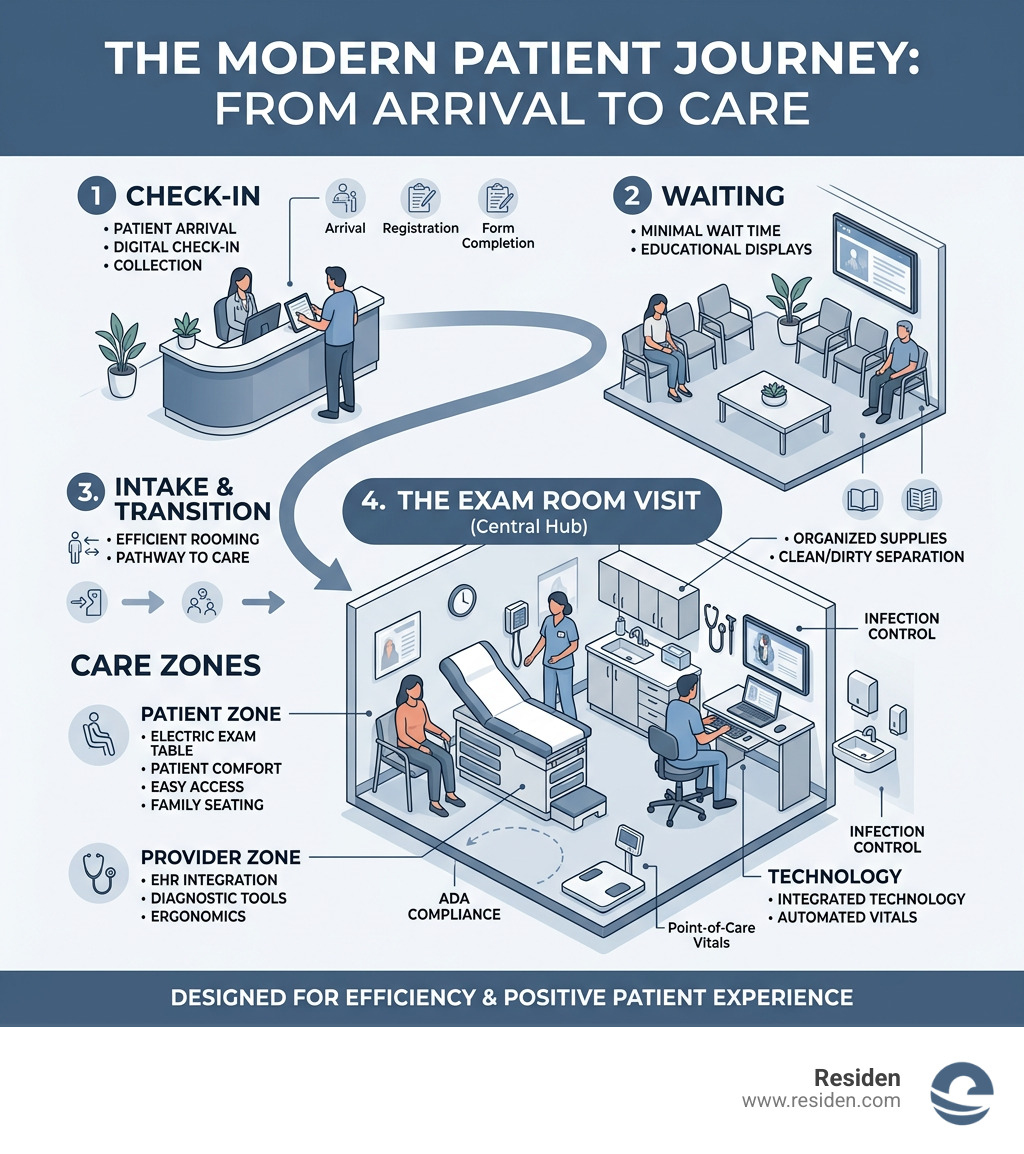
Patient exam rooms are where the real work of healthcare happens. Whether you're running a solo practice or rotating through a shared clinic, the exam room is where patients are assessed, diagnosed, and cared for — often without ever needing to leave that single space.
Here's a quick snapshot of what makes a well-designed exam room work:
- Patient zone — exam table, seating for the patient and family, clear pathways
- Provider zone — EHR workstation, diagnostic tools, ergonomic stool
- Storage zone — modular casework, clean/dirty separation, locked cabinets
- Key compliance — 32″ minimum clear door opening, 60″ turning circle for ADA
- Infection control — hands-free sink, antimicrobial surfaces, GFCI-protected outlets
- Technology — integrated vitals equipment, telemedicine-ready data drops
Today's exam room is no longer just a place for a quick checkup. It has become the central hub of the entire patient visit. Point-of-care testing, automated vitals, and EHR integration mean patients can complete registration, labs, and consultations all in one room — without bouncing between spaces.
That shift matters for independent providers especially. When your space works harder, you work smarter.
And the details count more than most clinicians realize. One study found that simply bringing all vital signs acquisition — including weight — to the point of care with an automated device can save over a minute per patient. Multiply that across a full day of appointments, and the impact is significant.
But efficiency is only part of the picture. The look, feel, and layout of an exam room also shape how patients feel about their care — before a single word is spoken.
Essential Equipment for Modern patient exam rooms
When we talk about equipping modern patient exam rooms, we aren't just talking about a table and a chair. We are talking about a highly synchronized environment where every piece of equipment serves a dual purpose: clinical accuracy and patient comfort.
In our Los Angeles facilities, particularly in high-demand areas like Beverly Hills, the expectation for equipment quality is high. Patients expect a professional, high-tech environment that mirrors the level of care they are receiving.
The Power of the Table
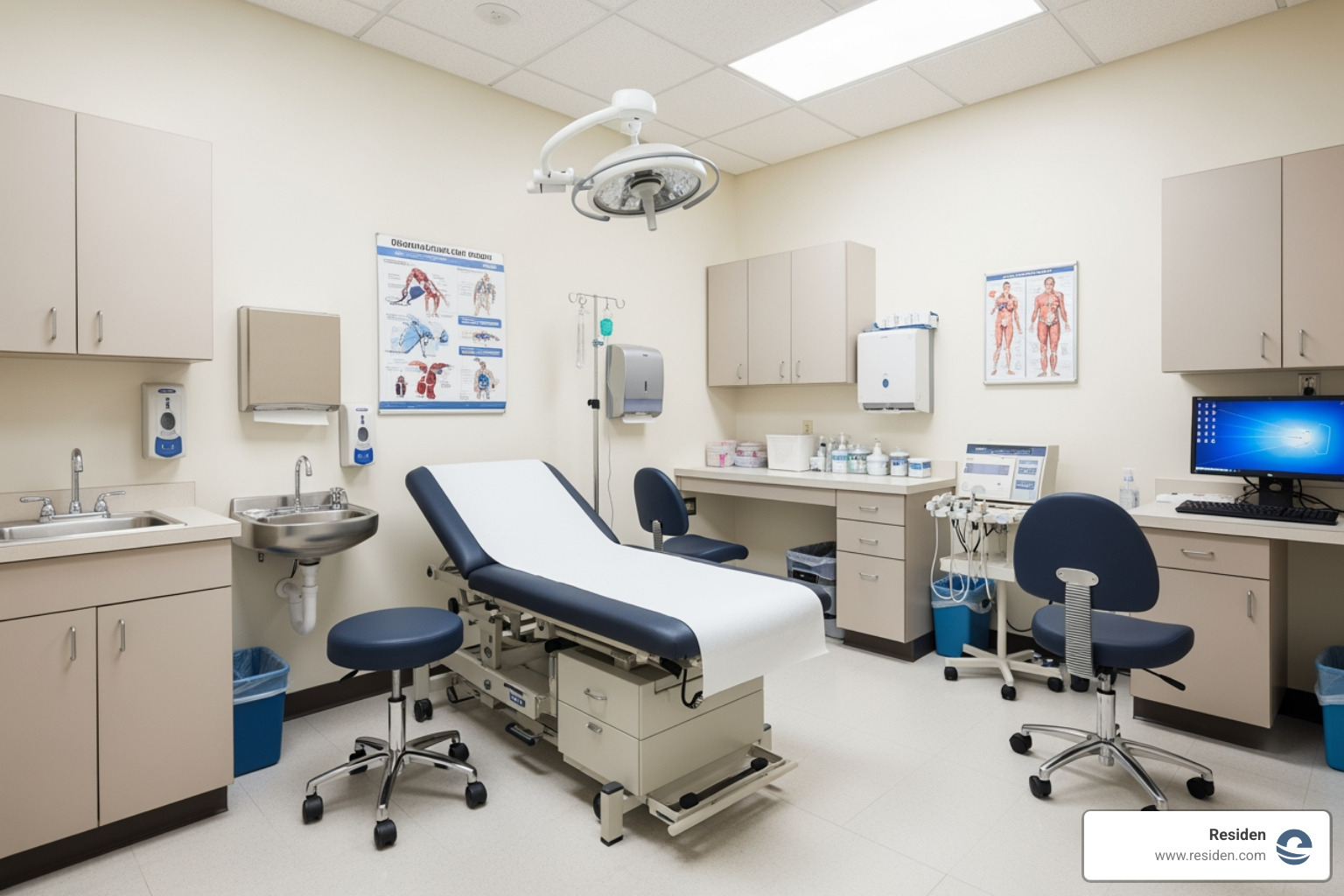
The centerpiece of any exam room is the exam table. While manual tables were the industry standard for decades, the shift toward power tables is undeniable. Why? Because accessibility and safety are paramount.
- Bariatric Capacity: Most modern power tables and procedure chairs now support a bariatric capacity of up to 700 pounds. This ensures that you can treat a diverse patient population safely.
- Adjustability: Height-adjustable tables (Hi-Low tables) allow patients with mobility issues to transition easily from a wheelchair to the exam surface. This isn't just a "nice-to-have"—it’s a core component of ADA compliance and provider safety, as it reduces the need for manual lifting.
| Feature | Manual Exam Tables | Power Exam Tables |
|---|---|---|
| Height Adjustment | Fixed or manual step | Motorized (Hi-Low) |
| Patient Access | Requires stepping up | Lowers to wheelchair height |
| Weight Capacity | Typically lower (300-500 lbs) | High (up to 700 lbs) |
| Provider Ergonomics | Can lead to back strain | Optimal positioning for exams |
| Patient Comfort | Standard padding | Often includes drawer warmers/pelvic tilt |
Point-of-Care Efficiency
One of the biggest trends in Equipping and Designing the Ideal Medical Exam Room is the integration of automated vitals. By bringing blood pressure, pulse oximetry, temperature, and weight acquisition directly to the point of care, we eliminate the "vitals station" bottleneck in the hallway.
This "one-stop shop" approach keeps the patient settled in their room, reducing anxiety and improving the flow of the clinic. For more specialized needs, you can explore More info about medical procedure rooms to see how layout requirements change when you move from general exams to minor surgeries.
Designing Efficient patient exam rooms
Efficiency in patient exam rooms isn't just about how fast you can work; it's about how many steps you don't have to take. We use a "zoning" model to ensure that every square inch of the room is utilized effectively.
Functional Zones
- The Patient Zone: This is the area surrounding the exam table. It should include a clear path for the patient to enter, a place for their belongings, and seating for a family member or caregiver.
- The Provider Zone: This is your workspace. It includes your ergonomic stool, the EHR workstation, and the diagnostic wall systems (otoscope, ophthalmoscope, etc.).
- The Storage Zone: This area houses the casework, sinks, and medical supplies.
Flow and "On-Stage/Off-Stage" Design
Advanced clinic designs, such as those highlighted by The Center for Health Design, often utilize a dual-entry system. In this layout, the patient enters through one door (the "on-stage" side) and the provider enters through another (the "off-stage" side).
This keeps the "backstage" bustle of the clinic—staff conversations, phone calls, and supply restocking—hidden from the patient, creating a much more serene and private environment. Standardizing these layouts across all rooms in a facility also means that no matter which room you walk into, you know exactly where the gauze is stored.
Provider and Storage Zone Essentials
A cluttered room is a stressful room—for both you and the patient. Modern patient exam rooms utilize modular casework to keep supplies organized and out of sight.
- EHR Workstations: Whether it’s a wall-mounted arm or a "Workstation on Wheels" (WOW), your computer should be positioned so you can maintain eye contact with the patient while charting. The technology should support the interaction, not act as a barrier.
- Diagnostic Wall Systems: Mounting your diagnostic tools on the wall saves precious floor space and ensures they are always charged and ready.
- Hands-Free Sinks: Infection control starts with the sink. Hands-free (sensor or foot-pedal) faucets are essential. Position the sink near the door so you can wash your hands as soon as you enter, signaling to the patient that you prioritize their safety.
- Clean vs. Dirty Separation: Your storage should clearly distinguish between clean supplies (bandages, swabs) and dirty areas (biohazard waste, sharps containers). Using labeled bins and color-coded zones helps prevent cross-contamination.
For more details on how to optimize the areas where your team prepares for visits, check out More info about staff stations.
Patient-Centric Design and Accessibility
In the heart of Beverly Hills and Brentwood, we know that "functional" isn't enough. Patient exam rooms must be accessible, comfortable, and inclusive. Design is a powerful tool for reducing the "white coat hypertension" that many patients experience.
ADA Accessibility: More Than Just a Ramp
Accessibility is a legal requirement under the 2010 ADA Standards, but it’s also just good practice. An ADA-compliant exam room must allow for a patient in a wheelchair to enter, turn around, and transfer to the exam table without obstruction.
- The 32-Inch Rule: All doors must have a minimum clear opening of 32 inches.
- Turning Space: The room must accommodate a 60-inch diameter turning circle or a T-turn space.
- Clear Floor Space: You need a 30″ × 48″ clear floor space next to the exam table to allow for a side-transfer from a wheelchair.
When you're looking for a Practical Guide for Clinics, Hospitals & New Facilities, you'll find that these clearances often dictate the entire layout of the room. If the door swing blocks the turning circle, the room isn't compliant.
Enhancing the Patient Experience in patient exam rooms
What does your exam room's appearance say about you? This is a question every provider should ask. Research from the AAFP suggests that patients make snap judgments about your clinical skills based on the state of your exam room. If the wallpaper is peeling or there are outdated flu shot notices from 2019 on the wall, patients may wonder if your medical knowledge is just as outdated.
Reducing Stress Through Design
- Acoustic Privacy: Patients need to know their conversation can't be heard in the hallway. Using sound-masking equipment and solid-core doors is vital for HIPAA compliance and patient trust.
- Visual Comfort: Use frosted glass to let in natural light while maintaining privacy. Avoid the harsh, flickering "interrogation" style fluorescent lights. Instead, use dimmable LED zones—ambient lighting for the consultation and task lighting for the exam.
- Home-Like Finishes: Move away from the sterile, industrial look. Incorporate wood-grain laminates, nature-themed artwork, and comfortable side chairs.
- Temperature Control: There’s nothing worse than sitting in a thin paper gown in a freezing room. Patient-adjustable thermostats or localized heating can drastically improve satisfaction.
If you find that a patient needs a longer conversation that doesn't involve a physical exam, More info about consultation rooms can help you understand how to design spaces that prioritize face-to-face communication over clinical procedures.
Technical Infrastructure and Infection Control
The "bones" of the patient exam rooms—the stuff behind the walls—are what keep the clinic running safely and legally.
Infection Control and Materials
In a post-pandemic world, surfaces must be more than just "cleanable." They must be proactive.
- Antimicrobial Surfaces: Using thermofused laminates and non-porous materials prevents bacteria from hiding in crevices.
- Coved Bases: Flooring should "curve" up the wall (a coved base) to eliminate the 90-degree corner where dust and germs collect.
- HVAC and Air Quality: Proper air exchange rates and high-efficiency filtration are necessary to reduce the risk of airborne transmission.
Power and Connectivity
The modern provider is tethered to their data.
- Data Drops: Every room needs multiple data drops for EHR connectivity and high-speed internet for telemedicine.
- GFCI Outlets: Any outlet near a sink must be GFCI-protected for safety.
- Outlets for Equipment: Don't rely on power strips. Ensure there are multiple duplex outlets at the head and side of the exam table to power diagnostic tools and the table itself.
Frequently Asked Questions about Patient Exam Rooms
What are the minimum ADA requirements for an exam room?
At a minimum, you need a 32-inch clear door opening, a 60-inch turning radius for wheelchairs, and a 30" x 48" clear floor space next to the exam table. Additionally, the sink must have specific knee clearance, and the exam table should ideally be height-adjustable to allow for easy transfers.
How can I save time during patient intake?
The most effective way to save time is by bringing vitals acquisition to the point of care. Using an automated device that captures blood pressure, temp, and weight inside the exam room can save over a minute per patient. Standardizing your supply layout also saves time by ensuring you never have to "hunt" for supplies during a procedure.
What are the most common mistakes in exam room design?
The most common mistakes include:
- Poor Door Placement: A door that opens directly onto the patient on the exam table, compromising privacy.
- Clutter: Using the exam room as a storage closet for extra boxes or old equipment.
- Inadequate Lighting: Having only one "on/off" switch that provides either too much or too little light for different parts of the visit.
- Outdated Decor: Keeping old posters or worn-out furniture that signals a lack of attention to detail.
Conclusion
Designing and maintaining high-quality patient exam rooms is a significant investment of time and capital. For many independent providers in Los Angeles, the burden of managing leases, equipment maintenance, and ADA compliance can detract from what matters most: patient care.
At Residen, we provide a better way. We offer turnkey, shared medical office rentals in the most prestigious parts of Los Angeles, including Beverly Hills and Brentwood. Our spaces are fully equipped with modern, patient-friendly exam rooms that meet all the standards discussed in this guide.
Whether you need a room for a few hours a week or a few days a month, our flexible bookings allow you to practice in a world-class environment without the overhead of a traditional lease. Our Camden Drive location in Beverly Hills is designed to impress your patients and support your workflow from day one.
Ready to see the future of the medical workspace? Book modern patient exam rooms with Residen today and experience the difference that thoughtful design makes.